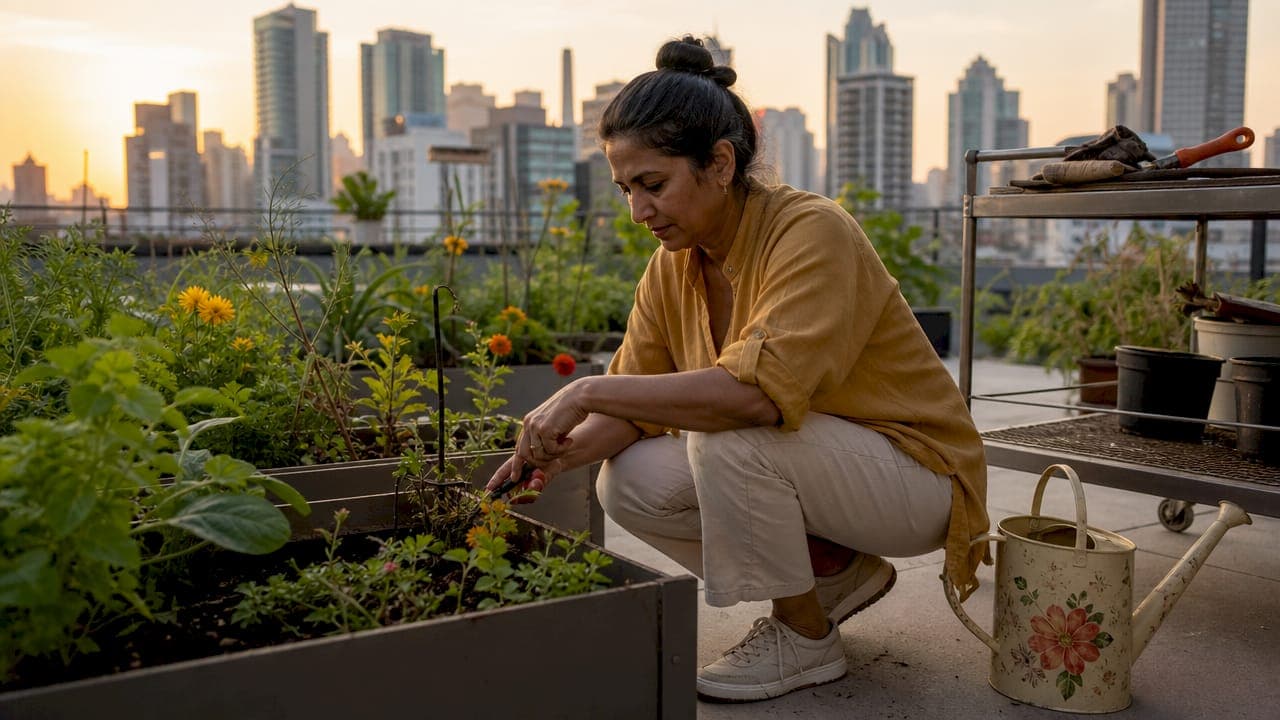
Rooftop gardens are vegetated spaces on urban rooftops that deliver measurable environmental, social, and economic benefits to cities. Also called green roofs in industry practice, these installations reduce urban heat, manage stormwater, support biodiversity, and improve the mental health of city residents. The European Commission's Joint Research Centre confirmed in 2026 that sensor-tracked heart rate and brainwave data show rooftop greenery lowers heat stress in urban populations compared to non-vegetated rooftops. For urban residents, city planners, and environmental enthusiasts, understanding the full benefits of rooftop gardens in cities is the starting point for smarter urban design.
What are the benefits of rooftop gardens in cities?
Rooftop gardens address one of the most urgent problems in urban planning: the heat island effect. Dense cities absorb and retain solar radiation through concrete, asphalt, and glass, pushing surface temperatures well above surrounding rural areas. Green roofs interrupt this cycle through evapotranspiration, the process by which plants release water vapor and cool the air around them.
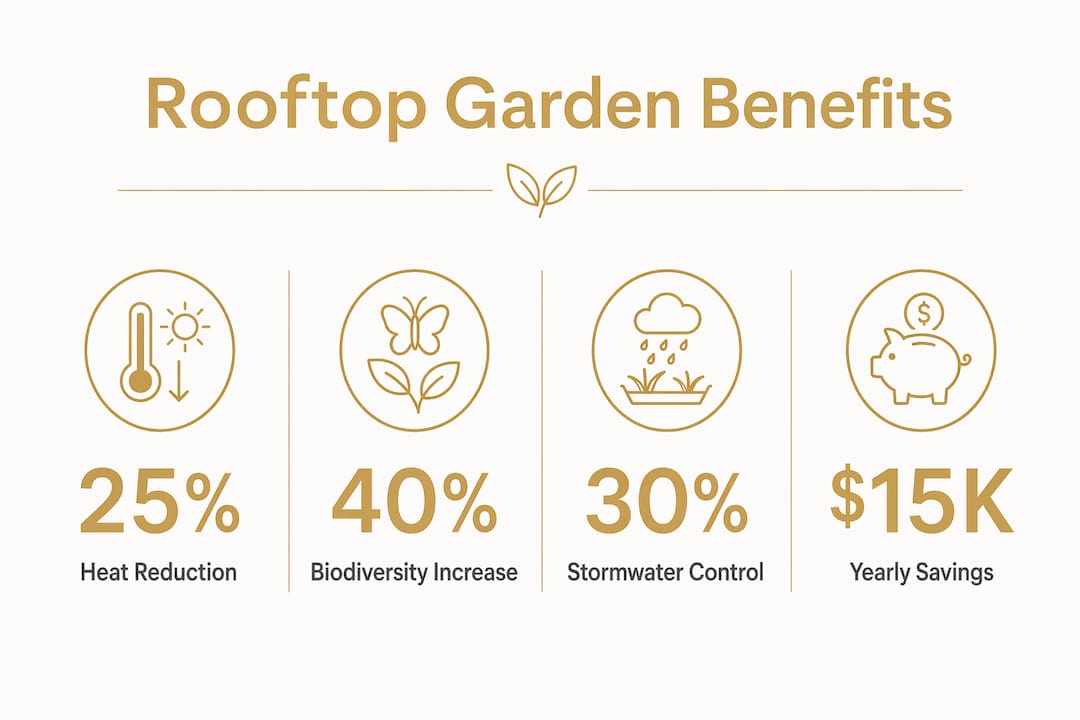
The LIFE-myBUILDINGisGREEN project, implemented across schools in Spain and Portugal, found that rooftop greenery reduces cooling electricity consumption by more than 11%. That figure translates directly into lower utility bills and reduced grid demand during summer peaks. In European schools where green roofs were installed, indoor temperatures dropped by 4–6 °C compared to buildings with conventional rooftops. That kind of temperature reduction changes whether a building needs mechanical cooling at all.
Pro Tip: When evaluating a green roof for heat reduction, prioritize substrate depth. Deeper growing media retain more moisture and deliver stronger evapotranspiration cooling than thin extensive systems.
The cooling effect also extends beyond the building itself. Surrounding streets and neighboring structures benefit from the lower ambient air temperature that vegetated rooftops produce. City planners who cluster green roofs across a district, rather than installing them in isolation, see compounding temperature reductions at the neighborhood scale.
How do rooftop gardens support urban biodiversity?
Building-integrated greenery supports hundreds of species, with particular value for pollinators and insects that have lost ground-level habitat to development. A March 2026 European green infrastructure report confirmed that green roofs support biodiversity at a scale that matters for urban ecological networks.
The ecological value of a rooftop garden depends heavily on its system type:
- Extensive green roofs use shallow substrate (typically 2–6 inches deep) and low-maintenance plants like sedums. They are lightweight and cost-effective but offer limited habitat complexity.
- Intensive green roofs use deeper substrate and support a wider range of plants, including shrubs and small trees. They create richer habitat for birds, bees, and other pollinators.
- Hybrid systems combine elements of both, often with varied topography that increases spatial heterogeneity and supports more species.
European case studies show that biodiversity outcomes depend on system type and governance model. Extensive green roofs dominate urban installations but deliver lower biodiversity value than intensive or hybrid systems managed through combined public, private, and community involvement.
The EU Nature Restoration Regulation creates a policy framework that pushes cities to count green roofs toward urban nature targets. That regulatory pressure is accelerating the shift from minimal extensive systems toward richer intensive designs. One challenge remains: most rooftop gardens sit on private buildings and are inaccessible to the public, which limits their social and ecological reach across the city.
What mental health benefits do sky gardens offer residents?
Visual and physical access to greenery reduces psychological stress and improves mood. This is not anecdotal. A 2026 psychology study using EEG monitoring and virtual reality environments found that rooftop garden design affects mental restoration in measurable ways, with optimal outcomes linked to specific combinations of green density and open sky visibility.
The study identified a key design principle: optimal mental restoration occurs when medium green visual density combines with a high sky view factor. Maximizing either element alone produces weaker results than balancing both. That finding has direct implications for how architects and planners should design sky gardens in dense urban environments.
Rooftop gardens also serve a social function that ground-level parks cannot always fill. They create what urban sociologists call "third places," spaces that are neither home nor work, where residents can decompress and connect with neighbors. This matters especially in high-density cities where ground-level green space is scarce.
- Stress reduction: Exposure to greenery lowers cortisol levels and reduces physiological markers of stress, confirmed by sensor-based studies.
- Mood improvement: Green view index scores correlate with self-reported wellbeing in urban residential surveys.
- Social cohesion: Shared rooftop garden spaces reduce social isolation by creating informal gathering points.
- Cognitive restoration: Time in green environments improves attention and reduces mental fatigue, a benefit documented across multiple urban greenery studies.
Pro Tip: Garden design should match intended use. A rooftop meant for quiet restoration needs different planting density and seating than one designed for community events. Mixing both functions in one space without clear zones often undermines both goals.
Functional garden type primarily drives how residents use the space. Social perception depends more on green density and design complexity than on the garden's stated purpose. Planners who understand this distinction make better decisions about where to invest in design detail.
What economic advantages do rooftop gardens deliver?
Rooftop gardens produce financial returns across multiple categories. The economic case is strongest when you account for the full building lifecycle, not just installation costs.

| Economic Benefit | Mechanism | Impact |
|---|---|---|
| Energy savings | Reduced cooling load through insulation and evapotranspiration | More than 11% electricity reduction in documented cases |
| Membrane durability | Vegetation protects roofing membrane from UV and thermal stress | Extended building lifespan |
| Stormwater retention | Growing media absorbs rainfall, reducing runoff volume | Lower municipal drainage costs |
| Property value | Green amenities increase residential and commercial asset values | Documented in March 2026 research |
Research documented in march 2026 confirms that rooftop gardens extend building lifespan by protecting roofing membranes from ultraviolet radiation and temperature fluctuation. A conventional roof membrane exposed to direct sun degrades significantly faster than one covered by a growing medium. That durability difference reduces long-term replacement costs.
Stormwater management is the economic benefit most often overlooked by private developers but most valued by city governments. Green roofs absorb rainfall and release it slowly, reducing peak flow into municipal drainage systems. Cities that face combined sewer overflow problems pay significant infrastructure costs to manage stormwater. Green roofs shift part of that burden back to the building level, which is why many municipalities now offer tax incentives for installations.
The impact on property values is well-supported by recent research. Buildings with accessible rooftop gardens command premium rents and sale prices in competitive urban markets. For investors, that premium often exceeds the cost of installation over a standard holding period.
What are the best practices for designing and maintaining rooftop gardens?
Successful rooftop gardens require a multidisciplinary team from the earliest planning stage. Long-term success depends on early involvement of licensed roofing contractors, horticultural specialists, and structural engineers working together before design is finalized.
Key practices that determine whether a rooftop garden performs over time:
- Structural assessment first: Confirm load-bearing capacity before selecting system type. Intensive green roofs are significantly heavier than extensive systems when saturated.
- Realistic maintenance budgeting: Rooftop gardens are not a set-and-forget installation. Sustained horticultural maintenance is required for long-term performance, including irrigation management, plant replacement, and drainage inspection.
- Governance model selection: Hybrid governance combining private ownership with community or public access maximizes both ecological and social returns compared to purely private systems.
- Policy alignment: Tax incentives and government programs in many cities reduce net installation costs. Engaging with local planning authorities early can unlock financial support.
Spatial distribution of rooftop gardens remains clustered in private residential areas. Creating accessible public sky garden networks requires government incentives such as tax reductions and density bonuses for developers who open rooftop spaces to the community. City planners who build these incentives into zoning frameworks see faster adoption and more equitable green space distribution.
Key Takeaways
Rooftop gardens deliver proven environmental, social, and economic benefits that make them one of the most effective tools available for sustainable urban design.
| Point | Details |
|---|---|
| Heat reduction is measurable | Green roofs cut indoor temperatures by 4–6 °C and reduce cooling electricity use by more than 11%. |
| Biodiversity depends on system type | Intensive and hybrid green roofs support far more species than standard extensive systems. |
| Mental health benefits require good design | Combining medium green density with high sky view factor produces the strongest restorative outcomes. |
| Economic returns span multiple categories | Energy savings, membrane durability, stormwater management, and property value all contribute to ROI. |
| Maintenance is non-negotiable | Long-term performance requires sustained horticultural care and a multidisciplinary team from day one. |
Why rooftop gardens are more than a green trend
The most common misconception I encounter is that rooftop gardens are primarily aesthetic. City planners sometimes treat them as a checkbox for sustainability reports rather than as functional infrastructure. That framing leads to underinvestment in maintenance and system quality, which is exactly why so many installations underperform within five years.
What the 2026 research makes clear is that the ecological and social dimensions of rooftop gardens are inseparable. A beautifully planted rooftop that sits behind a locked door delivers almost none of its potential community benefit. The cities making real progress are the ones writing accessibility requirements into their green roof incentive programs, not just rewarding square footage of vegetation.
I also think the mental health case is still underused in planning conversations. EEG data showing measurable stress reduction from rooftop greenery is the kind of evidence that should be in every urban health policy discussion. The sky gardens benefits extend well beyond energy bills. When a city invests in accessible, well-designed rooftop green spaces, it is investing in public health infrastructure.
The future of urban greenery is not a single large park. It is a distributed network of rooftop gardens, sky terraces, and vertical green systems that collectively reshape the thermal, ecological, and psychological experience of city life. Getting there requires developers, planners, and communities to treat rooftop gardens as serious long-term assets, not decorative additions.
— Velisa
Rooftop living at Onemarinagardens
Onemarinagardens brings the urban gardening advantages described in this article into daily residential life. Located in District 01 of Singapore, this 937-unit development by Kingsford Marina Development integrates multiple sky terraces directly into its design, giving residents regular access to rooftop greenery with views across Marina Bay.
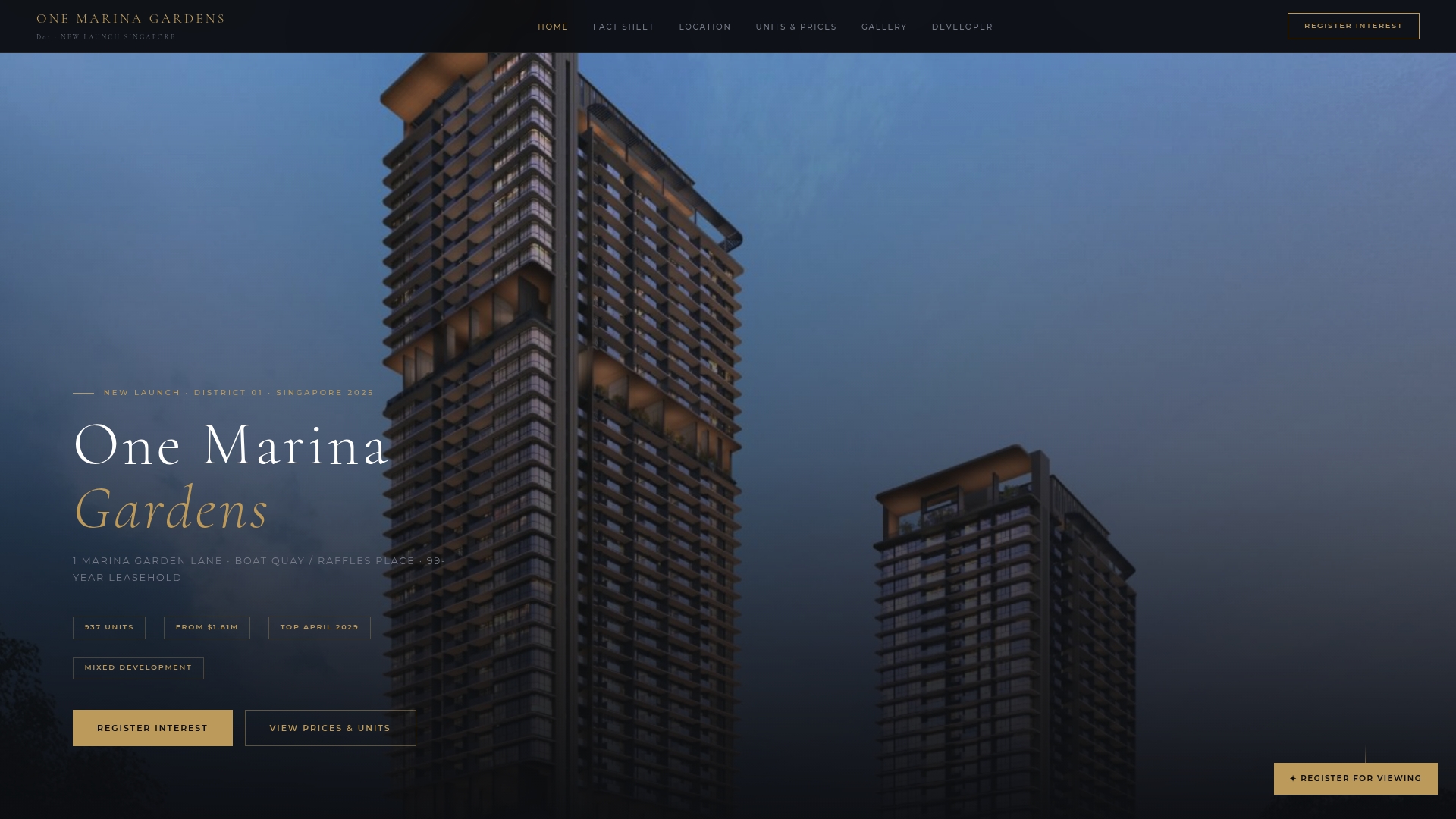
The sky terraces at Onemarinagardens are not decorative features. They are designed as functional green spaces that support the wellbeing, cooling, and community benefits documented in current research. Residents also benefit from a 50-metre lap pool, a dedicated childcare centre, and direct connectivity to the CBD via the Marina South MRT, just 160 meters away. Review the full project specifications or visit Onemarinagardens to learn more about available units starting from $1.81M.
FAQ
What is a rooftop garden, and how does it differ from a green roof?
A rooftop garden is a vegetated space on a building's roof designed for ecological, social, or aesthetic use. Green roof is the industry term for the same concept, though green roofs often refer specifically to the engineered system of waterproofing, drainage, growing media, and plants.
How much can a rooftop garden reduce building temperatures?
European schools implementing green roofs recorded indoor temperature reductions of 4–6 °C compared to conventional rooftops. The LIFE-myBUILDINGisGREEN project also documented cooling electricity savings of more than 11%.
Do rooftop gardens increase property values?
Research documented in 2026 confirms that rooftop gardens increase property values for both residential and commercial assets. Buildings with accessible rooftop green spaces consistently command higher rents and sale prices in urban markets.
What maintenance do rooftop gardens require?
Rooftop gardens require sustained horticultural maintenance including irrigation management, plant replacement, and regular drainage inspection. They are not a set-and-forget installation, and long-term performance depends on realistic maintenance budgeting from the planning stage.
Are rooftop gardens accessible to the public?
Most rooftop gardens are privately owned and inaccessible to the general public. Sustainability research from 2026 identifies this as a key challenge and recommends government incentives such as tax reductions to encourage developers to create publicly accessible sky garden networks.