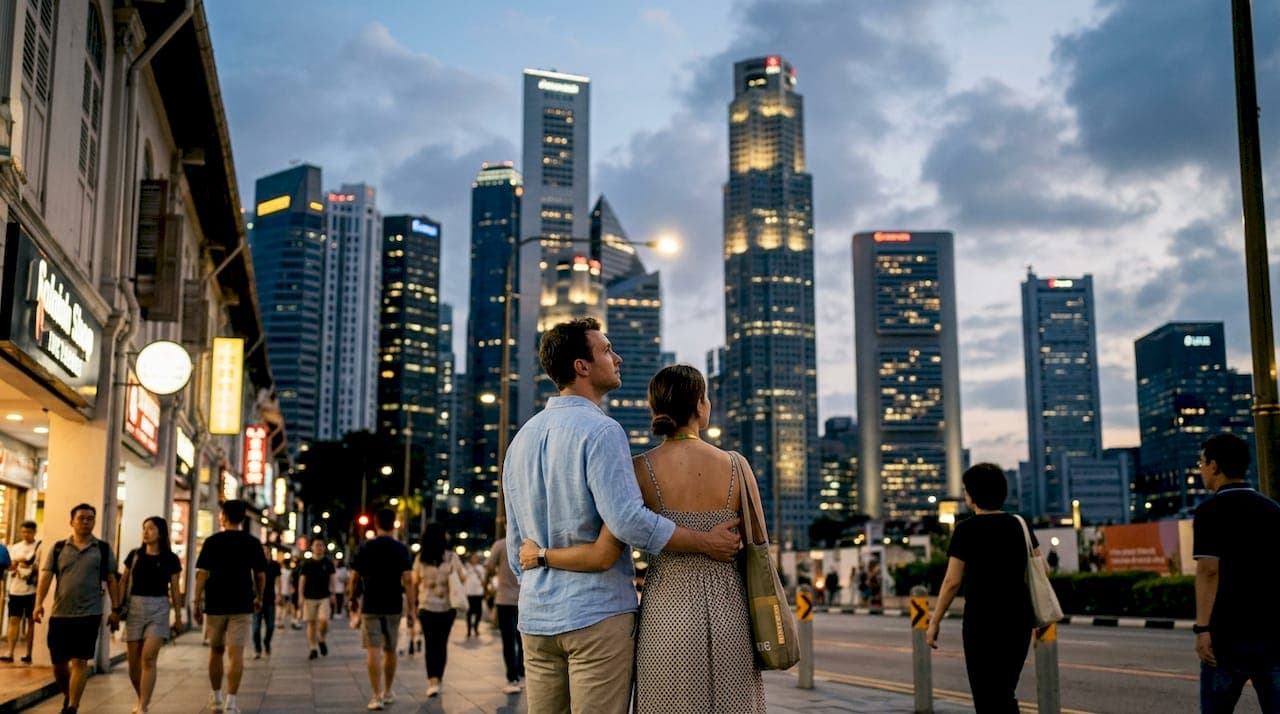
What are the best Singapore condos for expats?
The top condominiums for expats in Singapore cluster in three districts: District 01 (CBD/Marina Bay), Districts 09/10 (Orchard Road), and Districts 15/16 (East Coast). Within those zones, five developments consistently appear at the top of expat housing shortlists: One Marina Gardens, The Sail @ Marina Bay, Midtown Modern, Riviere, and Piccadilly Grand. Each suits a different expat profile, which is why the "best" answer depends on whether you're a CBD professional, a family needing school access, or someone who wants coastal space without sacrificing connectivity.
Why condos specifically? Unlike HDB flats, condominiums carry no ownership or tenancy restrictions for foreigners, and they come with the amenity stack that makes landing in a new country considerably less disorienting: pools, gyms, 24-hour security, and communal spaces where you'll meet neighbors within the first week. That social infrastructure matters more than most expats expect before they arrive.
Key reasons expats prefer condominiums over other housing types:
- No restrictions on foreign ownership or tenancy, unlike HDB flats
- Amenities (pools, gyms, BBQ areas, concierge) provide built-in community infrastructure
- 24-hour security gives newcomers immediate peace of mind
- Mixed-use developments often include retail and dining on the ground floor
- Proximity to MRT stations is standard in most expat-favored developments
- Furnished or partially furnished options reduce relocation friction
| Condo | District | Price range (2-bed rental/mo) | MRT access | School proximity | Expat profile |
|---|---|---|---|---|---|
| One Marina Gardens | D01 | S$5,000–S$8,000 | Marina South (160m) | Good (TEL) | Professionals, investors |
| The Sail @ Marina Bay | D01 | S$5,000–S$8,000 | Raffles Place/Marina Bay | Moderate | CBD professionals |
| Midtown Modern | D08 | S$5,000–S$8,000 | Bugis (direct) | Moderate | Young professionals |
| Riviere | D03 | S$5,000–S$8,000 | Havelock (TEL) | Good | Families, couples |
| Piccadilly Grand | D08 | S$4,000–S$8,000 | Farrer Park (direct) | Good | Families, value-seekers |
Which districts do expats actually live in, and what's there?
Expat housing in Singapore isn't spread evenly across the island. A handful of districts absorb the majority of international residents, each with a distinct character and a different answer to the question of what daily life actually looks like.
District 01: CBD and Marina Bay
The CBD corridor is the natural landing zone for finance, law, and consulting professionals who want to walk or take a single MRT stop to the office. The Sail @ Marina Bay sits at 245 metres and 70 storeys, making it Singapore's tallest residential building, with panoramic views of Marina Bay and direct access to the Raffles Place and Marina Bay MRT stations. Its 1,111 units range from one-bedroom apartments to penthouses, and the amenity list includes an infinity-edge pool, aqua gym, tennis courts, and sky terraces on the 34th and 44th floors.

One Marina Gardens, developed by Kingsford Marina Development, occupies a newer position in the Marina South precinct, just 160 meters from Marina South MRT. Its 937 units span one to four bedrooms, and the development includes multiple sky terraces, a 50-meter lap pool, a dedicated childcare center, retail shops, and a restaurant. For expats who want CBD access without being directly inside the older Tanjong Pagar corridor, Marina South offers a quieter residential feel with the same connectivity.
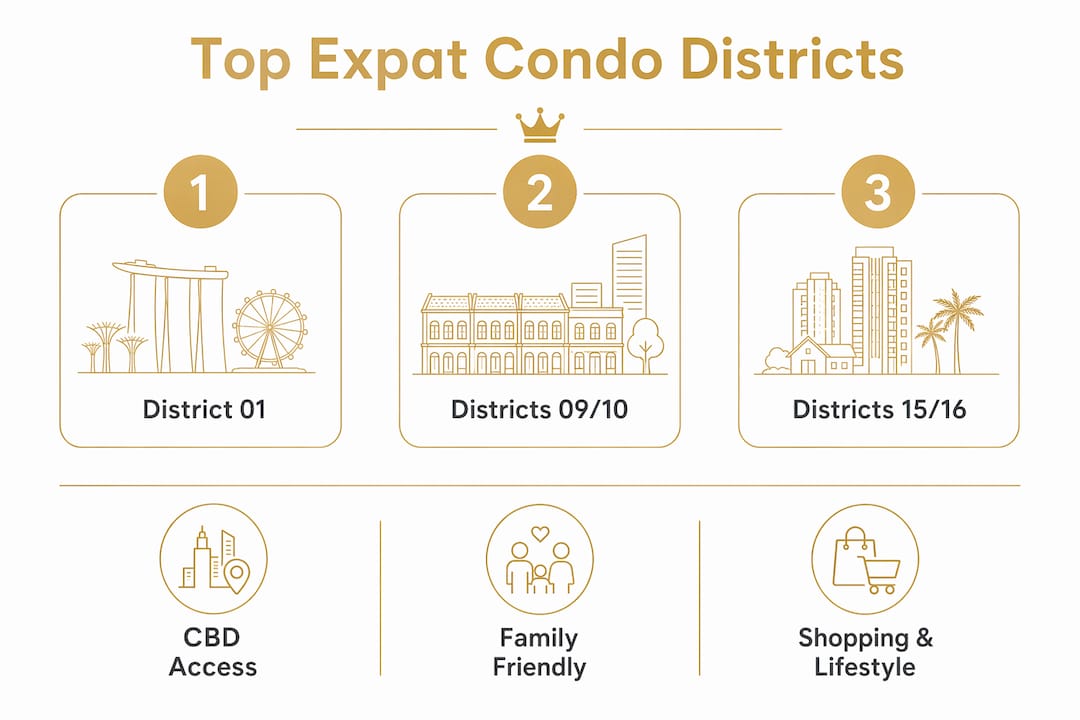
Districts 09/10: Orchard Road and Tanglin
Orchard Road is Singapore's main shopping spine, and the condos along it and Tanglin Road attract expats who want to be surrounded by international restaurants, Western supermarkets, and the kind of neighborhood infrastructure that makes the first six months abroad feel manageable. Tanglin sits just west of Orchard and is one of Singapore's most established residential areas, home to embassies, low-rise condominiums set among mature trees, and the Singapore Botanic Gardens, a UNESCO World Heritage Site, effectively serving as the neighborhood park. Indicative rents for a two-bedroom condo in Tanglin run S$6,000–S$15,000+ per month, reflecting both the prestige and the space.
Piccadilly Grand, in District 08 just north of the Orchard corridor, sits directly above Farrer Park MRT and offers a more accessible price point while keeping central Singapore within a short ride. Its mixed-use format, with retail on the lower floors, suits expats who want walkable daily conveniences.
Districts 15/16: East Coast
The East Coast is where expat families with children tend to land. Condos here are generally larger than their central equivalents, and East Coast Park, a long coastal parkway with cycling paths, beaches, and seafood restaurants, runs along the waterfront. The trade-off is commute time: many expats accept a 20–30 minute journey from East Coast to the CBD in exchange for the space and greenery. Rents for a two-bedroom condo in this corridor run S$4,000–S$8,000 per month, making it one of the more affordable options for families who need room.
Riviere, in District 03 along the Singapore River, bridges the gap between the East Coast family profile and the CBD professional. Its location near Havelock MRT on the Thomson-East Coast Line gives residents direct access to both the CBD and the East Coast corridor, and the development's riverside setting appeals to expats who want character without sacrificing connectivity.
| District | Best for | Indicative rent (2-bed) | MRT access | School proximity |
|---|---|---|---|---|
| D01 (CBD/Marina Bay) | CBD professionals, investors | S$5,000–S$8,000 | Excellent | Good |
| D09/10 (Orchard/Tanglin) | High-budget families, embassy staff | S$5,000–S$8,000 | Good | Excellent |
| D15/16 (East Coast) | Families, coastal lifestyle | S$4,000–S$8,000 | Good (TEL) | Good |
| D03 (River Valley/Riviere) | Couples, families, creatives | S$5,000–S$8,000 | Good (TEL) | Good |
| D08 (Bugis/Farrer Park) | Young professionals, value-seekers | S$4,000–S$8,000 | Excellent | Moderate |
How do you choose the right condo for expat life in Singapore?
The single biggest mistake expats make is optimizing for the wrong variable. Most people start with price or square footage. The better starting point is commute time and school zone, because those two factors shape daily life more than any amenity.
Practical steps for narrowing your condo shortlist:
- Map your office location first, then draw a 20-minute MRT radius around it
- Identify which international schools your children will attend and check their exact campus addresses, not just the general area
- Decide whether you want furnished or unfurnished, since furnishing costs vary and can meaningfully affect your first-year budget
- Set a realistic monthly budget that includes maintenance fees, utilities, and parking, not just rent
- Check the age of the development, since older buildings sometimes have pools and gyms that look good in photos but are poorly maintained in practice
- Shortlist three to five developments and visit each in person before signing anything
The city-center versus suburban trade-off is real. CBD condos put you within walking distance of work and the city's best restaurants, but units tend to be smaller and pricier per square meter. East Coast and Bukit Timah condos offer larger floor plates, gardens, and nature access at comparable or lower rents, but you're adding commute time. Suburban condos in areas like East Coast and Bukit Timah often have larger units and better nature access than city-center equivalents. Neither option is objectively better. It depends on whether you're the type who wants to walk to dinner or the type who wants a garden.
Neighborhood maturity and access to international schools, grocery stores carrying imported goods, and parks define long-term satisfaction in a way that a condo's pool deck simply cannot. Expats who move for the amenities and ignore the neighborhood often find themselves relocating within 18 months.
Pro Tip: Visit your shortlisted condos on a weekday evening, not a weekend morning. You'll see whether the pool is actually used, whether the gym equipment is functional, and whether the lobby feels like a place people want to spend time. Marketing photos are shot on the best possible day with the best possible light. Reality is what you see at 7 PM on a Tuesday.
The rental market for desirable expat condos moves fast. Listings in popular developments lease within days, and landlords expect a letter of intent and a deposit to hold a unit. If you're relocating from abroad, it's worth arranging a dedicated viewing trip before your move date rather than trying to decide remotely from photos.
Can foreigners buy condos in Singapore, and how does the process work?
Foreigners can buy private condominiums in Singapore without restriction. The rules that limit foreign ownership apply to HDB flats and landed residential property, not to private condos. That distinction is one of the most important things to understand before you start looking.
Step-by-step buying process for expats:
- Confirm eligibility. Any foreigner, including non-permanent residents, can purchase a private condominium. No special approval is required for condo purchases.
- Engage a licensed real estate agent. Singapore's Council for Estate Agencies (CEA) licenses all agents. Buyer's agents are typically paid by the seller, so representation costs you nothing.
- Secure financing. Singapore banks offer mortgage loans to foreigners, though the Loan-to-Value (LTV) ratio and Total Debt Servicing Ratio (TDSR) rules apply. Most lenders require a minimum 25% down payment for a first property.
- Submit an Option to Purchase (OTP). The OTP locks in the purchase price and gives you a set period (typically 14–21 days) to exercise the option.
- Pay stamp duties. Buyer's Stamp Duty (BSD) applies to all buyers on a tiered basis. Additional Buyer's Stamp Duty (ABSD) applies to foreigners at a rate of 60% of the purchase price as of current regulations. This is the single largest cost consideration for expat buyers and should be factored into any investment calculation from the outset. For detailed guidance on ABSD as it applies to foreign buyers, the ABSD guide for foreigners covers current rates and exemptions.
- Engage a conveyancing lawyer. The lawyer handles title searches, contract review, and the transfer of funds. Both buyer and seller appoint separate lawyers.
- Complete the purchase. Completion typically occurs 8–12 weeks after the OTP is exercised for resale properties, or upon the Temporary Occupation Permit (TOP) for new launches.
Renting versus buying: Most expats rent first, particularly if their assignment length is uncertain. Renting gives you time to learn the neighborhoods before committing to a purchase, and Singapore's rental market, while competitive, offers enough inventory in the expat-favored districts to find something suitable within a few weeks of active searching. Buying makes more sense for expats on long-term or permanent assignments, especially given the ABSD cost, which requires a longer hold period to recover through capital appreciation.
What do condos actually cost, and what do you get for the money?
Rental pricing in Singapore's expat-favored districts follows a clear pattern: the closer to the CBD and the newer the building, the higher the rent per square foot. In the CBD, expect to pay between S$5 and S$8 per square foot per month, which puts a 1,000-square-foot apartment in the S$5,000–S$8,000 per month range. New luxury developments in prime locations command more.
For context, a two-bedroom condo in Tanglin or Orchard Road typically runs S$5,000–S$8,000 per month. The East Coast corridor offers the same two-bedroom format for S$4,000–S$8,000, and areas like Tiong Bahru or Tanjong Pagar sit in the S$3,500–S$6,500 range for one to two bedrooms.
Beyond rent, the ongoing costs that catch expats off guard include:
- Monthly maintenance fees: Typically S$300–S$800 per month depending on development size and facilities. Larger developments with more amenities tend to have higher fees, though the cost per unit can be lower when spread across hundreds of residents.
- Utilities: Electricity and water in Singapore are metered and billed separately. A two-bedroom unit with air conditioning running regularly can generate monthly utility bills of S$200–S$400.
- Furnishing: Unfurnished units require a meaningful upfront investment. Fully furnished units command a rental premium but eliminate that cost.
- Parking: Not all condos include a parking space in the rent. In CBD developments, parking can add S$150–S$300 per month.
| Amenity category | Typical inclusions in expat-favored condos |
|---|---|
| Water facilities | Lap pool, leisure pool, children's pool, jacuzzi |
| Fitness | Gymnasium, tennis courts, yoga deck |
| Family | Childcare center, playground, function rooms |
| Lifestyle | BBQ pavilions, sky terraces, clubhouse |
| Security | 24-hour guard post, CCTV, access card system |
| Convenience | Retail shops, restaurant, concierge |
The amenity gap between developments is wider than most expats expect. A condo with a 50-meter lap pool and a dedicated childcare center is a fundamentally different living experience from one with a small leisure pool and a basic gym. The difference shows up in maintenance fees, but it also shows up in how much you actually use the building versus leaving it every evening.
Why Onemarinagardens stands out as a premier expat condo
Onemarinagardens occupies a position that few Singapore condominiums can match: a District 01 address with direct MRT access, a full luxury amenity stack, and a scale that supports genuine community life without feeling like a hotel.
The development's 937 units span one to four bedrooms, giving it enough variety to suit a solo professional, a couple, and a family with children within the same building. That range matters for expat communities, where social networks often form between neighbors with different household configurations.
What sets Onemarinagardens apart from other District 01 options:
- Located just 160 meters from Marina South MRT, the closest major condo to the station in the precinct
- Multiple sky terraces offering Marina Bay and city skyline views
- 50-meter lap pool, one of the longest in a Singapore residential development
- Dedicated childcare center on-site, rare in CBD-adjacent condos
- Mixed-use ground floor with retail shops and a restaurant
- Unit range from one to four bedrooms, accommodating singles through families
- Developed by Kingsford Marina Development, with a track record in Singapore's residential market
The Marina South MRT station connects directly to the Thomson-East Coast Line, giving residents one-seat access to Orchard Road, the CBD, and the East Coast corridor. For expat professionals who work in the CBD and whose children attend international schools along the TEL, that single line covers most of the daily geography of Singapore life.
Pro Tip: When evaluating new launch condos like Onemarinagardens, request the full facility layout alongside the unit floor plans. The ratio of amenity space to total units tells you more about the quality of daily life than any individual feature. A 50-meter pool shared among 937 units is a very different experience from the same pool in a 200-unit development.
For expats considering the investment angle, the Marina South precinct is one of the Urban Redevelopment Authority's designated growth nodes. New commercial, retail, and public space development in the area is ongoing, which historically correlates with rental yield support and capital appreciation in surrounding residential developments. The investment case for Marina South is grounded in this long-term planning context rather than short-term market speculation.
Pricing for Onemarinagardens starts from S$1.81M for one-bedroom units. For expats evaluating the rent-versus-buy decision, the development's rental yield potential in a prime District 01 location makes ownership worth modeling against the ABSD cost over a five-to-ten-year horizon. The full price list and available units are published on the official site.
Onemarinagardens vs. typical expat condo criteria:
| Criteria | Onemarinagardens | Typical expat condo benchmark |
|---|---|---|
| MRT proximity | 160m to Marina South MRT | 300–800m average |
| Pool length | 50-meter lap pool | 25–30 meters typical |
| Unit range | 1–4 bedrooms (937 units) | Usually 1–3 bedrooms |
| Childcare center | Yes, on-site | Rare in CBD condos |
| Sky terraces | Multiple | One or none |
| Mixed-use retail | Yes (shops + restaurant) | Occasional |
| District | D01 (prime) | D01–D15 varies |
For expats who want to see the development before committing, showflat appointments are available through the contact page. Given how quickly desirable units in new launches move, booking early is the practical approach.
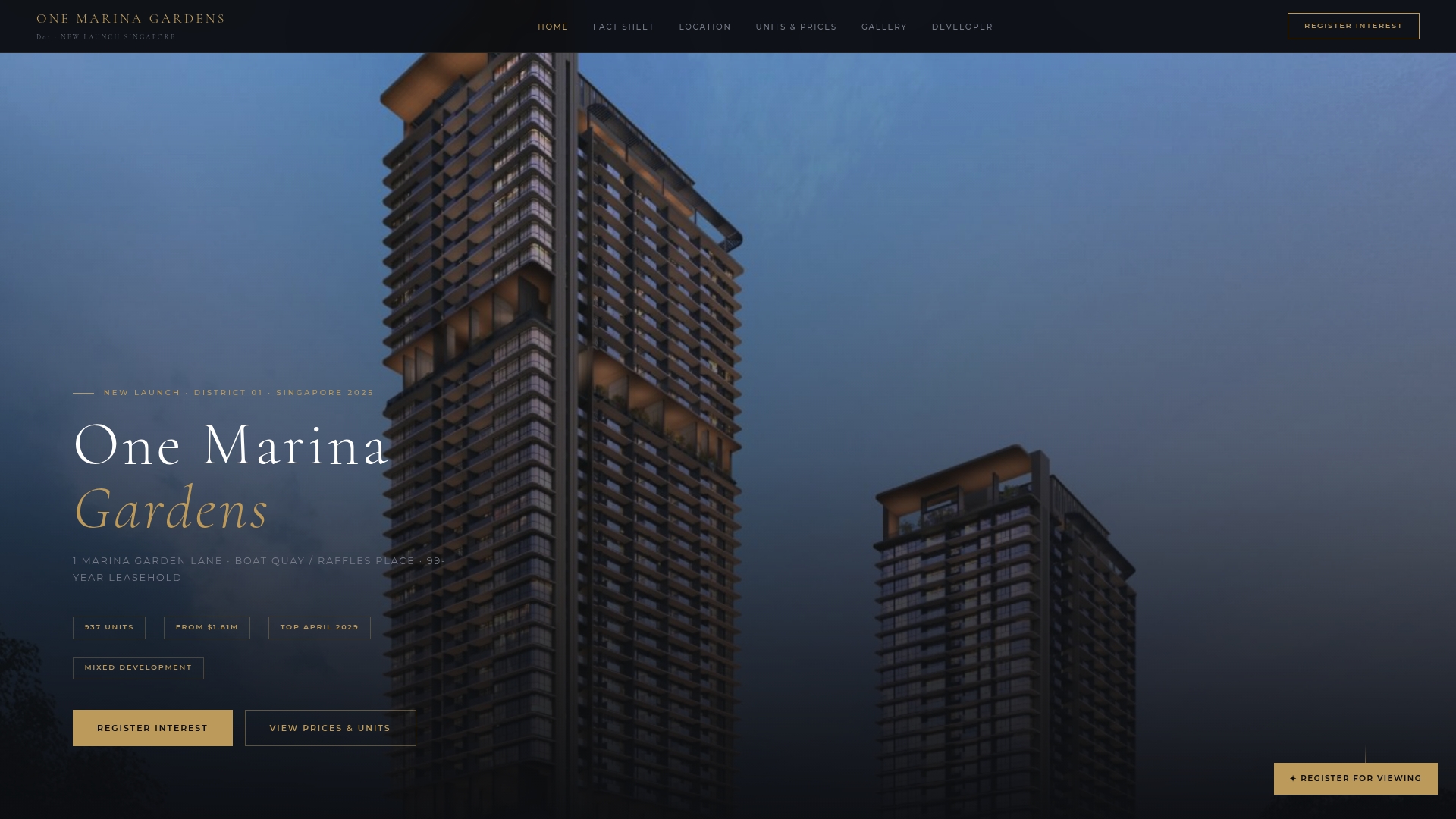
Ready to explore Onemarinagardens? Visit the official development page to view floor plans, pricing, and available units, or book a showflat appointment to see the facilities in person.
Key Takeaways
The best Singapore condos for expats combine prime district location, direct MRT access, and a full amenity stack that supports community life from day one of arrival.
| Point | Details |
|---|---|
| Top expat districts | District 01 (CBD), Districts 09/10 (Orchard), and Districts 15/16 (East Coast) cover most expat housing demand. |
| CBD rental benchmark | Expect S$5,000–S$8,000 per month for a 1,000-square-foot condo in the CBD corridor. |
| Foreign ownership | Foreigners can buy private condos freely; ABSD at 60% applies and must be factored into any purchase budget. |
| Onemarinagardens advantage | 937 units, 50-meter lap pool, on-site childcare, and 160 meters to Marina South MRT in prime District 01. |
| Neighborhood beats amenities | Long-term expat satisfaction depends more on school access and community maturity than on any individual condo facility. |