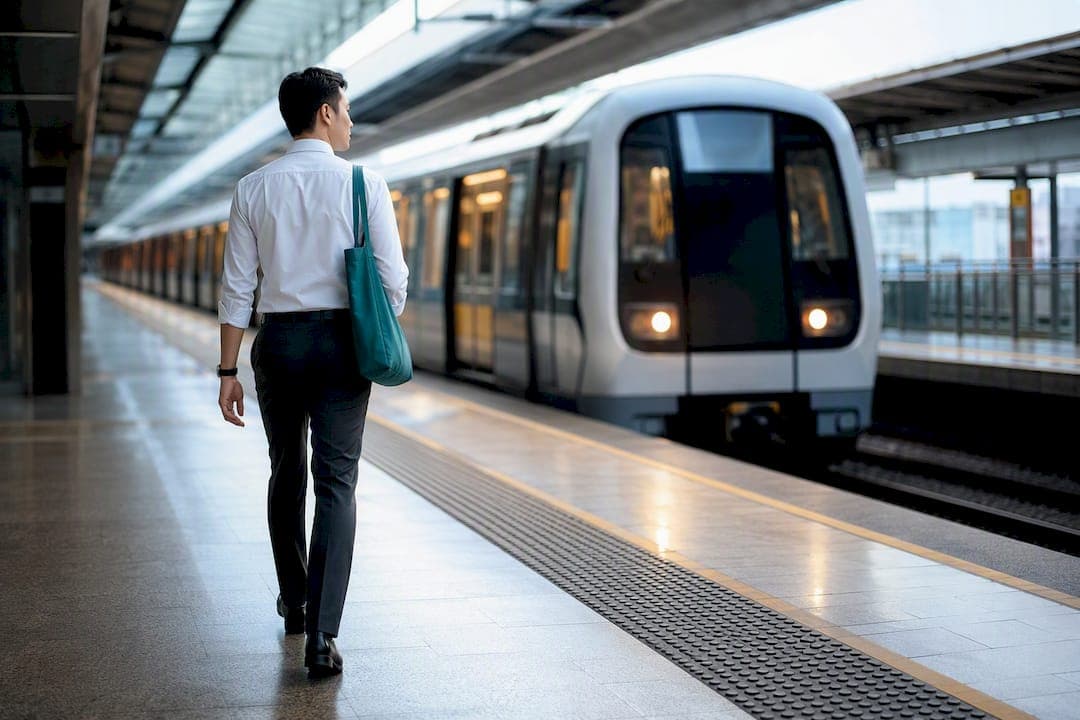
Median commute times to Singapore's CBD range from a short time for Tanglin residents to a much longer time for those in Sembawang, according to the SingStat General Household Survey 2025 data reported by The Straits Times. Most workers fall somewhere in a 30 to 45 minute band, with anything under 20 minutes counting as genuinely short. If your daily door-to-door time sits above 45 minutes, you're on the long end of the national curve, and it's worth checking whether a different route, station, or neighborhood would pull that number down.
TL;DR:
- Residents in districts with direct, one-seat MRT lines to the CBD, such as Districts 1, 2, and 9, generally have commutes under 20 minutes.
- Longer median commutes are reported in towns farther from the core rail network, with some exceeding 45 minutes, especially if transfers are required.
- Transfers can add 10 or more minutes per interchange, making direct rides preferable for shorter daily commute times.
- Public transport typically provides consistent trips of 30 to 45 minutes, whereas driving can be faster off-peak but is highly variable during peak hours.
- Verifying actual route times during peak hours is essential before choosing a home, as factors like interchanges and peak delays can significantly impact travel duration.
Table of Contents
- Cbd Commute Times By Town: What the 2025 Data Shows
- How a Commute Breaks Down: The Real Cost of Transfers
- Districts That Consistently Deliver Short Cbd Commutes
- Driving, Rail, or Cycling: Comparing Modes Into the Cbd
- Setting Your Own Commute Tolerance
- A Local Example: Marina South Mrt and Cbd Access
- What the Commute Data Actually Means for Buyers
- See What a Short Cbd Commute Looks Like at One Marina Gardens
- Where to Verify These Commute Numbers Yourself
- Sources
- FAQ
Cbd Commute Times By Town: What the 2025 Data Shows
The numbers tell a clear story about geography and rail access. Sembawang topped the list with the longest median commute, while several other towns, including Bukit Panjang and Punggol, recorded relatively longer medians; Tanglin, by contrast, had the shortest median commute, according to the same SingStat figures.
A "median travelling time to work" measures the midpoint across everyone in that town, not any single person's actual trip. Two residents of the same estate can have wildly different commutes depending on which block they live in, which exit they use, and whether they work near a station or a 15-minute walk from one. Town-level figures are a useful starting point, not a substitute for checking your own route.
Coverage of the survey also flagged a shift in how people get to work:
- Combined rail and bus journeys grew as a share of total trips in 2025, according to commuter survey data.
- Typical public transport commutes across Singapore commonly fall in the 30 to 45 minute range.
- Towns farther from the core rail network consistently report longer medians than those with direct CBD-bound lines.
That last point matters more than raw distance on a map, which is the whole reason interchange count deserves its own explanation.
How a Commute Breaks Down: The Real Cost of Transfers
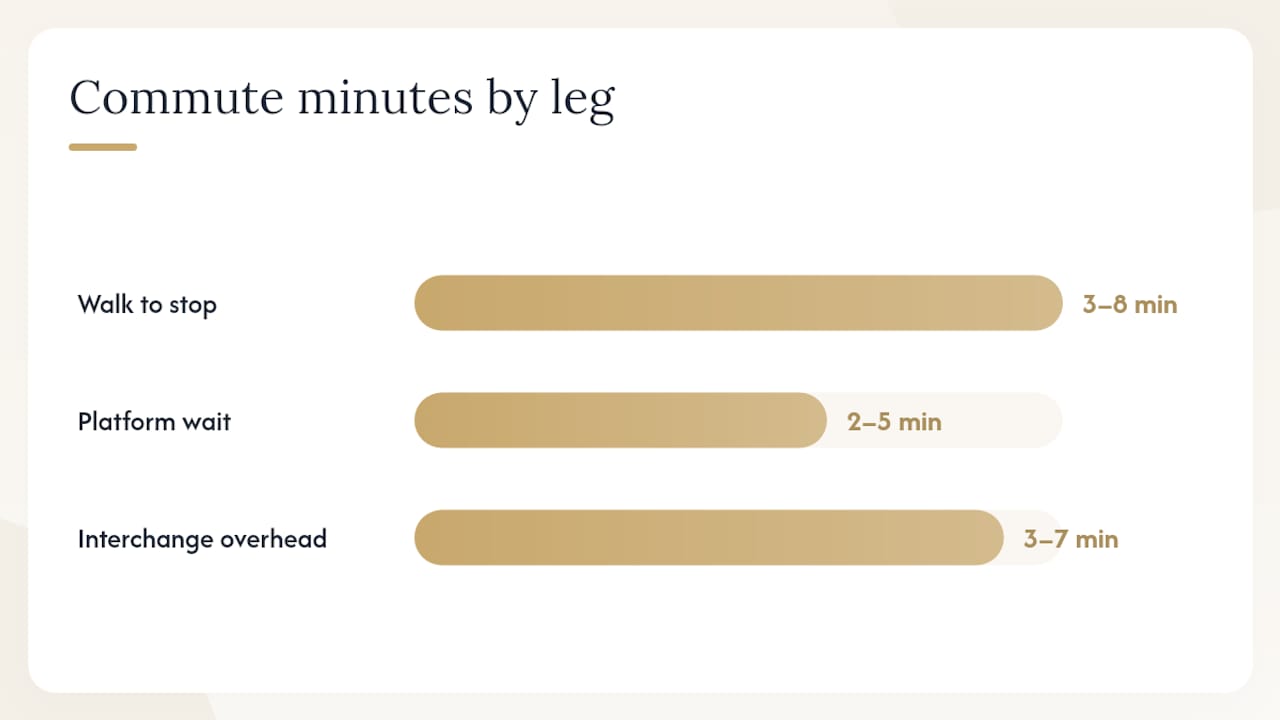
A door-to-door trip is really five separate pieces stacked together: walking to the stop, waiting on the platform, riding the train or bus, moving through an interchange, and walking from the final stop to your desk. Each one eats a few minutes, and they add up faster than most people expect.
- Walk to station or bus stop: usually 3 to 8 minutes depending on your block.
- Platform wait: 2 to 5 minutes at peak, longer off-peak on some lines.
- In-vehicle time: the actual ride, which varies by line and number of stations.
- Interchange overhead: 3 to 7 minutes per transfer, covering walking between platforms and a second wait.
- Final walk to the office: often the most underestimated leg of the whole trip.
A single interchange can quietly add 10 minutes to a journey once you count the walk and the second wait. That's why a direct, one-seat ride on a line like the North East Line or the Circle Line into the CBD frequently beats a shorter-looking trip that requires switching trains twice. Districts with one-seat MRT access consistently deliver faster door-to-door times than locations that look closer on a map but demand a transfer.
Statistic Callout: Districts 1, 2, 3, 7, 8, 9, and 12 rank among the fastest for CBD access precisely because they minimize or eliminate interchanges to Raffles Place, Tanjong Pagar, and Marina Bay.
Districts That Consistently Deliver Short Cbd Commutes
If a short commute is the priority, some districts do the heavy lifting for you before you even factor in which block you buy. The pattern is consistent: fewer interchanges and closer walking distance to a station beat straight-line proximity almost every time.
- District 1 (Marina Bay, Raffles Place): often walking distance to CBD offices, with some residents skipping public transport entirely.
- District 2 (Tanjong Pagar, Anson): one or two MRT stops from the core financial district on the East West Line or Thomson East Coast Line.
- District 3 (Tiong Bahru, Queenstown): direct East West Line access with a short ride into the city.
- District 7 (Bugis, Rochor): strong Downtown Line and East West Line coverage into the CBD corridor.
- District 9 (Orchard, River Valley): multiple line options feeding straight into the business district.
- District 12 (Toa Payoh, Balestier): North South Line gives a direct run down to Raffles Place without switching.
The trade-off is price. Central districts carry a premium precisely because they cut daily travel time, and that premium tends to hold up better than in outlying towns where rail access is thinner.
Pro Tip: Before shortlisting a unit, count the number of MRT stops to Raffles Place and check whether the route needs a transfer. Two stops on one line almost always beats three stops across two lines.
Driving, Rail, or Cycling: Comparing Modes Into the Cbd
Your choice of mode changes both your average time and how much that time varies day to day.
- Driving: Off-peak trips into the CBD can be quick, but expressways feeding downtown, including the CTE and ECP, back up hard during peak hours, and parking adds its own delay once you arrive.
- Public transport: A one-seat MRT ride is highly predictable, often varying by only a minute or two day to day. Bus-to-train combinations are cheaper in some cases but add the wait-and-walk overhead of an interchange.
- Active and first-last mile: Cycling or e-scooter trips paired with a short MRT ride can shave minutes off a commute for residents who live just outside comfortable walking distance of a station, turning a 12-minute walk into a 4-minute ride.
Rail tends to win on consistency, driving wins on flexibility when traffic cooperates, and active mobility is the quiet fix for the "too far to walk, too close to bother with a bus" gap.
Setting Your Own Commute Tolerance
Most people never actually define what "acceptable" means for them, which makes every housing decision harder than it needs to be. Start by picking a number: 20 minutes if you want a short commute, 30 to 45 if you're willing to trade time for space or price, and treat anything past 45 as a conscious cost you're choosing to accept.
- Pick your ceiling: Decide the maximum door-to-door time you'll tolerate before it affects quality of life.
- Run a real trial: Travel the actual route during your normal morning window, not a quiet Sunday afternoon.
- Time each leg separately: Walk, wait, ride, transfer, walk again, and note where the minutes actually go.
- Check the backup route: Confirm there's a second way to the CBD if your main line has a delay.
- Adjust before you commit: If the trial run beats your ceiling, you have your answer; if it doesn't, look at a different block, station, or building entrance.
Pro Tip: A 15 minute shift in your start time can cut platform waits and crowding by a noticeable margin, especially on lines that peak sharply between 8:00 and 8:45 AM.
A Local Example: Marina South Mrt and Cbd Access
One Marina Gardens is located in District 1, close to Marina South MRT, placing it within the shortest-commute category that district data suggests. Based on the client's own Marina South MRT travel time guide, residents can reach Raffles Place and Marina Bay in single-digit minutes, and the Marina Bay to Orchard route runs 10 to 13 minutes by MRT. These are strong starting estimates. Still, run your own trial during peak hours before treating any published figure as your personal commute.
What the Commute Data Actually Means for Buyers
Short commutes reward people who value time over floor space, and that's a real trade-off, not a universal upgrade. Someone commuting 45 minutes from Sembawang may be getting a bigger unit or a lower price per square foot for that time, and that's a rational choice, not a mistake.
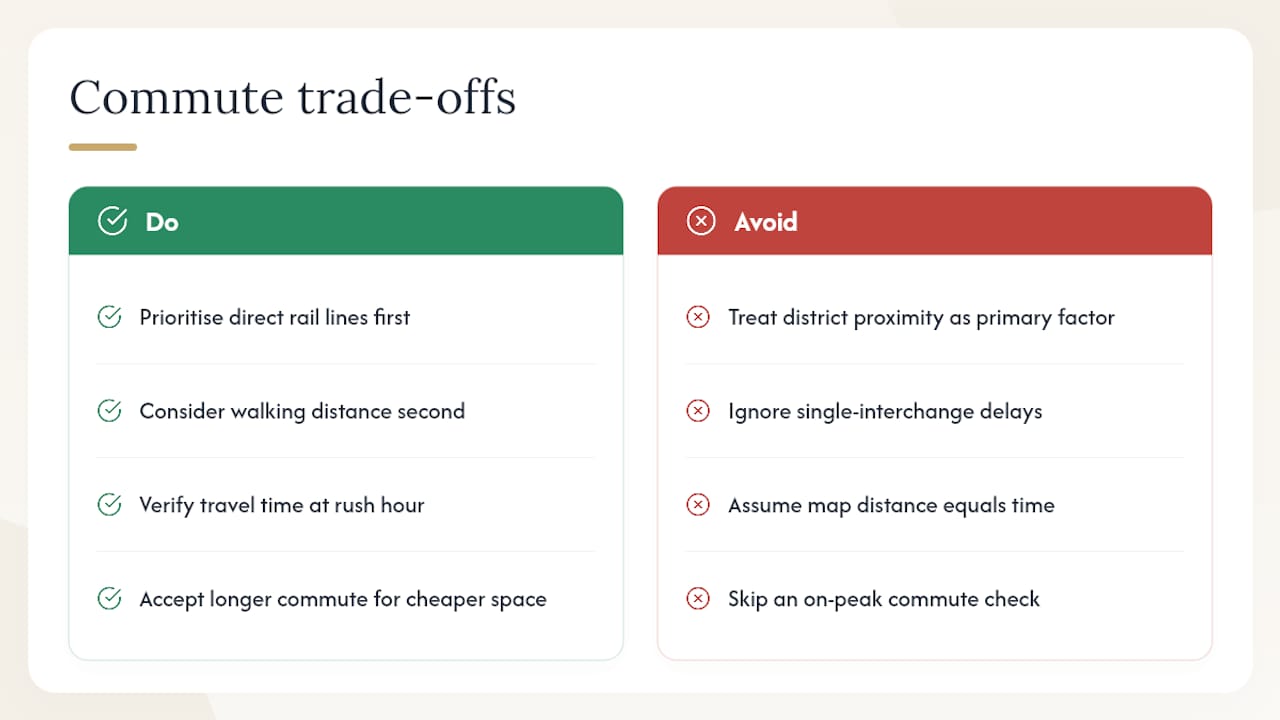
What I'd push back on is treating district proximity as the main variable. One-seat MRT access matters more than how close a unit looks on a map, since a single interchange can add ten minutes you didn't budget for. If short commute time is genuinely a priority, weight your search toward direct rail lines first and walking distance second. Then verify it yourself, during the actual rush hour you'll be living with.
— Velisa
See What a Short Cbd Commute Looks Like at One Marina Gardens
For buyers who've just done the math on interchanges and peak-hour delays, the appeal of skipping the commute question almost entirely is obvious. One Marina Gardens sits 160 meters from Marina South MRT, putting Raffles Place and Marina Bay within a short, direct ride, and Orchard Road within roughly 10 to 13 minutes, without needing a transfer.
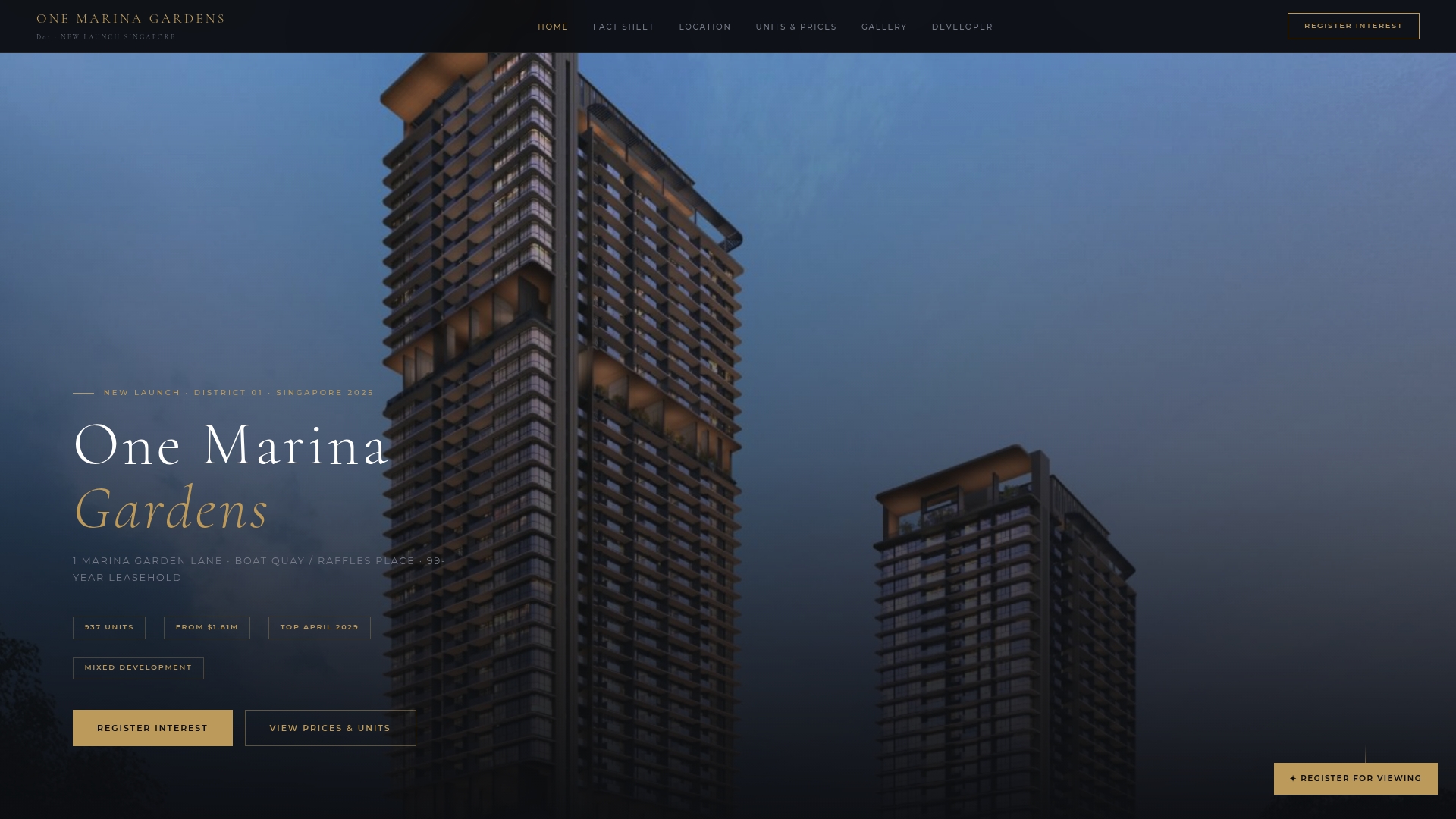
You can browse development photos in the gallery, or check unit layouts and current pricing on the price list. If you're weighing renovation costs as part of the total move, this condo painting cost guide is a useful reference for budgeting after purchase. When you're ready to see the location and commute times firsthand, request the fact sheet or book a showflat visit, then time your own trial commute before you decide.
Where to Verify These Commute Numbers Yourself
- SingStat General Household Survey: the official source behind the town-level medians cited throughout this guide.
- The Straits Times CBD commute coverage: news analysis of the 2025 survey results.
- ShiokNest district commute tool: heatmap-style estimates for specific postal codes.
- LTA rail network maps: confirm which lines and interchanges actually serve your target station.
Sources
- Residents in towns like Sembawang, Bukit Panjang, Punggol have longest work commutes — The Straits Times
- Districts with short CBD commutes — ShiokNest
FAQ
Will Your Commute Be 20 Minutes or Less?
Only if you live in a district with direct, one-seat MRT access to the CBD, such as parts of District 1, 2, or 9; most Singapore commuters fall in the 30 to 45 minute range instead.
Is MRT Travel Free Before 7:30 AM?
Fare discounts for early travel have applied in past LTA schemes, but current fare rules should be checked directly with LTA or SBS Transit before you plan around it, since promotional windows change.
Is 45 Minutes Considered a Long Commute?
Forty five minutes sits at the upper edge of typical, since SingStat data shows several towns at that median; anything beyond it puts you above most of the country.
What Is a Reasonable Commute Time?
Most Singapore commuters treat 30 to 45 minutes as reasonable for public transport, while anything under 20 minutes counts as short and is achievable in districts like District 1 with direct MRT access, such as near Marina South MRT.