
Choosing a condo for retirement is defined as selecting a property that matches your mobility needs, financial situation, and lifestyle preferences for independent living. 71% of baby boomers plan to downsize to smaller homes to reduce maintenance and improve affordability. That number tells you the demand for retirement condominiums is real and growing. This guide walks you through the exact criteria that separate a smart purchase from a costly mistake, covering accessibility, HOA financial health, and lifestyle fit before you sign anything.
How to choose a condo for retirement: the key criteria
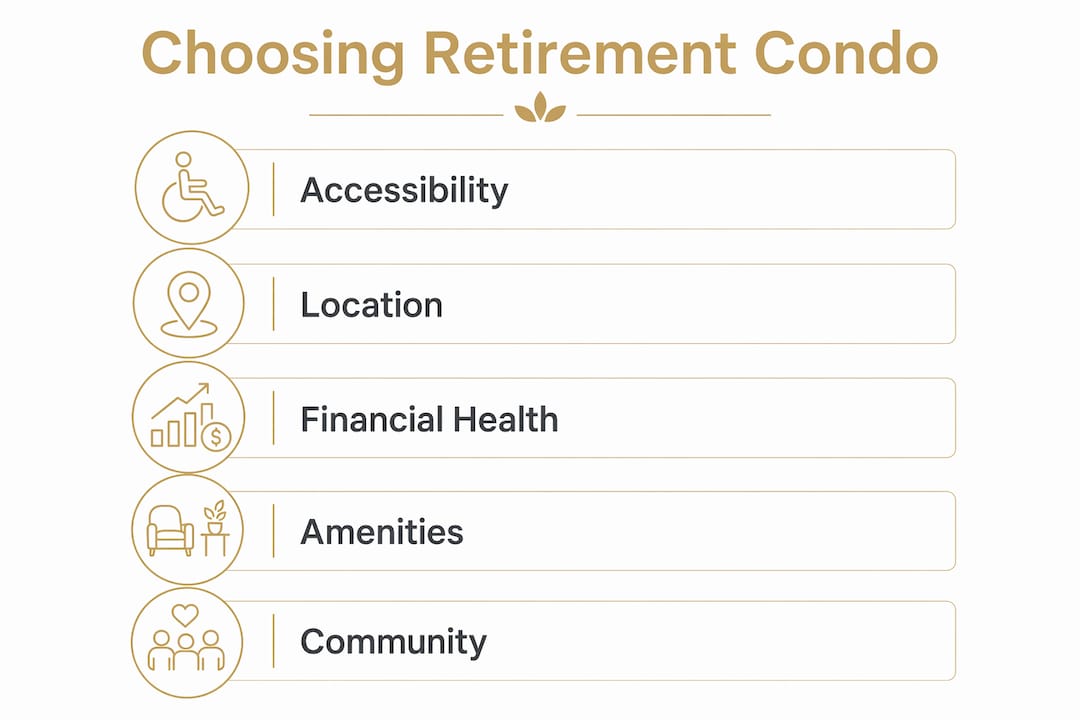
The best retirement condominiums score well on five factors: accessibility, location, financial stability, amenities, and community atmosphere. Miss any one of them and you risk buying a unit that works today but fails you in five years.
Accessibility standards for aging in place
Senior-friendly condos must have barrier-free entrances, wide hallways, and parking spots near elevators. These are not optional extras. They are the baseline for aging in place comfortably. A unit that meets building code on paper may still feel cramped in daily use, so physical testing matters more than the spec sheet.
Location and proximity to services
Condos near city amenities for retirees outperform suburban options on one key measure: daily independence. Proximity to healthcare, public transit, grocery stores, and social venues directly affects how long you can live without relying on others for transportation. A condo within walking distance of an MRT station or bus hub gives you flexibility that a car-dependent suburb cannot.

Financial health of the building
HOA fees, reserve funds, and special assessments determine your true monthly cost. Checking the financial health of the HOA, including reserve fund levels and the history of fee increases, is critical for predictable costs on a fixed income. A building with a thin reserve fund is a financial risk, not just an inconvenience.
Amenities versus cost trade-offs
Not every amenity adds value to your life. Luxury amenities often raise fees significantly and may not be cost-effective compared to community center memberships with senior discounts. Ask yourself which facilities you will actually use weekly before letting a rooftop pool or private cinema sway your decision.
Pro Tip: Build a personal "must-have versus nice-to-have" list before touring any unit. It stops you from paying for amenities you will visit twice a year.
How do you evaluate physical accessibility in a retirement condo?
Accessibility evaluation goes beyond reading the brochure. You need to walk the building yourself and test every feature that affects daily movement.
-
Measure door widths and hallway clearance. Standard wheelchair width is 24 inches, but comfortable maneuvering requires at least 32 inches of clear doorway. Bring a tape measure and check the bathroom, bedroom, and entrance doors.
-
Test the elevator reliability. Ask the building manager how often the elevator goes out of service. One elevator serving 20 floors is a serious risk if you have mobility limitations.
-
Walk the parking to elevator route. Testing bathroom turning radius and parking to elevator distances physically is essential even when a building meets code. A 200-meter walk from your parking spot to your front door is manageable at 65 but exhausting at 75.
-
Check for no-step entrances. A single step at the building entrance can become a barrier after a hip replacement or knee surgery. Confirm that every entry point is truly step-free.
-
Visit at different times of day. Experts recommend visiting potential condo communities at least 3 times during different periods to assess noise, traffic, and security. A quiet Saturday morning visit tells you nothing about Tuesday rush-hour noise levels.
Pro Tip: Bring a trusted friend or family member on your second visit. A second set of eyes catches accessibility issues you might rationalize away when you love the view.
Despite technical compliance, many condos fail practical daily-living accessibility tests. Building codes set a floor, not a ceiling. Your personal comfort and future mobility needs set the real standard.
What should you know about HOA fees and reserve funds?
The financial structure of a condo corporation directly affects your retirement budget. Understanding it before you buy protects you from surprises that can derail a fixed income.
Reading the reserve fund study
A reserve fund study is an independent report that estimates how much money the building needs to cover future repairs, from roof replacement to elevator overhauls. A well-funded reserve means you are unlikely to face a large special assessment. An underfunded reserve is a red flag that current owners have been deferring costs onto future buyers.
What HOA meeting minutes reveal
Reviewing the past 12–24 months of HOA minutes reveals upcoming projects and assessments that do not appear in official summaries. HOA meeting minutes serve as an early warning system for financial risks. Look for recurring complaints about the same repairs, votes on deferred maintenance, or discussions about raising fees.
| What to review | Why it matters |
|---|---|
| Reserve fund study | Shows if the building can cover major repairs without special assessments |
| Last 24 months of HOA minutes | Reveals deferred maintenance and upcoming cost increases |
| History of fee increases | Predicts future cost trajectory on a fixed income |
| What fees include | Determines true monthly cost (utilities, insurance, maintenance) |
Key questions to ask the HOA before purchasing:
- What percentage of the reserve fund is currently funded?
- Have there been any special assessments in the past five years?
- Are utilities included in the monthly fee, or billed separately?
- What is the fee increase history over the past decade?
A building with a strong reserve fund and transparent governance protects your retirement budget far better than one with low fees and deferred maintenance.
Does the community lifestyle match what you want in retirement?
Condo living in retirement works best when the community's rules and social environment align with how you actually want to spend your days. A beautiful unit in the wrong community creates friction every day.
Independent living condos do not cover personal care services. Residents who need assistance must arrange it separately. That distinction matters when you are planning for the next 10 to 20 years, not just the day you move in.
Community rules shape daily life more than most buyers expect. Pet policies, noise restrictions, rental rules, and renovation approval processes all affect your freedom inside your own home. Read the condo bylaws before you fall in love with the unit. A building that bans pets or restricts short-term guests may not suit your lifestyle.
Social engagement is a genuine health factor in retirement. Buildings with organized activities, shared lounges, and active resident committees tend to support better mental health outcomes than isolated units with no common spaces. Ask the building manager what activities run regularly and whether participation is genuinely active or just listed on a brochure.
Lock-and-leave convenience is a major condo advantage for retirees who travel, but balance it with resale appeal to broader buyer demographics. A condo that only attracts senior buyers has a narrower resale market. Properties that appeal across age groups hold value better over time, which matters if your financial plan includes selling the unit later.
Key Takeaways
Choosing the right retirement condo requires equal attention to physical accessibility, HOA financial health, and community lifestyle fit before committing to any purchase.
| Point | Details |
|---|---|
| Accessibility first | Test door widths, elevator reliability, and parking routes in person before deciding. |
| HOA financial health | Review reserve fund studies and 24 months of meeting minutes to spot hidden risks. |
| Lifestyle alignment | Read condo bylaws and visit the community at different times to confirm the social fit. |
| Amenity cost reality | Weigh each amenity against its fee impact and compare to local senior center alternatives. |
| Location independence | Proximity to transit, healthcare, and services extends daily independence longer than any interior feature. |
What I have learned from watching retirees choose condos
Most retirees I have worked with make the same mistake. They fall for the unit and ignore the building. A stunning kitchen and a harbor view are easy to love. A dysfunctional HOA or an underfunded reserve fund is easy to overlook until it costs you $20,000 in a special assessment two years after you move in.
The accessibility issue is subtler than people expect. A building can be fully code-compliant and still be genuinely difficult to live in at 78. I always tell people: bring a walker or a cane on your second visit, even if you do not use one yet. Walk the route from the parking garage to your front door. Use the bathroom. Open every door. If anything feels awkward now, it will feel impossible later.
The financial due diligence step is where most buyers cut corners because it feels like homework. Reading HOA minutes is not exciting. But those minutes are where you find out the roof has been leaking for three years, or that a $500 monthly fee increase is already being discussed. That information is worth more than any staging or sales pitch.
My honest advice: take your time. Visit three times. Hire a real estate lawyer to review the condo documents. And never let a beautiful view override a thin reserve fund.
— Velisa
Retirement living at Onemarinagardens

Onemarinagardens, developed by Kingsford Marina Development in District 01 of Singapore, offers a strong case for retirees who prioritize location and lifestyle. The development sits 160 meters from the Marina South MRT, giving residents direct access to the CBD and Orchard Road without a car. The 937-unit project includes a 50-metre lap pool, multiple sky terraces, and unit layouts ranging from 1-bedroom to 4-bedroom homes, covering a wide range of space and budget needs. Retirees who want to evaluate the full facility and unit specifications can review the detailed fact sheet, or register interest and book a showflat appointment to see the building in person.
FAQ
Is a condo good for retirement?
A condo is a strong retirement option for retirees who want reduced maintenance, lock-and-leave flexibility, and access to shared amenities. The key is matching the building's accessibility, financial health, and community rules to your specific lifestyle.
What is a typical retirement condo cost?
Retirement condo costs vary widely by location, unit size, and HOA fees. Always calculate the total monthly cost including HOA fees, utilities, and any separately billed services before comparing properties.
How do I check if an HOA is financially healthy?
Request the reserve fund study and the past 24 months of HOA meeting minutes. A well-funded reserve and no history of large special assessments are the clearest signs of financial stability.
What accessibility features should a retirement condo have?
Look for barrier-free entrances, wide hallways, elevator access, and parking spots close to the building entrance. Test these features physically during your visit rather than relying on the building's marketing materials.
How many times should I visit a condo before buying?
Visit at least 3 times at different times of day to assess noise levels, traffic, security, and the general atmosphere of the community before making a decision.