
What are the top investment condo alternatives to Wallich Residence?
If Wallich Residence's 99-year leasehold and ultra-premium price point aren't the right fit, several luxury urban condos offer compelling alternatives for young professionals and first-time buyers chasing rental yield and capital growth.
The strongest options share three traits: prime or near-prime location, a unit mix weighted toward one- and two-bedroom layouts, and either freehold tenure or a pricing advantage over established leasehold benchmarks. Here's where serious buyers are looking:
- Onemarinagardens (One Marina Gardens) — 937 units in District 01, freehold tenure, priced from approximately $1.25M for a one-bedroom, with direct access to Marina South MRT and waterfront views of Marina Bay
- Newport Residences — freehold, 246 units in the Tanjong Pagar CBD, one-bedders from $1.298M ($3,012 per square foot), targeting investors and smaller households
- Kingsford Marina Development projects — the developer behind One Marina Gardens, with a track record in mixed-use urban developments
The key differentiator across all three is tenure. Freehold luxury condos command higher prices justified by superior finishes and tenure security, acting as a hedge against the lease decay risk that affects 99-year properties like Wallich Residence.
Key factors to consider when evaluating luxury urban condo investments
Location drives rental yield more than any other single variable. A condo near a major employment hub, MRT interchange, or waterfront district attracts a concentrated, reliable tenant base. That consistency is what separates a 4% yield from a 2.5% one.
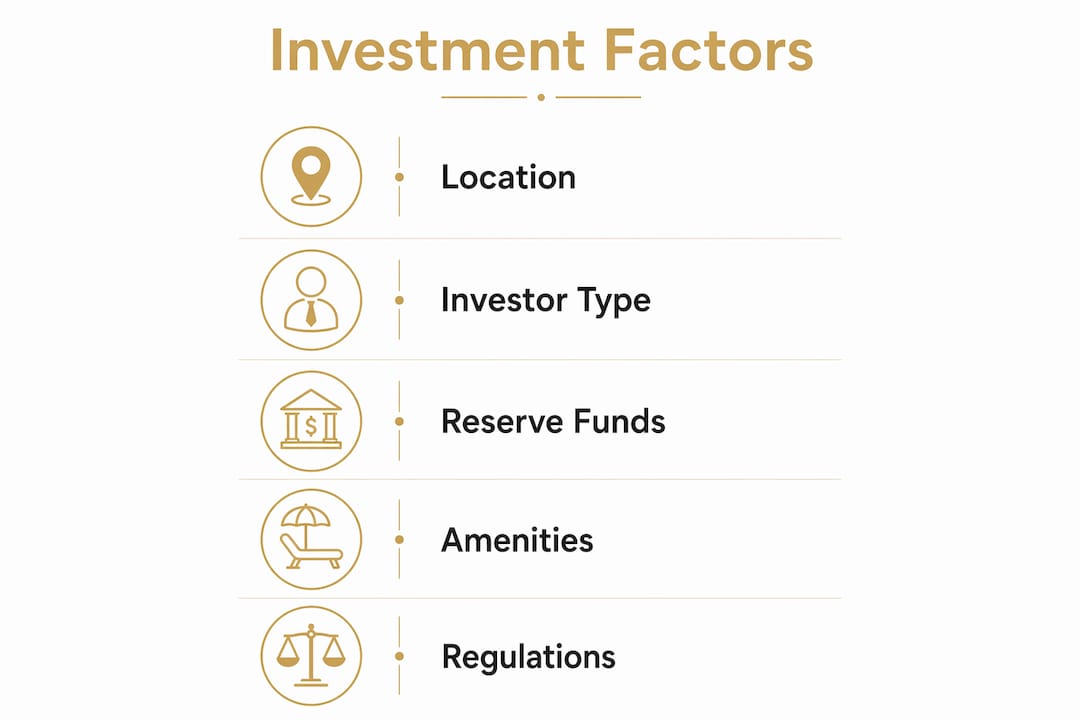
The owner-occupier versus investor split matters more than most buyers realize. Experts distinguish these motivations clearly: an owner-occupier optimizes for lifestyle and long-term equity, while an investor prioritizes purchase price, rental yield, and management fees. Conflating the two leads to overpaying for amenities that don't move the rent needle.
Unit mix is another underrated signal. New developments favor one- and two-bedroom units responding to the growing share of singles and couples working near CBD hubs. A project with 80% of its units in that range has a built-in tenant pool that's easier to fill and re-let quickly.
Key evaluation criteria to run through before committing:
- Rental yield vs. purchase price: Calculate gross yield on realistic rent, not peak-market assumptions
- HOA fees and management costs: These directly reduce cash flow; HOA rules can also restrict short-term rentals entirely
- Freehold vs. leasehold: Leasehold properties face accelerating value decay as the tenure shortens past 60 years
- Neighborhood trajectory: A master plan under active development (new MRT, mixed-use rezoning) is worth more than a finished precinct with no growth catalyst
- Reserve fund health: An underfunded HOA can issue special assessments that hit investors without warning
Pro Tip: Before signing anything, pull the development's reserve fund statements. A fund below 70% of its required balance is a red flag that future special assessments are likely, which can erode your net yield by more than a percentage point.
How do US luxury urban condos compare to Wallich Residence alternatives?
The Singapore luxury condo market has direct parallels in major US metros. Young professionals in New York, Miami, Chicago, and San Francisco face the same core trade-off: pay a premium for a trophy address with thin resale liquidity, or find a newer development in an emerging district that offers better entry pricing and stronger yield.
US luxury condos in prime urban districts share several features with Singapore's CBD alternatives:
- One- and two-bedroom dominance: The Singapore luxury condo segment mirrors US urban markets where smaller units near employment centers generate the most reliable rental demand
- Mixed-use positioning: Developments that integrate retail, dining, and transit access command rent premiums and attract lower-vacancy tenants
- New launch pricing advantage: Buying into a new development in an emerging district often means entering below the eventual stabilized price, particularly when a major infrastructure project (a new transit line, a waterfront park) is still under construction
The core lesson from Singapore's CBD market applies directly to US buyers: integrated mixed-use developments targeting high-net-worth tenants draw from a different, more concentrated demand pool than family-oriented condos. That concentration is a feature, not a risk, if the employment hub is durable.
Why One Marina Gardens stands out as an international alternative
One Marina Gardens, developed by Kingsford Marina Development, launched in April 2025 across 937 units in Singapore's District 01. Developer new-sale prices start competitively for one- to four-bedroom units, at an average price per square foot that is market-aligned.
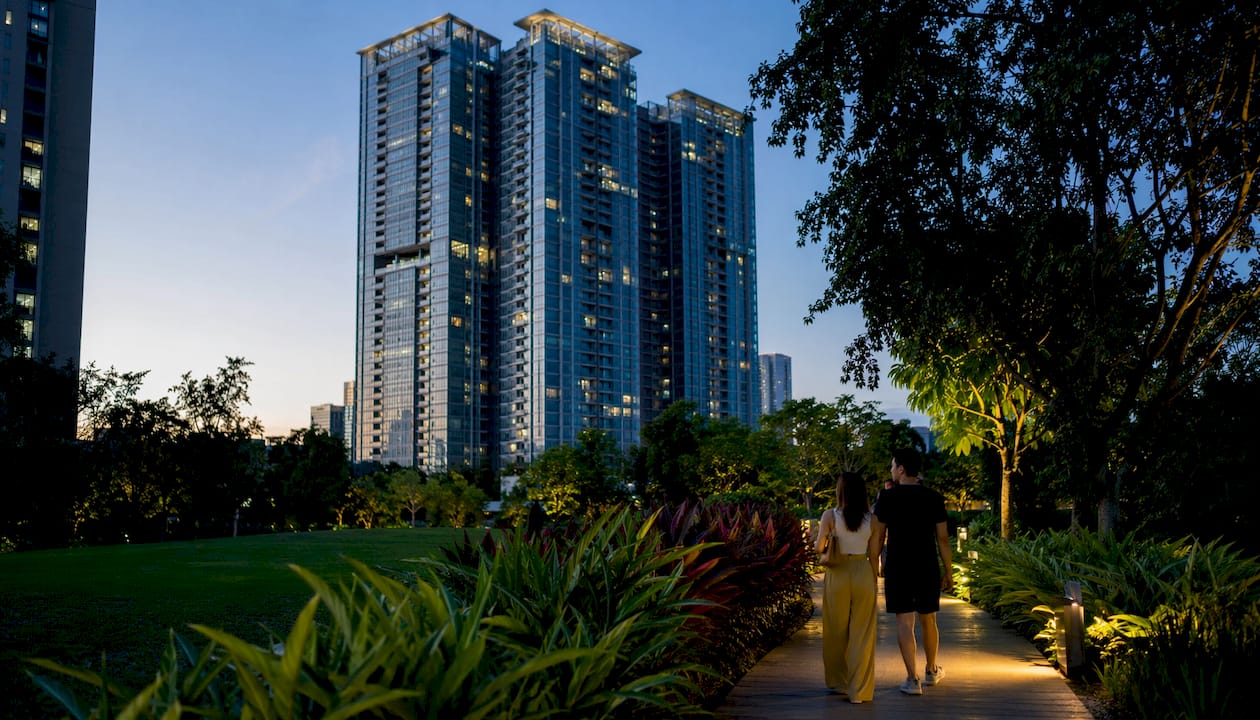
The project's location is its clearest advantage. Positioned 160 meters from Marina South MRT, with Gardens by the Bay as a neighbor and Marina Bay's skyline as the backdrop, it sits at the center of Singapore's most ambitious urban master plan. The URA's Marina South plan targets roughly 10,000 future homes in a car-lite, walkable neighborhood, and One Marina Gardens is the first residential plot in that precinct.
| Feature | One Marina Gardens | Wallich Residence |
|---|---|---|
| Tenure | Freehold | 99-year leasehold |
| Units | 937 | — |
| District | 01 (Marina South) | — |
| Launch price (avg PSF) | $3,012 | — |
| MRT access | Marina South MRT (160m) | Tanjong Pagar / Maxwell |
| Rental yield (comparable) | Projected competitive | 4% current |
Investment and lifestyle benefits for young professionals:
- Multiple sky terraces and a 50-meter lap pool
- Dedicated childcare center, relevant for growing families
- Retail shops and restaurant within the development
- Freehold tenure with no lease decay risk
- First-mover pricing in a precinct where every future plot will benchmark against 2025 entry prices
The honest caveat: Marina South has no resale track record yet. Buying One Marina Gardens is a long-term hold thesis, not a flip. The exit depends on the master plan delivering as promised.
How to decide among multiple luxury urban condo investment options
Narrowing down from several strong options comes down to matching the investment to your actual goal, not the most impressive brochure.
A practical decision checklist:
- Define your primary goal first: rental income now, capital appreciation over ten-plus years, or a home you'll actually live in
- Run the yield math honestly: gross yield minus HOA fees, property tax, and vacancy allowance gives you net yield, which is the number that matters
- Check the neighborhood's growth catalyst: a new MRT line, a government master plan, or a major employer relocating nearby all support future appreciation
- Understand your financing ceiling: condo mortgages often carry stricter approval standards than single-family loans, particularly if the HOA doesn't meet lender guidelines
- Read the HOA rules before you fall in love with the unit: rental restrictions, short-term rental bans, and pet policies can all affect income potential
Weighing owner-occupier needs against rental income goals is where most first-time buyers get stuck. If you plan to live in the unit for five or more years before renting it out, lifestyle fit matters. If you're buying purely to rent from day one, the amenities that attract tenants (gym, pool, transit access) matter far more than the ones that attract owners (storage, parking, school proximity).
Pro Tip: The early mover advantage in a new precinct is real but time-limited. When later phases of a master plan launch at higher prices, the first buyers get carried up. That window closes once the precinct stabilizes.
What purchase price, yield, and fees actually look like in practice
Purchase price sets your yield ceiling before you've done anything else. A unit bought at a 20% premium to comparable resale stock needs exceptional rent or exceptional appreciation to justify itself. Wallich Residence's current rental yield sits at 4%, which is strong for a 99-year leasehold property, but that yield is driven by prestige-premium tenants who are less price-sensitive than the average renter.
HOA fees are the most commonly underestimated cost. For luxury condos with pools, gyms, concierge, and sky terraces, monthly fees can run meaningfully high. Factor them into your net yield calculation before comparing properties. A condo with a 4% gross yield and high HOA fees may net out below a 3.5% gross yield property with minimal fees.
Rental restrictions vary widely by development and jurisdiction. Some HOA agreements prohibit leases shorter than six months, which rules out short-term rental platforms entirely. Others cap the percentage of units that can be rented at any one time, creating a waitlist that can delay your income by months.
How amenities and developer reputation affect long-term value
Amenities drive both rental demand and resale value, but not equally. A 50-meter lap pool and sky terraces photograph well and attract premium tenants. A childcare center is a quieter differentiator that matters enormously to the specific tenant profile most likely to sign a two-year lease and renew it.
Developer reputation affects both construction quality and post-completion management. Kingsford Marina Development's track record on One Marina Gardens includes a $1.034 billion land acquisition and a project that cleared 38% of its units on opening weekend, which signals genuine market confidence rather than developer-subsidized sales.
For 1-bedroom condo investors, the developer's ability to maintain common areas and manage the sinking fund over a 10-plus year horizon is as important as the launch price. A poorly managed building loses its rental premium within five years.
Financing options and mortgage considerations for condo investments
Condo mortgages carry specific quirks that single-family buyers don't encounter. Lenders typically require the HOA to meet minimum financial health standards before approving a loan on a unit in that building. If the association has less than 10% of units owner-occupied, or if the reserve fund is underfunded, some lenders will decline the loan entirely.
For investment condos specifically, expect a higher down payment requirement than for a primary residence. Many lenders require 20–25% down on a non-owner-occupied condo, and the interest rate will typically run higher than a primary residence rate. That spread directly affects your monthly cash flow calculation.
Foreign buyers purchasing Singapore condos like One Marina Gardens face Additional Buyer's Stamp Duty. The ABSD rules for foreign buyers are a material cost that must be factored into the total acquisition price before any yield calculation makes sense.
How HOA rules and local regulations affect your rental income
HOA rules are the fine print that can make or break a rental investment. Beyond the monthly fee, associations set the rules on lease minimums, subletting caps, renovation approvals, and short-term rental platforms. A building that prohibits Airbnb-style rentals in a tourist-heavy market eliminates an entire income strategy.
Local regulations add another layer. In Singapore, the Urban Redevelopment Authority sets minimum rental periods for private residential properties. In US cities, short-term rental ordinances vary by neighborhood and change frequently. Buying in a city with active short-term rental regulation without checking the current rules is a common and expensive mistake.
The practical step: request the full HOA governing documents before making an offer, not after. The rental restrictions section is usually buried in the CC&Rs (Covenants, Conditions, and Restrictions), not the summary sheet the agent provides.
Tax implications of condo investing in major US cities
Property taxes on condos vary significantly by city and state. In New York City, the effective property tax rate on condos is notably lower than on comparable single-family homes due to the co-op and condo abatement program, which benefits owner-occupiers but phases out for investment units. In Texas, where there is no state income tax, property taxes run higher, often offsetting the income tax advantage.
Rental income from a condo is taxable as ordinary income at the federal level, but depreciation deductions can offset a meaningful portion of that income. The IRS allows residential rental property to be depreciated over 27.5 years, which creates an annual deduction even when the property is appreciating in value.
Capital gains treatment depends on how long you hold the property and whether it was your primary residence. A condo held as a rental for more than one year qualifies for long-term capital gains rates, which are lower than ordinary income rates for most investors. The Section 121 exclusion ($250,000 for single filers, $500,000 for married couples) applies only to primary residences, so a pure investment condo does not benefit from it on sale.
Onemarinagardens offers a rare entry into Singapore's most ambitious new district
One Marina Gardens is the first residential address in Marina South, a 45-hectare precinct that Singapore's URA is building from scratch around Gardens by the Bay. For buyers who want a Marina Bay lifestyle home with freehold tenure and a long-term hold thesis, there is currently no comparable entry point.
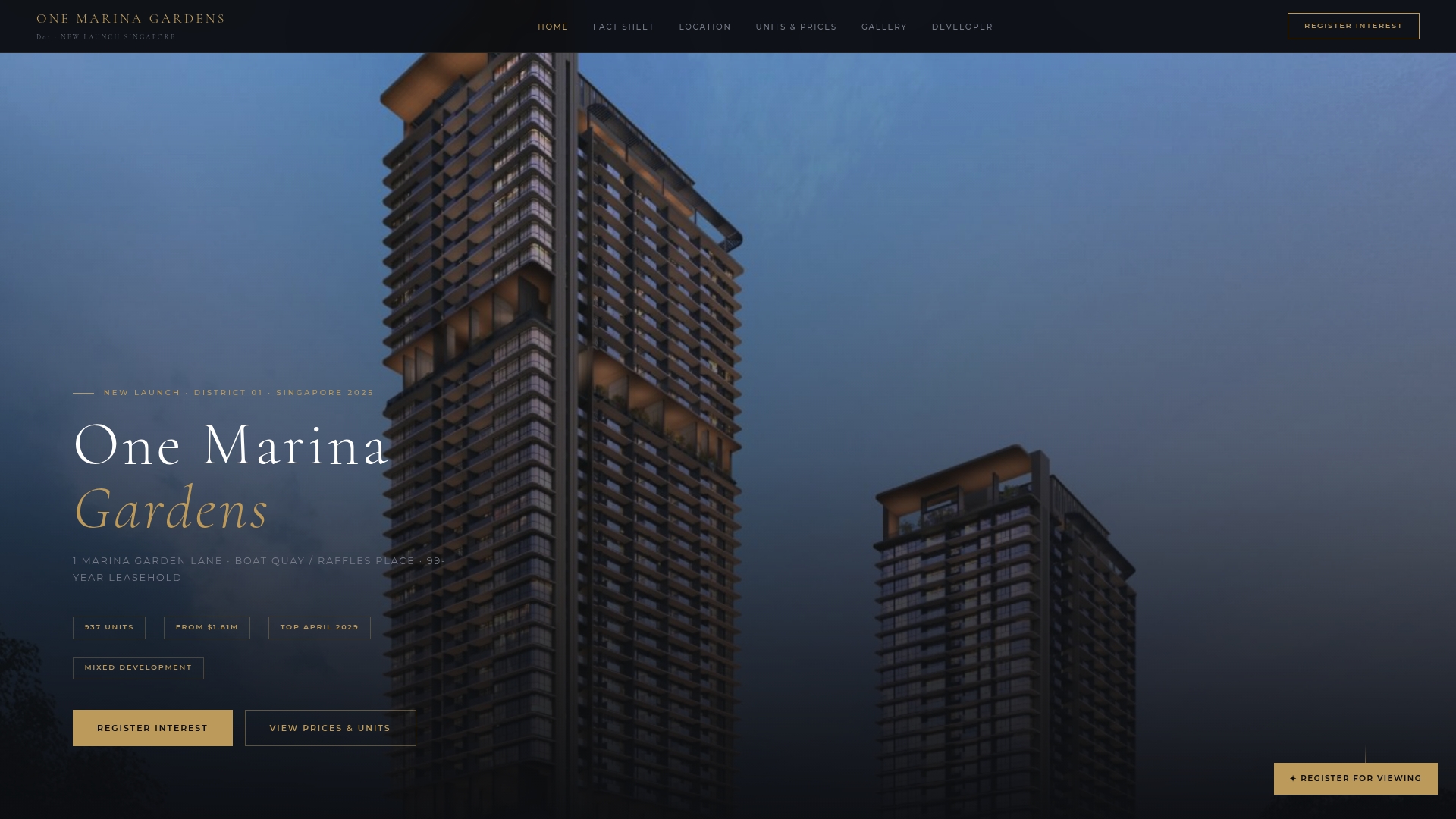
Prices start from approximately $1.25M for a one-bedroom, with the development offering 1- to 4-bedroom layouts across 937 units. The project's full specifications, including unit distribution, amenity details, and floor plans, are available on the Onemarinagardens fact sheet. For buyers ready to explore pricing and availability, the current price list reflects developer new-sale rates as of 2026. This is a long-term hold, not a flip, but for the right buyer, the Marina South master plan makes that timeline the point.
Key Takeaways
Freehold tenure, location within an active master plan, and a unit mix targeting young professionals are the three factors that most reliably separate a strong investment condo from an expensive one.
| Point | Details |
|---|---|
| Freehold vs. leasehold | Freehold condos hedge against lease decay; Wallich Residence's 99-year tenure is a long-term value risk. |
| Rental yield benchmark | Wallich Residence currently yields 4%, setting the performance bar for comparable luxury alternatives. |
| Unit mix matters | Developments with 80% one- and two-bedroom units attract the most reliable urban professional tenant base. |
| HOA and fees | Management fees and rental restrictions directly reduce net yield; review CC&Rs before committing. |
| Onemarinagardens | One Marina Gardens offers freehold District 01 entry from $1.25M, positioned as the first address in Marina South's 10,000-home master plan. |
Recommended
- One Marina Gardens vs Marina One Residences — Which D01 Condo to Buy in 2026?
- Is One Marina Gardens a Good Investment? Marina South Growth Story (2026)
- One Marina Gardens | New Launch Condo D01 Singapore 2025 | Prices from $1.81M
- One Marina Gardens Price List 2026 | Units & Available Prices from $1.81M