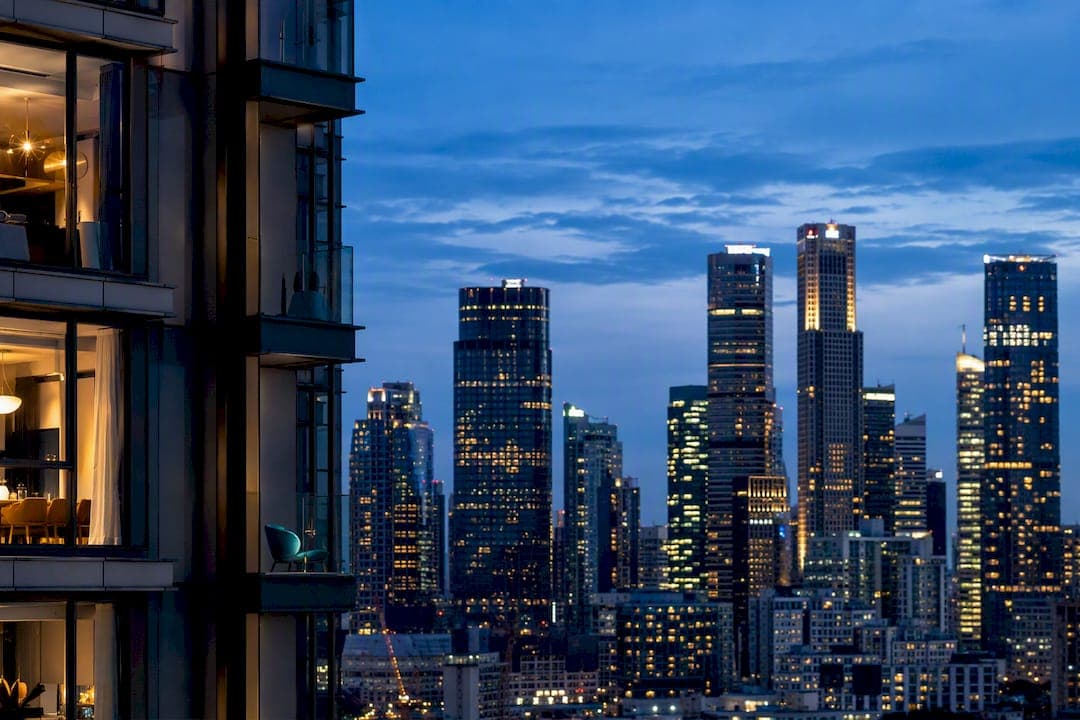
District 1 is built for capital preservation, not fast gains. Its scarcity, CBD proximity, and deep pool of high net worth and corporate buyers support steady long-term price resilience, even though recent quarters show softer growth than some suburban districts. It suits long-horizon owner-occupiers and portfolio diversifiers more than short-term flippers. Before you commit, check recent comparables and stress-test your holding period against a 5-to-10-year window.
TL;DR:
- District 1's slow but steady appreciation is driven by land scarcity, high-end buyer demand, and limited new supply support long-term capital preservation.
- Resale volumes are thin due to limited stock and caution among foreign buyers, while rental yields remain modest but stable, favoring long-term investors.
- Rising connectivity, especially near Marina South MRT, and a strong reputation for build quality could gradually push prices higher, but only with confirmed infrastructure projects.
- Stamp duty, financing limits, and potential supply boosts from future launches are key costs and risks that buyers must model into their return expectations.
- Long-term hold strategies with a focus on unit quality, location, and thorough due diligence on recent comparables are best suited for those investing in District 1.
Table of Contents
- District 1 Capital Appreciation: The Current Price and Rental Picture
- How District 1 Property Prices Have Moved Over the Past Decade
- What's Limiting New Supply in District 1
- What Could Push District 1 Prices Higher
- The Costs and Risks That Eat Into Your Returns
- One Marina Gardens as a Working Example of the District 1 Thesis
- Who Actually Belongs in the District 1 Market
- Explore One Marina Gardens if District 1 Fits Your Strategy
- Sources
- FAQ
District 1 Capital Appreciation: The Current Price and Rental Picture
Singapore's private residential price index has kept climbing through recent quarters, and the Urban Redevelopment Authority publishes the figures that every serious buyer should check before making an offer. District 1, covering Marina Bay, Raffles Place, and the Marina South precinct, sits inside the Core Central Region (CCR), which has generally trailed the broader market in percentage terms over the past two years while holding a premium in absolute psf.
That gap matters for how you read district 1 capital appreciation right now. CCR buyers are paying for scarcity and address, not momentum, and the psf math reflects it:
- District 1 new-sale psf typically runs well above the national median, often trading at a premium to Rest of Central Region (RCR) projects.
- CCR resale volumes have been thinner than the mass market segment, partly a function of limited stock and partly buyer caution around financing costs.
- Rental demand in the CBD-adjacent belt has stayed firm, supported by finance and tech sector leases and short-term corporate housing.
Pro Tip: Pull the URA caveat list for District 1 transactions in the last two quarters before you anchor on any headline psf figure. A handful of penthouse or high-floor deals can skew the average upward and mislead you into overpaying for a mid-floor unit.
Gross rental yields for central units generally land in a modest band, usually a percentage point or two below what you would see in outer-region rentals. That is the trade-off buyers accept for capital appreciation in District 1: lower running yield in exchange for a location that historically holds its value when the broader market corrects. Rental index movements have tracked slightly upward in the CBD fringe, a sign that occupier demand has not softened even as sale prices moved sideways.
How District 1 Property Prices Have Moved Over the Past Decade
District 1 has never been the district that posts dramatic annual gains. Over both 5-year and 10-year windows, price per square foot in the area has moved in a slower, more compressed band than fast-growing RCR pockets or select suburban districts riding infrastructure upgrades.
That pattern is not a flaw. It's the point.
- Between market cycles, District 1 has shown smaller peak-to-trough swings than districts with heavier speculative flipping activity.
- EdgeProp's analysis of district-level condo price growth places District 1 among the weaker performers in certain recent sampled periods, a reminder that "prime" does not automatically mean "fastest-growing."
- Underperformance windows tend to coincide with cooling measure rollouts or foreign buyer tax hikes, both of which hit CCR harder than the mass market because a larger share of CCR buyers are foreign or investment-driven.
- Recovery after each dip has been gradual rather than sharp, consistent with a market driven by long-term holders rather than short-term traders.
The takeaway for anyone underwriting a District 1 purchase: model your return on a multi-year holding horizon, not a two-year flip. A district guide focused on capital appreciation makes a similar case, describing District 1's value proposition as preservation-first, built on land scarcity and CBD adjacency rather than yield chasing. That framing lines up with what steadier core districts elsewhere show too: gains in mature, land-constrained districts tend to come from scarcity and buyer depth, not sharp percentage spikes.
What's Limiting New Supply in District 1
District 1's scarcity is mostly structural, not accidental. Marina Bay and the Downtown Core have almost no greenfield land left, and most future supply comes from mixed-use redevelopment sites released in small, deliberate tranches through the URA master planning process.
- Land parcels are finite and slow to release. Government land sales in the Marina South and Downtown Core precincts happen infrequently, and each site typically supports only one or two large residential launches at a time.
- Near-term completions remain limited relative to demand. Unlike districts with multiple concurrent launches competing for the same buyer pool, District 1's pipeline is thin enough that new project launches rarely cannibalize resale values in the surrounding area.
- Buyer depth skews toward higher-commitment purchasers. High net worth individuals, corporate housing programs, and expatriate tenants dominate demand here, and that buyer profile tends to transact with more conviction and less panic-selling during downturns than leveraged retail investors.
That combination, tight land supply plus a buyer base that isn't easily spooked, is why liquidity in District 1 tends to hold up even when transaction volumes citywide slow down.
What Could Push District 1 Prices Higher
Connectivity is the clearest lever. Units within walking distance of Marina South MRT capture a measurable last-mile advantage over anything requiring a bus transfer, and that gap tends to widen as the surrounding precinct fills in with offices and retail.
A few forces stand out:
- Continued office and mixed-use development around Marina South adds daytime population, which supports both rental demand and retail vibrancy at street level.
- Limited new CCR launches mean each project that does reach the market absorbs demand from a backlog of buyers who have been waiting on the sidelines.
- Developer reputation and build quality matter more in District 1 than almost anywhere else in Singapore, since buyers here are paying for long-term asset quality, not just location.
Pro Tip: When you evaluate a "catalyst" in property marketing material, ask whether it is funded and under construction or merely announced. A confirmed MRT extension with a construction contract awarded is a real catalyst. A masterplan sketch with no funding attached is not, and treating the two the same is how buyers overpay on hope.
The Costs and Risks That Eat Into Your Returns
Capital appreciation on paper is not the same as capital appreciation after tax and financing costs, and District 1 buyers face some of the steepest friction in the country.
- IRAS's Additional Buyer's Stamp Duty (ABSD) rates rise sharply for second properties and for foreign buyers, and because District 1 attracts a disproportionate share of foreign and investment purchases, ABSD has an outsized effect on buyer depth and resale liquidity here compared with the mass market.
- MAS loan tenure and loan-to-value rules, along with Mortgage Servicing Ratio and Total Debt Servicing Ratio limits, cap how much leverage a buyer can take on, which raises the effective cash outlay needed to purchase in a high-quantum district like this one.
- Oversupply risk is low but not zero. A cluster of new CBD-adjacent launches arriving in the same window could temporarily soften resale premiums until absorption catches up.
Model these frictions into your return expectations before you compare District 1 against any other district on a like-for-like basis.
One Marina Gardens as a Working Example of the District 1 Thesis
One Marina Gardens illustrates how the drivers above show up in an actual project rather than in the abstract. The development sits roughly 160 meters from Marina South MRT, according to its location page, placing it inside the walkable catchment that tends to command a connectivity premium in resale pricing.
The fact sheet lists 937 units developed by Kingsford Marina Development, spanning 1 to 4-bedroom layouts with facilities including multiple sky terraces, a 50-meter lap pool, and a childcare center, an amenity mix aimed at both owner-occupiers and long-term investors.
When you compare any District 1 listing against a project like this one, run the same checklist every time:
| What to compare | Why it matters for appreciation |
|---|---|
| Quantum and psf vs. recent District 1 comparables | Tells you whether you're buying at a premium or a discount to the local baseline |
| Rental track record of similar units nearby | Signals realistic yield to offset the capital-preservation trade-off |
| Distance to MRT and CBD on foot, not by map estimate | Connectivity premiums are sensitive to actual walking time |
| Developer track record and unit mix | Affects resale appeal and buyer pool depth years from now |
Who Actually Belongs in the District 1 Market
I'd point most buyers here toward a long-hold, capital-preservation mindset rather than a yield play. Think HNWI portfolio diversifiers or owner-occupiers planning to stay put for a decade, not investors chasing a quick flip. Run your comps, model ABSD and financing costs honestly, and stress-test a 5-to-10-year horizon before you sign anything.
— Velisa
Explore One Marina Gardens if District 1 Fits Your Strategy
One Marina Gardens checks the boxes this article just walked through: a location near Marina South MRT, direct CBD access, and a large unit mix built around scarcity-driven, long-term value rather than short-term speculation.
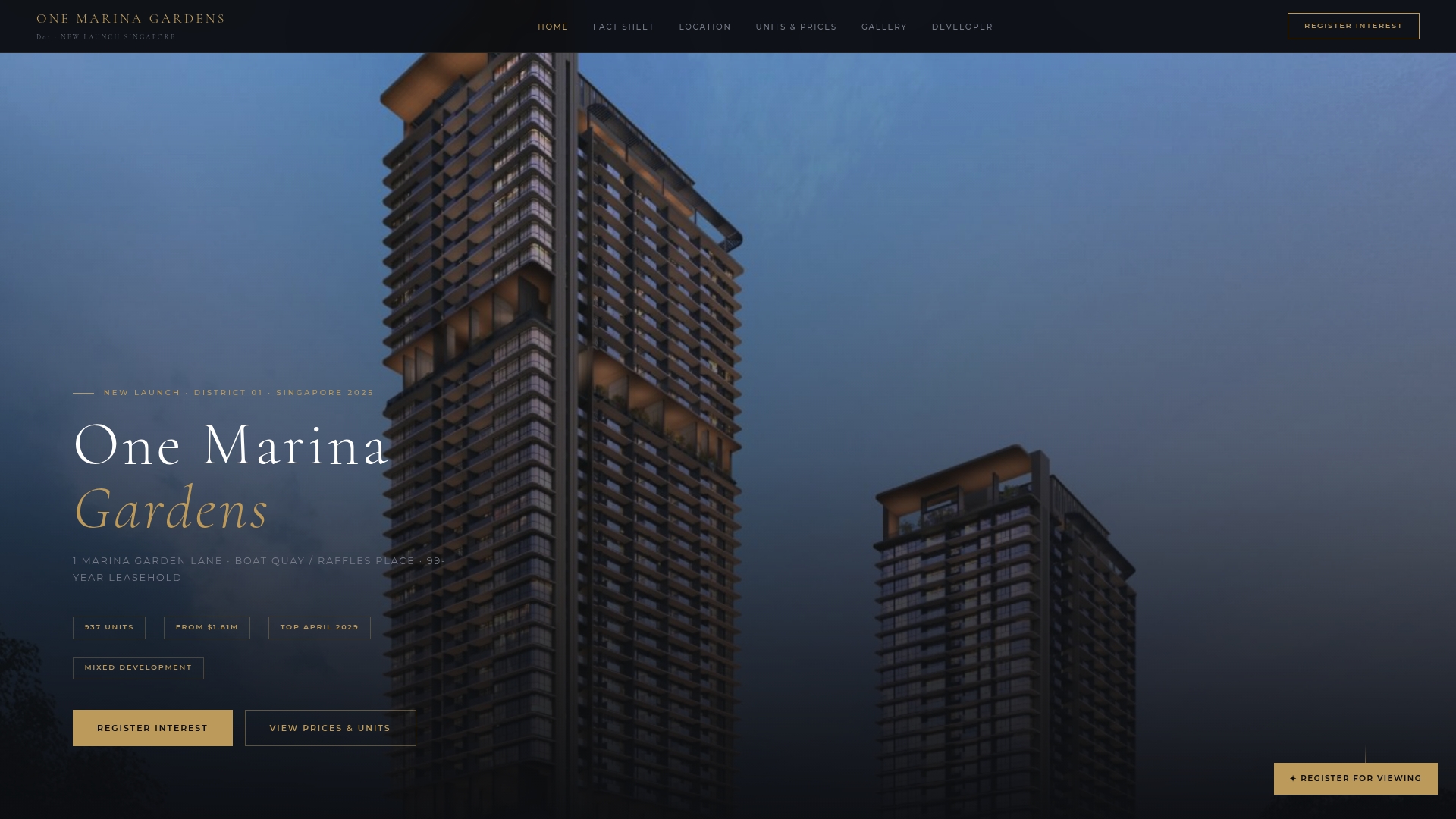
If the capital-preservation case for District 1 makes sense for your portfolio, the next step is straightforward. Download the project fact sheet for the full unit mix and pricing structure, browse the gallery to see the sky terraces and lap pool up close, or reach out to book a showflat viewing and get direct answers on availability before you commit to any District 1 purchase.
This article is general information, not a substitute for advice from a qualified financial advisor. Consult a qualified financial professional about your own circumstances before acting on anything here.
Sources
- Urban Redevelopment Authority (URA)
- MAS explainer — loan tenure and loan-to-value limits
- Districts with the highest and lowest condo price growth — EdgeProp Singapore
FAQ
What is the richest district in Singapore?
District 10, covering areas like Bukit Timah and Holland Road, and District 1, covering Marina Bay and the CBD, are typically cited as Singapore's most expensive districts by average property value, with District 1 commanding some of the highest psf figures nationally.
Who owns Nassim Road?
Ownership records for specific private addresses like Nassim Road are not publicly listed in a way this article can confirm; property ownership details of individual private homes are generally not disclosed in public Singapore property data.
Which condo is good for investment in Singapore?
It depends on your goal: buyers chasing rental yield often look outside the CCR, while those prioritizing capital preservation and long-term value gravitate toward District 1 projects like One Marina Gardens, which combines CBD proximity with a scarce, limited supply location.
Which condo will top in 2026?
No single project can be reliably forecast to "top" the market, since price leadership shifts with each launch and transaction cycle, but CCR projects near confirmed transport nodes, including Marina South MRT, tend to hold premium pricing due to structural land scarcity.