If affordability, retirement runway, or family budgeting is your priority, an HDB flat almost always wins on cost and holding power. If your priority is facilities, privacy, and flexibility, and your income supports it, a condo earns its higher price. The math shifts hard once you factor MOP timing, CPF housing grants, and ABSD exposure, which is exactly what the framework below walks through.
TL;DR:
- Buying a condo involves higher upfront costs, monthly fees, and loan complexities, especially with market-rate financing and higher property taxes.
- Upgrading from an HDB to a condo requires careful timing to avoid heavy stamp duties, with selling HDB before purchasing the condo often being the best strategy.
- Condos offer amenities and privacy ideal for lifestyle-focused buyers, while HDBs excel in affordability, community, and long-term holding power.
- Location and future potential often have a greater impact on property appreciation than whether the unit is an HDB or condo.
- Renting rules are stricter for HDBs, which demand approval and compliance with minimum occupation periods, unlike the freer rental market for private condos.
Table of Contents
- HDB vs Condo at a Glance
- What Do HDB and Condo Actually Cost Each Month?
- Lifestyle and Facilities: What Changes Day to Day
- Does a Condo Actually Appreciate More Than an HDB Flat?
- Can You Rent Out an HDB Flat the Same Way as a Condo?
- Who Can Buy What? Eligibility, Grants, and Stamp Duty Basics
- Your Decision Checklist Before Signing an OTP
- Why We Think Location and Lifestyle Fit Beat the Label
- See What Upgrading to One Marina Gardens Actually Looks Like
- Sources
- FAQ
HDB vs Condo at a Glance
Before the details, here's the fast comparison most buyers actually want.
- Upfront cost: HDB resale flats typically need a smaller downpayment thanks to CPF grants and HDB loans; condos usually demand a 25% minimum cash/CPF downpayment on the private loan portion.
- Monthly cost: HDB service and conservancy charges (S&CC) run far below condo maintenance fees, which cover pools, gyms, and 24-hour security through the Management Corporation Strata Title (MCST).
- Financing: HDB flats qualify for concessionary HDB loans; condos require bank loans subject to the Total Debt Servicing Ratio, not the more generous Mortgage Servicing Ratio HDB buyers get.
- Eligibility: HDB flats carry citizenship, family nucleus, and income ceiling rules; condos have none of that, open to any buyer including permanent residents and (with Additional Buyer's Stamp Duty) foreigners.
- Resale flexibility: HDB resale is locked until the Minimum Occupation Period ends; condos can be sold anytime, subject to Seller's Stamp Duty if held under three years.
- Amenities: Condos bring pools, gyms, and function rooms baked into the price; HDB estates lean on hawker centres, void decks, and mature-estate walkability instead.
- Typical buyer fit: First-timers, retirees, and budget-conscious families lean HDB; dual-income professionals and lifestyle-focused buyers lean condo.
Pro Tip: Don't skip the Executive Condominium (EC) route. It's a hybrid: HDB-like eligibility and grants at purchase, but it privatises into a full condo after the privatisation timeline runs its course, at which point resale opens to everyone.
What Do HDB and Condo Actually Cost Each Month?
The gap between an HDB flat and a condo isn't just the purchase price. It's what happens to your CPF, your loan structure, and your monthly outflow for the next 25 years.
HDB buyers get access to a concessionary loan pegged around 2.6% per year, historically far more stable than bank loan packages, according to DBS's comparison of HDB and condo financing. Bank loans for condos float with market rates and cap borrowing at a lower Loan-to-Value ratio once you already hold other property debt, and they're bound by the Total Debt Servicing Ratio, which counts all your other loans, not just the mortgage.
Here's where it bites in practice:
- A resale HDB buyer using an HDB loan and CPF grants can often keep monthly repayments manageable on a single stable income.
- A condo buyer using a bank loan faces a materially higher quantum, plus MCST maintenance fees that don't exist in an HDB budget, plus property tax calculated on a higher annual value.
- Upgraders frequently underestimate the CPF refund obligation: when you sell your HDB, you must return the CPF monies you used, plus accrued interest, into your CPF account before you can redeploy that cash into a condo downpayment.
Timing matters more than most buyers realize. If you sell your HDB flat before you buy the condo, you may avoid the 20% Additional Buyer's Stamp Duty that applies to second residential properties for Singapore citizens. Get the sequence wrong and that ABSD bill can wipe out a year of savings.
Sample cash-flow comparisons between a median resale HDB and a mass-market Outside Central Region condo show the monthly gap can be substantial once maintenance, tax, and the higher loan quantum stack up, per LovelyHomes' 2026 decision guide. Before you commit, run a 12-month stress test: simulate condo-level costs, including a one or two percentage-point rate hike and a plausible MCST fee increase, against your actual income. If that number still works, the upgrade is probably sustainable. If it doesn't, you've just saved yourself from a very expensive lesson.
Lifestyle and Facilities: What Changes Day to Day
Money aside, this is the comparison that actually decides most upgrades.
Condo living typically includes a swimming pool, gym, function rooms, and manned or camera security, all funded through mandatory MCST maintenance fees that every unit owner pays regardless of usage. You get more privacy inside the development, controlled access at the lobby, and often a more consistent aesthetic since the MCST enforces renovation and common-area rules.
HDB estates trade that private polish for something harder to buy: walkable hawker centres, wet markets, established community networks, and often larger flat layouts, especially in older 1980s and 1990s developments where floor areas can beat a similarly priced new condo unit. Void decks, resident committees, and decades-old neighbor relationships build a different kind of security than a guardhouse does, and HDB's own guidance on neighbourhood living and pet rules shows how tightly shared spaces are governed compared to a private MCST's more flexible by-laws.
Before you upgrade or downgrade, check these against your actual life:
- Commute time to work from the new location versus your current one.
- School proximity if you have or plan to have children in the Primary 1 registration catchment.
- Pet rules: HDB restricts dog breeds and unit types more tightly than most condo MCSTs.
- Eldercare accessibility, including lift access, distance to clinics, and whether aging in place is realistic.
Pro Tip: If eldercare or aging in place is a factor, look closely at ground-floor or lift-linked HDB units before assuming a condo lift lobby automatically wins on convenience.
Does a Condo Actually Appreciate More Than an HDB Flat?
Not automatically, and this is where a lot of buyers get burned by assumptions. Both HDB flats and private condos in Singapore sit on 99-year leases (with rare freehold exceptions for some condos), and lease decay accelerates in the final decades as CPF usage and bank financing get harder to secure on an aging lease.
Location tends to matter more than property type. A well-located resale HDB flat near an MRT interchange and good schools can outperform a peripheral condo on both rental yield and capital growth, according to Redbrick's investment comparison, and 99.co's analysis makes the same point: unit specifics and location routinely beat the HDB-versus-condo label when it comes to demand.
Rental demand pools differ too. Condos attract expatriates and tenants wanting facilities and shorter lease flexibility, while HDB rooms and whole-flat rentals draw a broader, more price-sensitive tenant base once the Minimum Occupation Period clears.
Executive Condominiums add another layer. Recent rule changes extended the EC MOP structure and adjusted the privatisation runway, with the Deferred Payment Scheme removed for some newer launches, per StackedHomes' coverage of the 2026 EC rule updates. Privatisation is the real inflection point for EC returns: once an EC privatises, it trades like any other condo and opens to the full resale market, foreigners included, which historically triggers a value re-rating, a shift Channel NewsAsia flagged as a major factor in EC investment timing.
- A mature-estate HDB near an MRT can beat a car-dependent fringe condo on total return.
- A newly privatised EC often sees the sharpest single re-rating event in its ownership life.
- A prime-district condo like those near Marina Bay draws a rental pool a heartland HDB simply can't reach.
Can You Rent Out an HDB Flat the Same Way as a Condo?
Not quite; the rules diverge sharply once you become a landlord.
HDB flats can only be rented out in full after the Minimum Occupation Period ends, and owners must apply for HDB approval before renting, with penalties for unapproved subletting that include fines and even repossession in serious cases. Renting out individual rooms has its own occupancy caps and citizenship conditions for tenants.
Condo owners face far fewer restrictions. There's no MOP-equivalent lock on private property, so a condo can typically be rented from day one of ownership, subject only to a Seller's Stamp Duty consideration if you sell (not rent) within three years. MCST by-laws may still govern short-term rental minimums and tenant registration, but the ceiling on flexibility sits much higher than HDB.
- HDB landlords: confirm MOP has passed, get HDB approval, and check tenant eligibility before signing a lease.
- Condo landlords: check your MCST's minimum tenancy period and registration process, often 3 or 6 months minimum.
- Either way, weigh rental yield against what you'd give up living there yourself. Yield only matters if it beats your opportunity cost of staying put.
Who Can Buy What? Eligibility, Grants, and Stamp Duty Basics
The rules here decide whether you can even get into the game, let alone what it costs.
HDB flats require Singapore citizenship (or citizen plus permanent resident for most schemes), a qualifying family nucleus, and compliance with income ceilings tied to the flat type and grant applied for. Eligible buyers can tap the Enhanced CPF Housing Grant for Families, which stacks with other grants depending on income and flat type, materially lowering the effective purchase price for first-timers.
Condos have no citizenship, income ceiling, or family nucleus requirement, though foreign buyers pay a steep Additional Buyer's Stamp Duty on top of the standard Buyer's Stamp Duty.
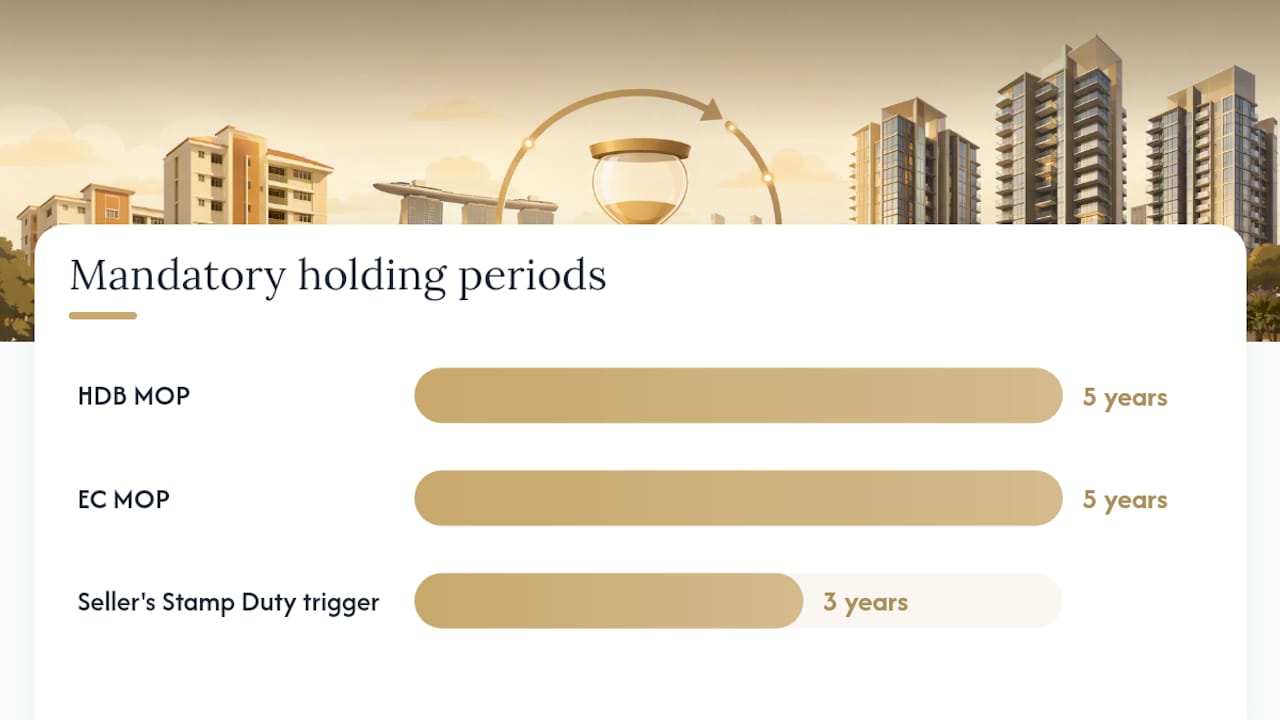
- HDB flats: MOP typically runs five years from key collection before resale or full rental is allowed.
- ECs: MOP mirrors HDB at five years, but privatisation (full market opening) takes longer under the updated rules.
- Selling within three years of a private property purchase can trigger Seller's Stamp Duty-for-residential-property), on a sliding scale that drops the longer you hold.
- Selling your HDB before completing on a condo purchase is the standard way to dodge the 20% ABSD that hits a second residential property.
Sequencing sales and purchases correctly, and applying for the right grant before signing anything, is where a good agent or mortgage broker earns their fee.
Your Decision Checklist Before Signing an OTP
Run through this before you commit to either path.
- Confirm your downpayment source: cash, CPF Ordinary Account balance, or a bridging loan if you're selling first.
- Calculate your CPF refund obligation if you're selling an existing HDB flat.
- Check your MOP date if you currently hold an HDB flat or EC.
- Stress-test your monthly budget against a rate hike and a maintenance fee increase, not just today's numbers.
- Decide your dominant objective: retirement security and low overhead, or lifestyle and long-term capital growth.
- Map your job stability against a 25 to 30 year loan tenure.
- Ask your financial adviser or agent how commission and any referral fees are structured before you sign anything.
- Confirm ABSD exposure and sequencing if you'll own two properties even briefly.
Pro Tip: Get your CPF refund and ABSD numbers in writing from a bank or lawyer before you make an offer. Verbal estimates from agents are often optimistic.
Why We Think Location and Lifestyle Fit Beat the Label
Having walked through the numbers, here's the honest take: the HDB-versus-condo debate is less about which asset class wins and more about which one matches the decade of life you're actually in. A development located in Marina South, near Marina South MRT, with direct access to the CBD and Orchard Road, offering a commute and connectivity profile that may influence upgrade decisions.
If your reasons for upgrading are facilities, connectivity, and long-term capital positioning in a prime district, a project like this is a direct answer to that brief, not a compromise. For readers still weighing options, our guide to upgrading from HDB to condo and our roundup of best condominiums in Singapore go deeper on the comparisons above.
— Velisa
See What Upgrading to One Marina Gardens Actually Looks Like
If the numbers above pointed you toward condo living, certain projects can offer a prestigious District 01 address near Marina South MRT, with a range of unit types, a lap pool, sky terraces, and childcare facilities inside a large mixed-use development.
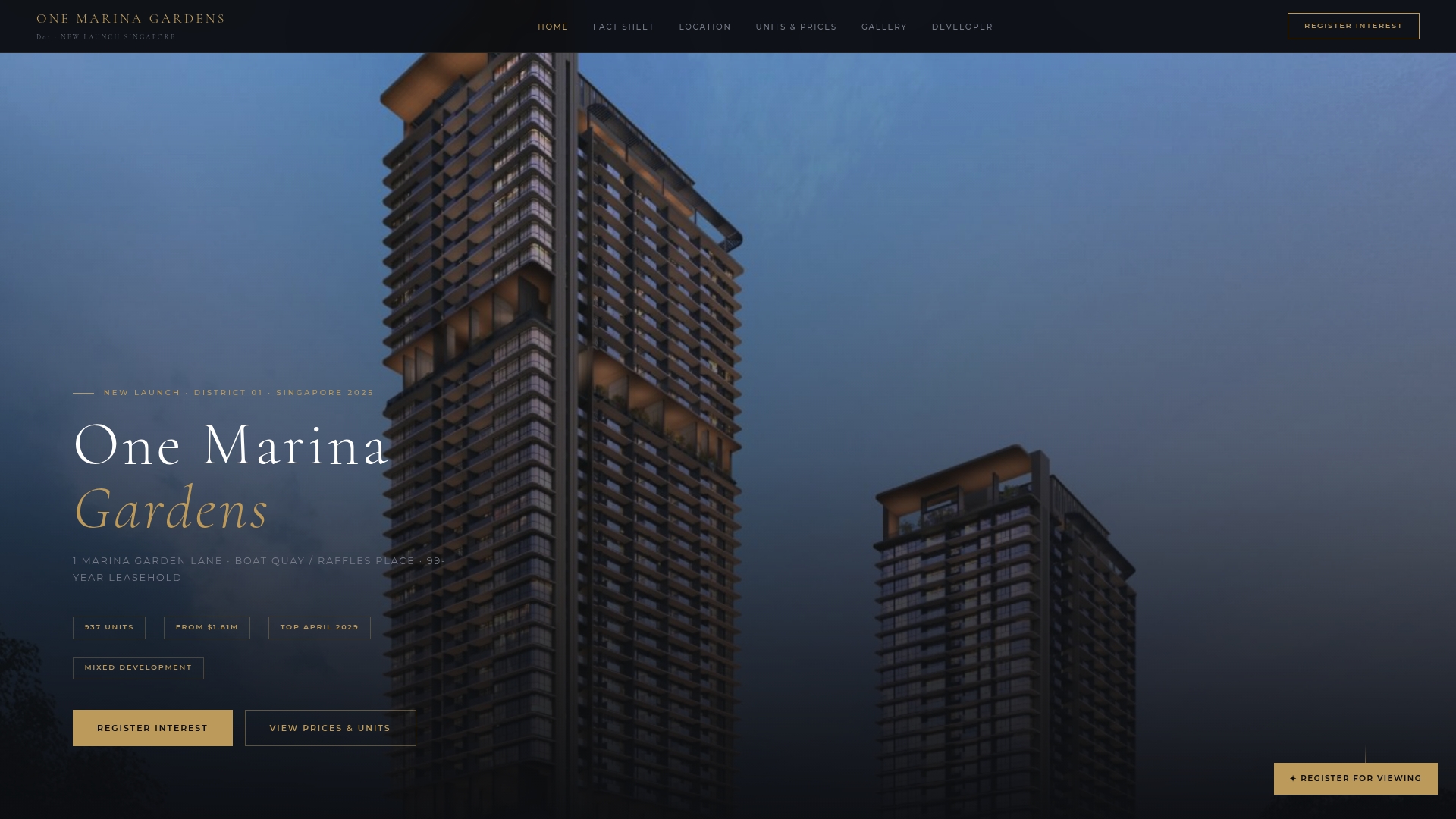
Whether you're comparing rental yield potential or just want to see the layouts, the fact sheet breaks down unit distribution and specs, the gallery shows the artist impressions and facilities in detail, and the developer page covers who's behind the project. If you're ready to see it in person, head to the One Marina Gardens page to book a showflat visit or request more information.
This article is general information, not a substitute for advice from a qualified financial advisor. Consult a qualified financial professional about your own circumstances before acting on anything here.
Sources
FAQ
Is It Better to Buy an HDB or a Condo?
It depends on your priority: HDB flats generally cost less upfront and monthly, making them stronger for affordability and retirement planning, while condos suit buyers prioritizing facilities, privacy, and prime-location capital growth who can comfortably absorb the higher monthly costs.
What Happens After 50 Years Living in a Condo?
At the halfway mark of a 99-year lease, financing and CPF usage typically get harder, since banks and CPF apply age-based restrictions on leasehold property, which is why location and remaining lease matter more than the property label at resale.
Can Singaporeans Own One HDB Flat and One Condo?
Singapore citizens who already own an HDB flat can buy a private condo, but must pay Additional Buyer's Stamp Duty of 20% on the second property, unless they sell the HDB flat first to avoid that ABSD exposure entirely.
Should I Downgrade From a Condo to an HDB Flat?
Downgrading makes sense if your priority has shifted toward lower monthly overhead, retirement runway, or freeing up capital, since HDB's lower maintenance and tax burden can meaningfully extend a fixed income compared to ongoing MCST fees.