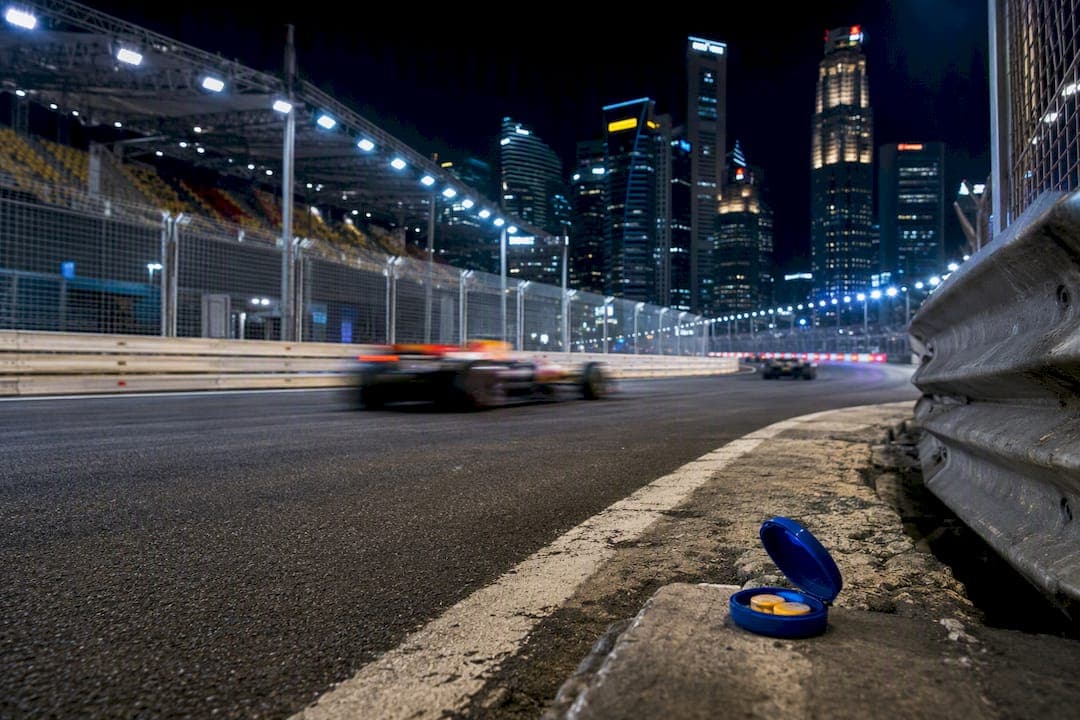
Trackside noise at the Marina Bay Street Circuit regularly tops 95 dBA sustained (LAeq) near the straights, with peak engine bursts (LAmax) exceeding 120 dBA, loud enough to cause hearing damage with prolonged unprotected exposure. Road closures and transport changes run for several days around race weekend. If you live, work, or plan to walk through the area, get hearing protection sorted and check the Land Transport Authority's notice before you make any plans.
TL;DR:
- Residents and visitors close to the track should use hearing protection due to noise levels exceeding 95 dBA, with peaks over 120 dBA, which can cause hearing damage.
- The sharpness and roughness of the noise vary between straights and bends, with buildings amplifying sound through reflection, creating a "sound canyon" effect that intensifies noise.
- Disruption extends beyond noise, causing delays, reduced foot traffic, canceled appointments, and increased frustration for local residents and businesses during race week.
- To minimize noise impact, higher floor units with better soundproofing, especially those facing away from the track, are preferable, and sound attenuation measures should be verified before purchasing.
- Planning ahead by checking official road closures and preparing with ear protection can significantly reduce the adverse effects of race week disruptions.
Table of Contents
- How Loud Is Marina Bay F1, Really?
- Who Feels the Impact: Residents, Businesses, and Public Spaces
- Where the Noise Hits Hardest: Straights, Bends, and the Sound Canyon
- What the Decibel Numbers Mean for Your Hearing
- How to Prepare Before, During, and After Race Week
- What Condo Buyers Near Marina Bay Should Check
- Weighing the Benefit Against the Disruption
- Thinking About a Home Near Marina Bay?
- Sources
- FAQ
How Loud Is Marina Bay F1, Really?
A 2023/2024 peer-reviewed acoustic study measured the Singapore Grand Prix directly, and the numbers explain why conversation becomes impossible trackside. Near the straights, sustained sound levels (LAeq, the energy-averaged reading over time) exceeded 95 dBA, while peak bursts (LAmax, the loudest instantaneous spike) topped 120 dBA. At bends, the same study recorded LAeq above 91 dBA and LAmax above 117 dBA, slightly lower, but still well into hazardous territory for unprotected ears.
By the Numbers: Trackside LAeq near the straights ran above 95 dBA, with LAmax peaks over 120 dBA, according to acoustic measurements from the 2023 race. For comparison, a jackhammer at close range sits around 100 dBA.
Raw decibels only tell part of the story. The same study looked at psychoacoustic metrics, loudness, sharpness, and roughness, and found they don't move in lockstep with LAeq. Straights tend to register higher sharpness, a quality tied to high-frequency energy that makes sound feel piercing even at similar loudness to a nearby corner. Bends often score higher on roughness, the sensation of a fluctuating, textured noise caused by cars braking, downshifting, and accelerating in quick succession. That's why two spots with nearly identical decibel readings can feel completely different to your ears.
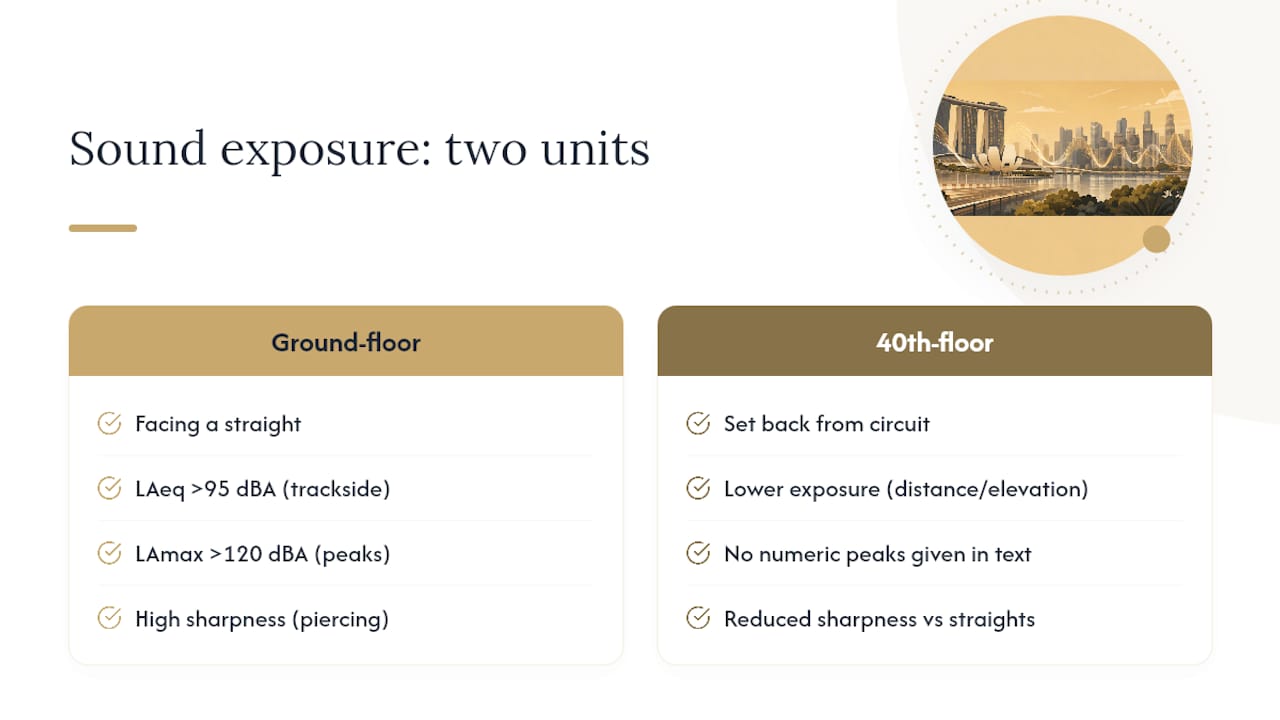
Distance, elevation, and what's standing between you and the track all shift the experience further. A ground-floor unit facing a straight will take a very different hit than a 40th-floor unit set back from the circuit, even if both sit within a few hundred meters of the action. Glass, concrete overhangs, and building orientation all bend and bounce sound in ways a flat decibel map can't capture.
Who Feels the Impact: Residents, Businesses, and Public Spaces
The noise is only one layer of disruption. Business Times reporting on the Grand Prix's local impact describes a genuine split: hospitality and F&B outlets near the grandstands see a revenue boost, while retailers and service businesses further from the action often report reduced foot traffic and operational headaches during setup and race week. The disruption isn't purely acoustic. It's logistical, stretching across several days of altered access, deliveries, and pedestrian flow.
Common friction points during race week include:
- Delivery delays as trucks reroute around barricades and restricted zones.
- Reduced walk-in traffic for shops and clinics outside the main entertainment strip.
- Canceled or rescheduled services, from home repairs to childcare pickups, when access roads close.
- Noise bleed into residential towers, especially units facing the track or open to prevailing wind direction.
Some residents have voiced ongoing frustration over how the event disrupts routine civic life, canceled appointments, altered business hours, and general strain during setup and teardown. Older adults, young children, shift workers who sleep during the day, and anyone with noise sensitivity or auditory processing conditions face the steepest costs. If you fall into one of those groups, plan around the event rather than through it.
Where the Noise Hits Hardest: Straights, Bends, and the Sound Canyon
Track geometry decides who gets the worst of it. Straights push cars to top speed under full throttle, producing that sharper, more piercing psychoacoustic signature the acoustic study flagged. Bends bring braking, downshifting, and re-acceleration in tight succession, generating the rougher, more textured sound profile instead. Neither is quiet, but they hit your ears differently.
Marina Bay's surrounding architecture makes things louder than the raw engine output would suggest. Tall buildings lining the circuit reflect and trap sound between their facades, a "sound canyon" effect that keeps engine noise bouncing rather than dissipating into open air. That's part of why residents several streets back from the track still report noticeable noise on race nights.
If you want to experience the atmosphere without a ticket, some free public vantage points still deliver a strong sense of the race, though visitor guides note you won't get the full sound and visual package you'd get trackside. Good options include:
- Elevated public walkways and bridges with a sightline toward the circuit perimeter.
- Waterfront promenades near Marina Bay that catch engine sound across open water.
- Rooftop bars and public viewing decks in buildings set back from the barriers.
What the Decibel Numbers Mean for Your Hearing
Hearing damage risk climbs sharply once you cross 85 dB of sustained exposure, the threshold most occupational health guidelines use as a starting point for concern. At the levels recorded trackside, above 95 dBA sustained and above 120 dBA at peak, safe exposure time drops from hours to minutes. Once you're near 130 dB, which some measurements of modern F1 cars have recorded at very close range, damage can occur almost immediately, even from a single burst.
Protection needs to match your position and duration:
- Foam earplugs work for casual viewing from a moderate distance and knock several decibels off perceived loudness.
- Over-ear muffs offer stronger protection for anyone stationed close to the fence line for extended periods.
- Combined foam plugs plus muffs are worth it for grandstand seats near the straights, where peak readings are highest.
Children's ears are more vulnerable to damage at lower thresholds, so kid-sized protection or simply keeping them further from the fence line matters more than for adults. Residents who can't leave the area during race nights should treat bedrooms and living spaces facing the track as high-exposure zones, not just noisy ones. Workers stationed trackside for extended shifts need consistent protection, not just protection during the loudest moments.
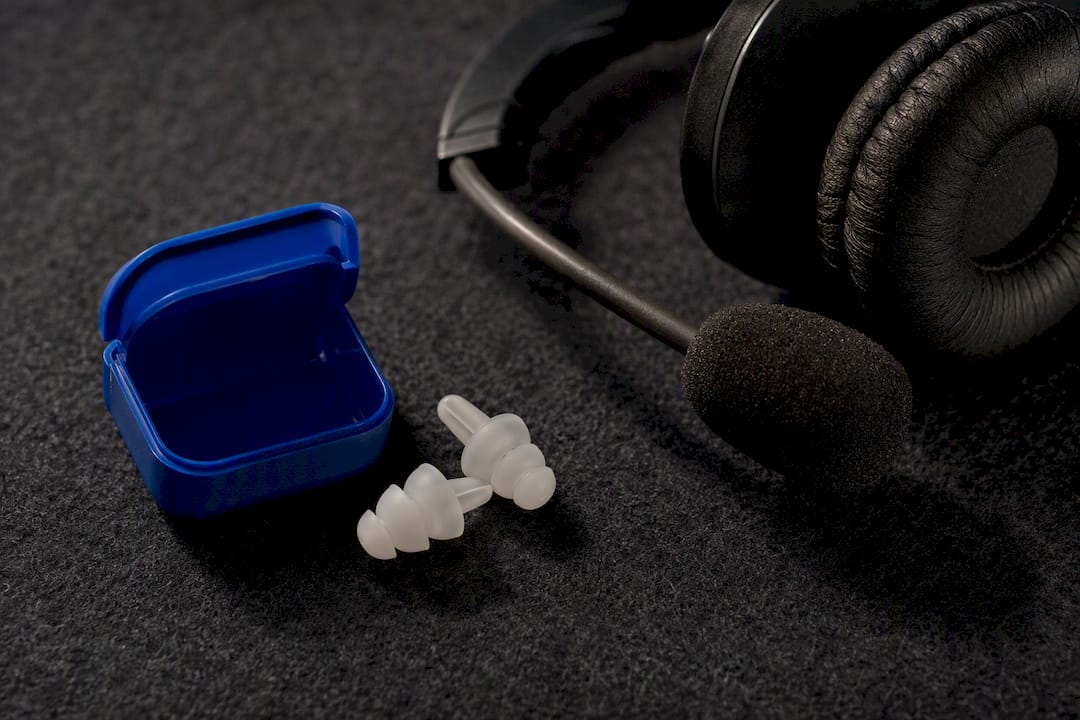
Pro Tip: If you want to follow commentary or talk to people near you, alternate between wearing plugs and briefly removing them rather than leaving your ears unprotected the whole time. Some attendees pair earplugs with dedicated commentary headsets to get both protection and sound.
How to Prepare Before, During, and After Race Week
Planning ahead turns a chaotic week into a manageable one. Start by checking the official LTA road closure notice as soon as it's published, since it lists exact closure dates, affected routes, and MRT station access changes you'll need to route around.
Before race week arrives:
- Reschedule deliveries and service appointments to avoid the closure window entirely.
- Stock up on earplugs or muffs if you're staying in the area.
- Notify customers, tenants, or clients of adjusted hours or access routes in advance.
During the event itself:
- Set up a quiet room away from the track-facing side of your unit if possible.
- Temporary door and window seals, similar to the fixes recommended for general noise pollution around homes, can meaningfully cut interior sound levels.
- White noise machines or fans help mask lower-frequency rumble that seals alone won't stop.
- Limit how long children spend outdoors near the perimeter.
Pro Tip: Book a hotel room or coworking space away from the circuit for the loudest nights if working or sleeping through the race weekend isn't realistic in your own unit.
After the event wraps, document any disruptions, damaged deliveries, missed appointments, unusual noise complaints, and raise them with building management or the relevant local authority if a pattern repeats year over year.
What Condo Buyers Near Marina Bay Should Check
If you're evaluating a unit near the circuit, treat race-week noise resilience as a real line item in your due diligence, not an afterthought. A handful of concrete checks separate a unit that handles race week comfortably from one that doesn't.
- Glazing specs: ask for STC or Rw ratings on windows facing the track; higher numbers mean better sound attenuation.
- Floor level: higher floors generally sit further from the sound canyon effect at street level.
- Unit orientation: a unit facing away from the straights will hear noticeably less than one with a direct sightline.
- Building management's event-week plan: ask how deliveries, childcare pickups, and guest access are handled during closures.
One Marina Gardens, positioned near Marina South MRT, is the kind of development where these questions are worth asking directly. Request measured facade performance data and a written contingency plan for event weeks rather than taking a sales pitch at face value; verifiable specs matter more than reassurance.
Weighing the Benefit Against the Disruption
The Grand Prix brings real economic activity and a genuine spectacle to Marina Bay, and plenty of residents enjoy the buzz. But that benefit sits alongside real costs for people living close to the circuit: interrupted sleep, disrupted routines, and a week of altered access. The honest takeaway is simple. Either plan carefully around race week or make peace with staying away from the immediate area while it happens.
— Velisa
Thinking About a Home Near Marina Bay?
If Marina Bay's energy appeals to you but you want a unit built to handle race week without turning your living room into the front row, the details matter more than the view. One Marina Gardens sits roughly 160 meters from Marina South MRT, with multiple sky terraces, a 50-meter lap pool, and a dedicated childcare center built into a mixed-use development in District 01.
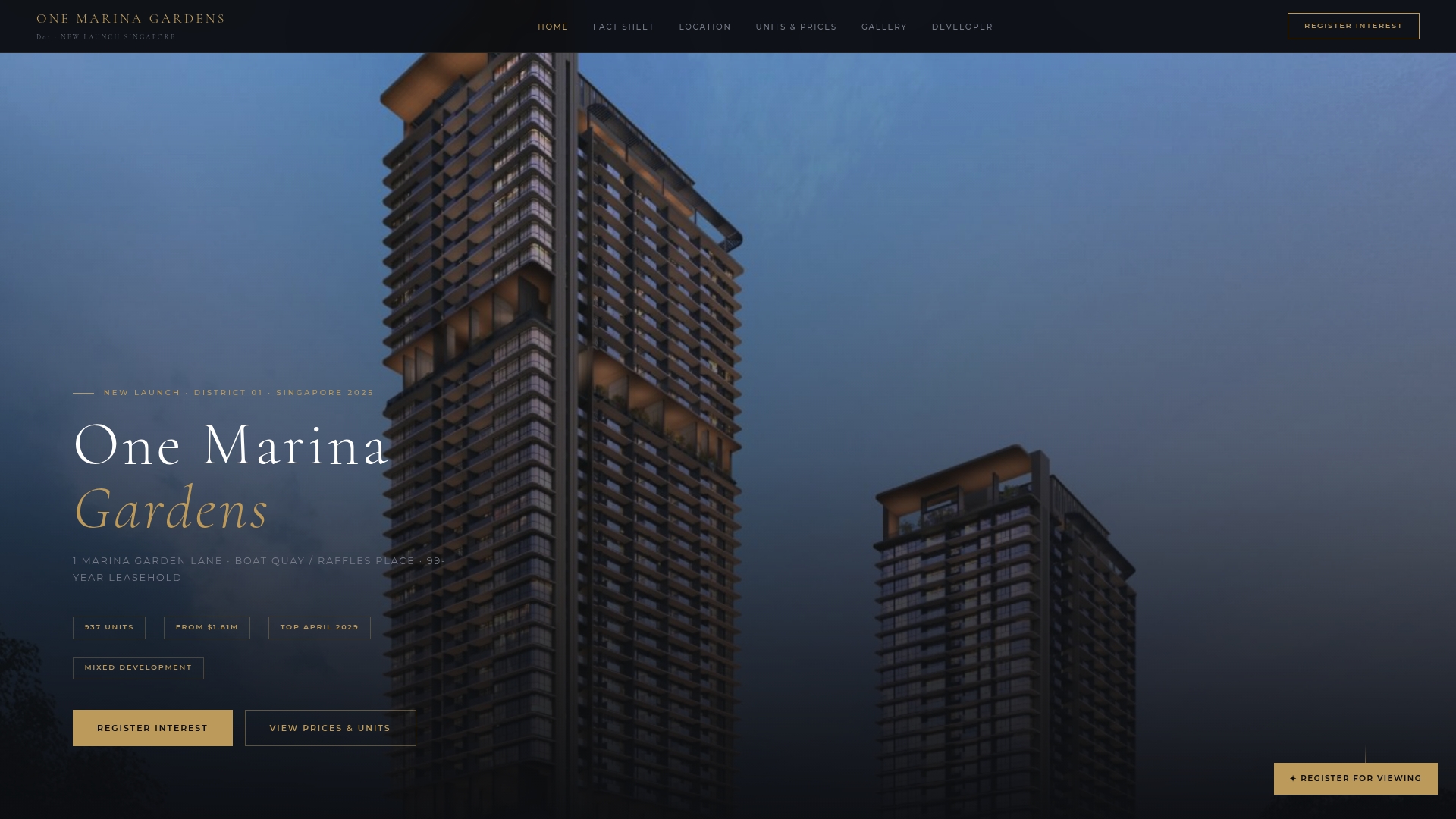
Before you commit to any unit near the circuit, ask directly about glazing performance and how building management handles deliveries, guest access, and childcare logistics during race week. The fact sheet lays out project specs and unit distribution so you can compare those details against whatever a sales agent tells you in person. Get in touch to check current availability and book a showflat visit.
This article is general information, not a substitute for advice from a qualified doctor. Consult a qualified healthcare professional about your own circumstances before acting on anything here.
Sources
- The sound and psychoacoustic analysis of 2023 Formula 1 race
- Road closure and transport arrangements — LTA (2026)
- Two sides of the track: winners and losers — Singapore F1 Grand Prix
- Singapore-spirit
FAQ
Can You Watch F1 From Marina Bay Sands?
Marina Bay Sands sits close to the circuit and offers elevated views from certain public areas, though you won't get the full trackside sound and sightline experience without a ticketed seat.
Why Is Singapore F1 Held at Night?
The race runs at night to suit European television broadcast windows and to avoid Singapore's daytime heat and humidity for drivers and spectators alike.
Does F1 Singapore Have Fireworks?
Yes, the Singapore Grand Prix weekend typically includes fireworks displays as part of its entertainment program, adding another layer of noise on top of the race itself.
Can I Drive to Marina Square During F1?
Driving access to Marina Square and surrounding areas is restricted during race week under the LTA's road closure arrangements, so check the official notice for exact dates and use MRT where possible.
How Loud Is Too Loud at Trackside?
Once sustained exposure crosses 85 dB, hearing risk increases significantly, and at the 95 to 120+ dBA range recorded near Marina Bay's straights, hearing protection isn't optional for anyone staying trackside for more than a few minutes.