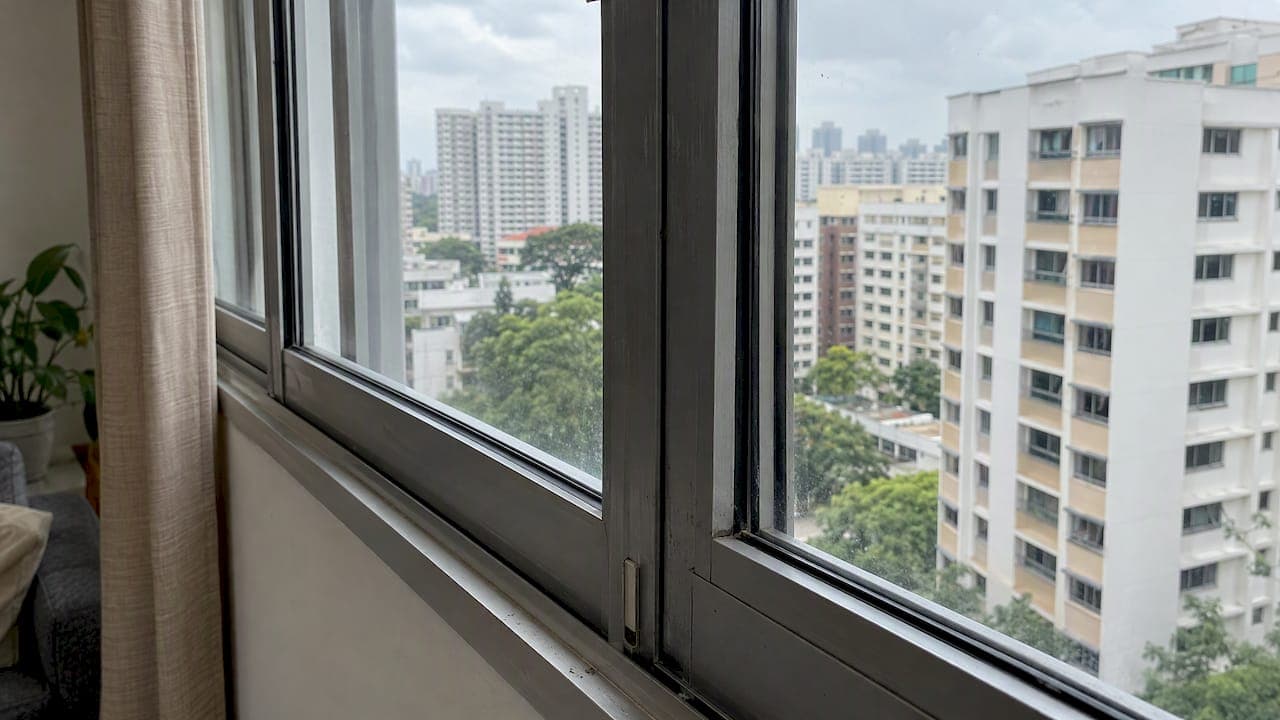
Double glazing is worth the investment if your home faces heavy traffic noise, strong afternoon sun, or both, but the payoff depends entirely on frame quality, seal work, and compliance. Before getting quotes, check HDB's renovation guidelines for your flat type and shortlist only BCA-approved window contractors.
TL;DR:
- An NTU study estimated 15% to 25% lower cooling loads in a typical three bedroom unit, but results depend on the complete window system.
- For traffic noise, request laminated acoustic glass, an airtight casement frame, and a written seal guarantee; premium sliding units can still leak sound.
- HDB generally bars replacing full height, three quarter height, or bay windows unless the frame is damaged and HDB grants permission; replacements must match the original type, color, and dimensions.
- Use BCA approved window contractors, secure permits before work, and retain completion reports; required professional engineer submissions can add weeks.
Table of Contents
- What double glazing actually does for your home
- How double glazing performs in Singapore's climate and why frame matters
- Types of double-glazed systems and what each is best for
- Soundproofing: how to get meaningful noise reduction
- Costs, typical timeline, and what affects price
- HDB and BCA compliance: step-by-step checklist for owners
- A practical take on double glazing and resale value
- FAQ
- Sources
What double glazing actually does for your home
Double glazing works by trapping air (or gas) between two glass panes, which slows heat transfer compared to a single pane. Pair that with a Low-E (low-emissivity) coating and the glass reflects more solar radiation before it ever reaches your living room, which matters in a climate where air conditioning runs most of the day.
The acoustic benefit comes from the same air gap plus the added mass of a second pane, though results vary widely depending on glass thickness and frame sealing. Double glazing also cuts down on condensation on the interior pane, since the outer surface stays closer to room temperature, and it blocks a large share of UV rays that fade furniture, flooring, and curtains over time.
- Reduces heat transfer through the glass, easing the load on your air conditioning
- Low-E coatings specifically target solar heat gain rather than just insulation
- Cuts UV transmission, protecting furnishings from sun damage
- Lowers interior condensation on humid days
One study found that Low-E double glazing can reduce cooling load by an estimated 15% to 25% in a typical three-bedroom unit, though the exact figure depends on the whole window system, not the glass alone.
How double glazing performs in Singapore's climate and why frame matters
Glass specification only tells half the story. Standard aluminum frames conduct heat efficiently, which works against you here: a well-chosen glass unit set into a plain aluminum frame still lets heat creep in around the edges. Thermally-broken aluminum frames, which insert an insulating barrier between the inner and outer metal sections, or uPVC frames, reduce this thermal bridging considerably.
Installation quality often limits real-world gains more than the glass itself does. A sliding sash, common in many Singapore homes, is harder to seal airtight than a casement window that closes against a compression gasket.
- Thermally-broken aluminum or uPVC frames cut heat conduction compared to plain aluminum
- Sliding frames are a frequent weak point for both air leaks and sound leaks
- High-rise condo units often see better results than ground-floor landed homes due to less direct heat exposure and dust infiltration
- HDB flats face additional restrictions on what frame types and window styles can be swapped in
Types of double-glazed systems and what each is best for
Most quotes will reference an insulated glass unit (IGU), which is simply the sealed double-pane assembly. Within that category, the specifics determine whether you are buying heat control, noise control, or safety glass.
- Low-E coated IGU: best for cutting solar heat gain and glare, ideal for west-facing or high-sun units
- Laminated acoustic IGU: uses a plastic interlayer between panes, which dampens sound vibration better than standard float glass
- Asymmetric glass build: pairs two different glass thicknesses (for example 6mm and 10mm) to disrupt sound frequencies that pass through matched panes more easily
- Safety laminated glass: required in some HDB and BCA contexts for high-rise units, since it holds together when cracked rather than shattering outward
The window mechanism matters as much as the glass. A casement window with a laminated acoustic IGU and a tight compression seal will outperform a sliding window with the same glass, because sliding tracks are harder to seal completely.
Pro Tip: Ask your contractor to specify the exact glass build-up (thickness of each pane, air gap width, coating type) in writing before you compare quotes, since "double glazing" alone tells you almost nothing about performance.

Soundproofing: how to get meaningful noise reduction
Many homeowners install double glazing expecting dramatic silence and end up disappointed, usually because the glass was fine but the installation was not. Industry practitioners note that a high-spec IGU in a poorly sealed sliding frame can perform worse than a modest unit installed in an airtight casement frame.
Glass build-up, laminated interlayers, and the width of the air gap between panes all affect how much sound gets through, but so do the small gaps around the frame perimeter, the compression of door and window seals, and whether sliding tracks are properly fitted.
- Confirm the glass has a laminated acoustic interlayer, not just a standard air gap
- Ask whether the frame seals are tested or just visually inspected after install
- Request the sound transmission class or Rw rating for the specific glass build quoted, where available
- Check whether ventilation gaps or trickle vents compromise the seal design
Pro Tip: Request a written installation guarantee that covers seal performance, not just glass defects, since most underperformance complaints trace back to fitting rather than the glass itself.
Costs, typical timeline, and what affects price
Contractors in Singapore typically price double glazing per window or per square meter, with unit count, accessibility, and glass specification driving most of the variation between quotes. A small bedroom window with a basic Low-E IGU will cost far less than a full living room sliding door with laminated acoustic glass.
Expect your final price to reflect frame material (uPVC and thermally-broken aluminum cost more than standard aluminum), glass build complexity, how many units need replacement, and whether scaffolding or crane access is needed for upper floors.
- Frame material and glass specification are the two biggest cost drivers
- Larger projects with more units often get a better per-unit rate
- HDB permit processing and PE(Civil) submissions, when required, can add weeks to the timeline
- Difficult access, such as high floors without existing scaffolding points, raises installation cost
HDB and BCA compliance: step-by-step checklist for owners
Compliance is not optional, and skipping it can create problems at resale or during a routine inspection. HDB's guidelines generally prohibit replacing full-height, three-quarter height, or bay windows unless the existing frame is damaged and HDB grants specific permission, and any approved replacement must match the original type, color, and dimensions.
- Confirm your renovation permit is in place before any window work starts
- Engage a BCA-approved window contractor registered under RW01, or a builder with the right license, using trained window installers
- Check whether a standardized design applies to your unit, which avoids a lengthy professional engineer submission
- If a standardized design does not apply, confirm a PE(Civil) will handle the design and submit it to BCA
- Request copies of the contractor's registration, the approved permit, and the completion report once work finishes
BCA requires contractors to submit completion reports after window replacement or retrofitting work, and materials such as rivets must meet stainless steel standards compliant with BS EN 10088. Keep every document from the permit application through the final completion report, since these records matter if you ever sell the unit or face a routine building inspection.
A practical take on double glazing and resale value
Documentation matters as much as the glass itself. A buyer's lawyer or the next owner's agent will ask about permits for any window change, and missing paperwork can stall a sale or raise questions during due diligence.
Weigh comfort gains against the compliance work involved, and keep every permit, contractor credential, and completion report together for your sale disclosures later.
— Velisa
This article is general information, not a substitute for advice from a qualified lawyer. Consult a qualified legal professional about your own circumstances before acting on anything here.
FAQ
How much do soundproof windows cost in Singapore?
Pricing depends heavily on glass specification, frame material, and the number of windows involved, so costs vary significantly between a single bedroom window and a full-home retrofit. Request itemized quotes from multiple BCA-approved contractors to compare like-for-like specifications rather than relying on a single average figure.
What is double glazing windows?
Double glazing refers to a window built with two panes of glass separated by a sealed air or gas-filled gap, which slows heat transfer and can reduce noise transmission compared to a single pane. Performance depends on the glass coating, interlayer type, and how airtight the surrounding frame is.
What are the three types of windows?
Window classifications vary by context, but in terms of glazing structure, the common categories are single-glazed, double-glazed, and triple-glazed units. In Singapore, triple glazing is rare and generally unnecessary given the climate. Double glazing remains the commonly available and standard upgrade option.
What is the typical window height for HDB flats in Singapore?
HDB sets a minimum internal window sill height of 1.0 meter for safety, and this applies when windows are replaced or retrofitted. Replacement windows must also match the original type, color, and dimensions unless HDB grants specific permission for a different configuration.
Can I finance window upgrades alongside other renovation costs?
Many homeowners bundle window upgrades into a broader renovation loan or home equity arrangement rather than paying out of pocket. A broker such as KAPVOY Advisory can help match renovation financing options across a panel of banks and lenders if you are weighing upgrade costs against your budget.
If you are weighing a window upgrade against buying into a home that already offers efficient glazing, strong noise insulation from height, and resort-style comfort, our 2 Bedroom, 3 Bedroom, and 3BR Premium residences at One Marina Gardens come with thoughtfully specified windows and panoramic Marina Bay views built in from day one. Our location near Marina South MRT offers convenience, and our sky terraces and lap pool offer the kind of everyday comfort a window retrofit alone cannot deliver. Reach out to check current availability and pricing.
Sources
- Renovation guidelines — window works (HDB)
- Windows safety — Building and Construction Authority
- NTU research on glazing and cooling loads