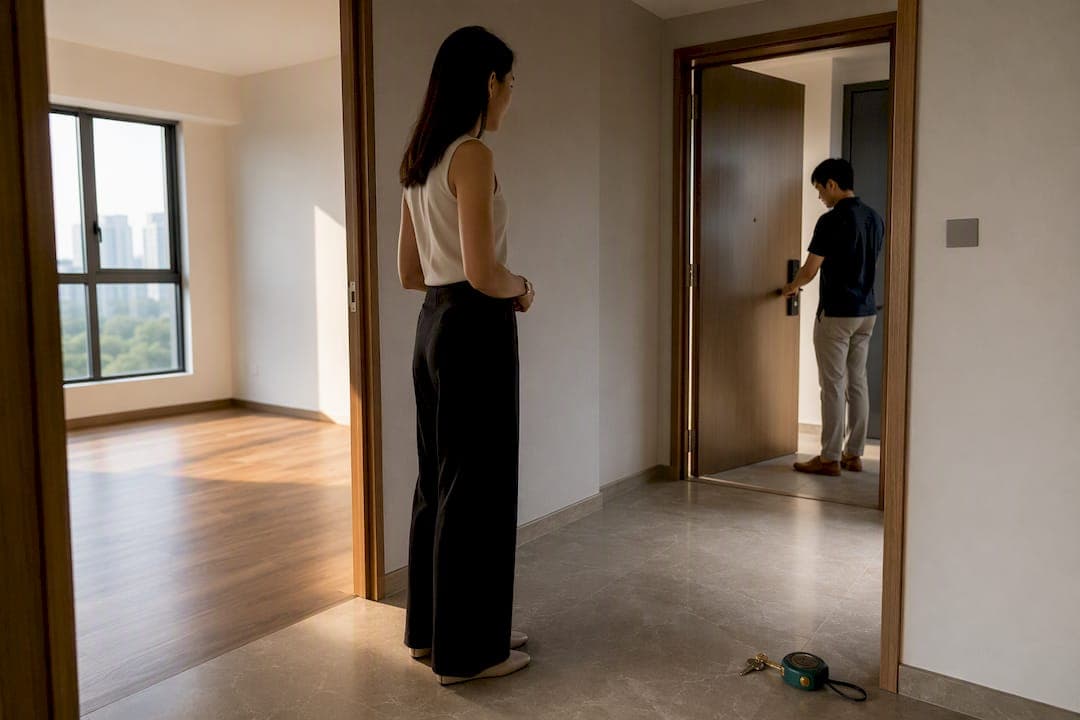
A dual key condo is a single-strata apartment split into two lockable living zones under one title, and in Singapore it suits investors or multigenerational families who can manage active tenancy and accept limits on how the unit can later be sold. The upside is flexible income and shared living; the downside is a smaller resale buyer pool and financing that lenders treat more cautiously. Before committing, check the BCA guidance for condo owners and IRAS rules on stamp duty.
TL;DR:
- Dual key units can generate two rental incomes, but their resale value is limited due to the single-title structure restricting buyer pool expansion.
- Lenders may impose higher down payments and stricter serviceability checks because of the reliance on rental income from two tenants.
- Renovations involving structural changes require Professional Engineer approval and MCST consent, especially when merging or modifying shared walls or services.
- The property counts as one for ABSD purposes under IRAS rules, minimizing additional stamp duty but complicating future resale or multiple purchases.
- Location impacts rental resilience, with districts near MRT stations and central business districts offering more stable tenant demand.
Table of Contents
- What a dual key unit looks like inside a Singapore condo
- Weighing rental income against resale and financing limits
- Planning a dual key renovation that keeps both zones livable
- Your responsibilities as owner under MCST and BCA rules
- A buyer's checklist from showflat visit to signed contract
- How owners actually use dual key units in Singapore
- Who should seriously consider a dual key unit
- Where to verify the rules before you buy
- Finding your own fit in District 01
- Sources
- FAQ
What a dual key unit looks like inside a Singapore condo
A dual key unit is one strata title containing two self-contained living spaces, each with its own entrance, kitchenette or kitchen, and bathroom. You cannot sell the two halves separately later since they sit on a single title, which shapes every decision about financing and exit.
In Singapore showflats, you will typically see three layout patterns:
- A shared foyer that splits into two private doors once inside the unit.
- Fully separate entries from the corridor, so the two halves never share a landing.
- A split-level design where one unit sits above the other, connected internally but lockable.
Before signing anything, confirm each zone has its own kitchen or kitchenette, a private bathroom, independent electrical and water metering where offered, and a door that locks separately from the main unit. Missing any of these turns a "dual key" listing into a standard apartment with an extra room.
Weighing rental income against resale and financing limits
Dual key units can generate two rental streams from one purchase, appealing to owners who want to house a parent while renting the second half, or investors chasing higher combined yield from a single quantum. The trade-off shows up at resale: because the unit cannot be split into two titles, you are selling to a narrower pool of buyers who specifically want a dual key configuration.

Additional Buyer's Stamp Duty also treats a dual key purchase as one property, not two, since it carries a single title. That matters for a buyer's ABSD calculation on a next purchase.
A dual key condo counts as a single property for ABSD purposes) under IRAS rules, so buying one does not trigger the higher rate reserved for a second or third residential property the way two separate units would.
A few other factors shape the investment case:
- Lenders often scrutinize dual key purchases more closely, sometimes asking for higher down payments or tighter serviceability checks given the reliance on rental income from two tenants.
- Rental resilience depends heavily on location: districts near MRT stations and the CBD draw a steadier pool of tenants and expats willing to pay for the flexibility.
- Owner-occupiers who plan to merge both halves into one home should budget for renovation and approval costs on top of the purchase price.
Foreign buyers weighing these numbers against their own ABSD profile should also review the eligibility and financing considerations for non-resident buyers before making an offer.
Planning a dual key renovation that keeps both zones livable
Treat each half of a dual key unit as its own design brief. The side you plan to rent out needs durability and low-maintenance finishes, while an owner-occupied side can carry more personal choices in materials and layout.
- Write two separate scopes of work, one per zone, covering finishes, storage and lighting so contractors do not default to a single shared plan.
- Plan the shared arrival point first: if both doors open onto one small foyer, add sound-dampening panels or a lobby divider to reduce shared noise.
- Size storage for two households, not one, since combined foyer and corridor space often shrinks when a unit is split into two zones.
- Check whether any wall between the zones is load-bearing before assuming it can be altered or removed.
Pro Tip: Ask the design firm for a floor plan that marks every shared service line, water, electrical and ventilation, before finalizing the layout so neither zone loses access during future repairs.
Any renovation touching structural elements or shared services needs sign-off before work starts. That means engaging a Professional Engineer for structural changes and checking with your Management Corporation Strata Title (MCST) and, where required, URA before demolishing or relocating walls.
Your responsibilities as owner under MCST and BCA rules
Buying a dual key unit makes you a Subsidiary Proprietor (SP) under Singapore's strata title system, with the same obligations as any other condo owner. BCA guidance for condo owners states that SPs must follow MCST rules and cannot alter structural or external features without approval, a rule that applies just as strictly to a dual key layout as to a standard unit.
Because dual key renovations often involve adding a second kitchen or bathroom, or adjusting partition walls between the two zones, they draw more MCST and regulatory attention than a typical touch-up. The BCA advisory on renovation works requires that demolition or structural changes be endorsed by a qualified Professional Engineer and approved by the Commissioner of Building Control.
Practical steps to stay compliant:
- Request the unit's original approved floor plans from the MCST before planning any layout change.
- Get written PE endorsement for any wall removal or structural modification, not just a verbal opinion.
- Submit for MCST approval before work starts, since retroactive approval is far harder to secure and can trigger a Dangerous Building Order if works proceed unapproved.
A buyer's checklist from showflat visit to signed contract
A dual key purchase deserves more scrutiny than a standard unit because the layout, tenancy mix and title structure all affect long-term value.
- Check MRT distance and CBD travel time, since tenant demand for dual key units leans heavily on convenience for expats and young professionals.
- Review the MCST's recent minutes for sinking-fund health and any history of renovation disputes or enforcement action.
- Ask whether previous owners altered the layout and whether those changes had proper approval.
- Get a rough renovation quote for your intended use, whether that means merging the two zones or upgrading each for separate rental.
- Confirm your ABSD exposure and loan terms with your bank before making an offer, since dual key financing can carry different conditions than a standard mortgage.
Pro Tip: Bring the MCST's maintenance fee schedule and sinking-fund report to your bank when applying for a loan, since some lenders factor building health into their serviceability assessment.
For a full showflat walkthrough, a showflat viewing checklist and a guide to condo maintenance fees cover the physical and financial checks in more detail.
How owners actually use dual key units in Singapore
Owners tend to fall into a few patterns: housing parents on one side while renting the other, renting both halves separately to maximize yield, or merging the two zones into a single larger home once children move out.
- Multigenerational households value the built-in privacy alongside proximity, letting parents and adult children share a building without sharing every room.
- Investors renting both sides report more hands-on work than a single-tenant unit, since two tenancies mean double the turnover, viewings and maintenance calls.
- Owners attempting to merge both zones into one home need MCST approval and often face structural limits, as shown by a Somerset dual key conversion reworked into a larger sky villa, a project that required significant design and approval work to combine the spaces.
Who should seriously consider a dual key unit
A dual key condo fits investors comfortable managing two tenancies and owner-occupiers who genuinely want built-in space for extended family. It does not fit buyers who want a simple resale exit or a hands-off rental. Do your ABSD math, check the MCST's track record, and go in expecting active management, not passive income.
— Velisa
Where to verify the rules before you buy
Check IRAS's ABSD guidance, BCA's condo owner guidance, the BCA renovation advisory, and URA's renovation guidelines before signing or renovating.
Finding your own fit in District 01
If a dual key layout appeals for the flexibility but you would rather skip the two-tenant juggling act, a well-located single unit with strong fundamentals can deliver similar peace of mind with less hands-on work. A well-located development in District 01, approximately 160 meters from Marina South MRT, with access to the CBD and Orchard Road, offers a range of 1 to 4-bedroom layouts. For buyers weighing ABSD exposure on their next purchase, our ABSD guide for foreigners buying at One Marina Gardens walks through the numbers specific to this development. Check current unit types and floorplans to see which layout matches your plans, whether that is owner-occupation or long-term rental income.
This article is general information, not a substitute for advice from a qualified financial advisor. Consult a qualified financial professional about your own circumstances before acting on anything here.
Sources
- What to know as a condo owner | Building and Construction Authority
- Advisory on control of renovation works involving demolition of non-structural elements (BCA)
- Renovating private residential property | URA
FAQ
Is a dual key condo a good investment?
A dual key condo can generate two rental incomes from one purchase, which appeals to investors chasing higher combined yield, but it also draws a smaller resale buyer pool since the title cannot be split. Whether it performs well depends heavily on location, with units near MRT stations and the CBD holding stronger tenant demand.
Does HDB allow dual key units?
Dual key layouts are a private condominium product in Singapore and are not part of the standard HDB flat typology. Buyers looking for a dual key configuration should search within private condo developments rather than HDB resale or BTO listings.
What is a dual key condo?
A dual key condo is a single-strata apartment containing two separate lockable living zones, each with its own entrance, kitchen or kitchenette, and bathroom. Both zones sit under one title, so the unit must be bought, financed and eventually sold as a single property.
How does ABSD apply when buying a dual key unit?
Because a dual key unit carries a single title, IRAS counts it as one property for ABSD purposes, not two. This differs from buying two separate strata units, which would each count toward a buyer's ABSD profile.
Can I convert a dual key unit into a single larger home?
Some owners have merged both zones into one larger residence, but this requires MCST approval and often a Professional Engineer's sign-off if walls or structural elements are involved. Check the BCA renovation advisory and confirm with your MCST before assuming a conversion is straightforward.