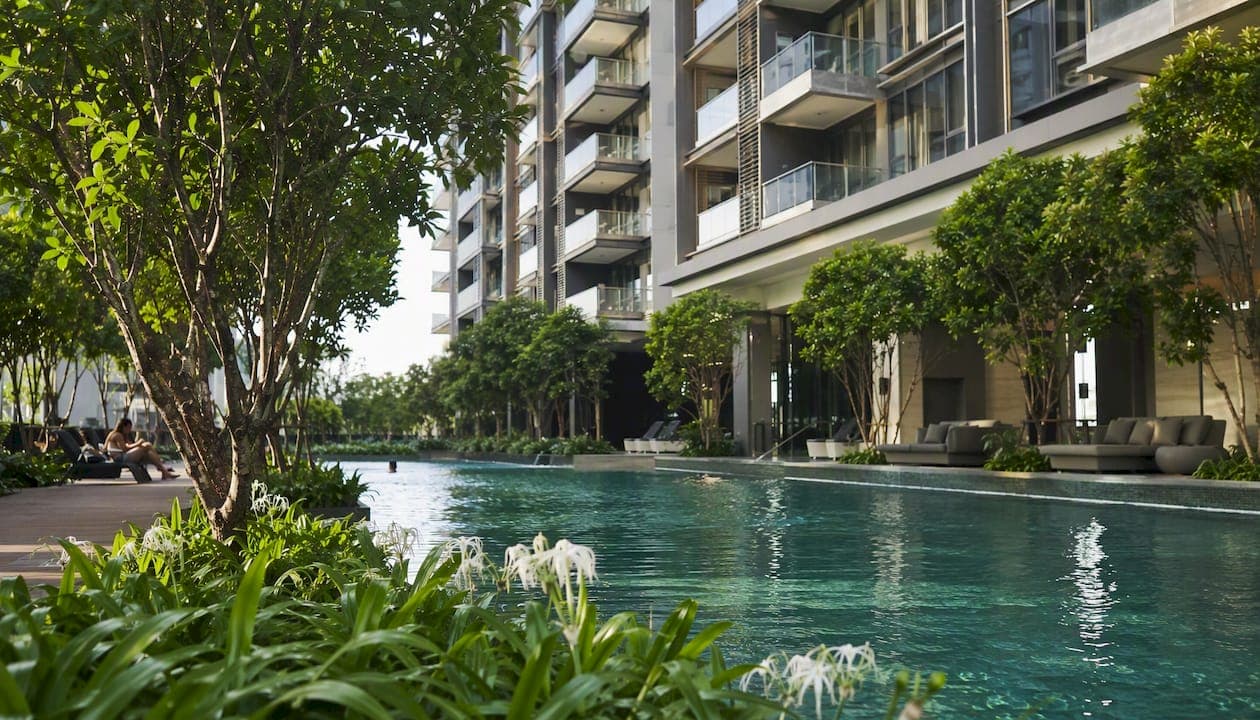
Condo maintenance fees in Singapore are mandatory monthly contributions every unit owner pays to their Management Corporation Strata Title (MCST), the statutory body that runs the development's common property. The fees split into two legally distinct pots: a management fund for day-to-day operations and a sinking fund for major long-term works. Before anything else, request the sinking-fund balance. That single number tells you more about a development's financial health than the monthly fee itself.
Here is what you need to know upfront:
- Fees for mass-market and mid-tier condos typically run in the range of S$250 to S$700 per month; luxury and central-region developments often exceed that range depending on facilities and unit size.
- The Building and Construction Authority (BCA) oversees strata management and publishes guidance on how MCSTs must collect and administer these funds.
- The Association of Strata Managers (ASM) and the MCST Association of Singapore are the industry bodies that set professional standards for managing agents and council members.
- Governance quality, not just amenity count, is the biggest predictor of whether fees stay stable or spike.
Pro Tip: When inspecting any unit, ask for the latest audited accounts, the last two years of AGM minutes, and the current sinking-fund balance before you make any offer. A low sinking-fund balance relative to building age is a red flag that special levies may be coming.
Key Takeaways
Singapore condo maintenance fees fund both daily operations and long-term capital works, and the sinking-fund balance is the single most reliable indicator of whether future fee shocks are likely.
| Point | Details |
|---|---|
| Two funds, two purposes | Management fund covers operations; sinking fund covers capital works. Check both balances before buying. |
| Sinking-fund adequacy matters most | A low sinking-fund balance relative to building age is the clearest predictor of future special levies. |
| 2026 fee ranges by tier | Mass-market: S$250–S$450/month; mid-tier: S$400–S$700/month; luxury/central: S$700–S$1,500+/month. |
| Governance drives costs | Council engagement, competitive tendering, and MA quality affect fees as much as amenities do. |
| Onemarinagardens, District 01 | One Marina Gardens is a new-launch luxury development with a full facility suite. Review the fact sheet for its fee structure and facilities before comparing against older stock. |
Table of Contents
- What condo (MCST) maintenance fees are under Singapore law
- What your maintenance fees actually pay for
- Typical fee ranges in 2026 by condo tier
- How condo maintenance fees are calculated
- Why maintenance fees are rising in 2026
- What to do when your condo fee increases or a special levy is proposed
- Checklist: what to check about fees before you buy a condo
- How reserve planning changes your long-term costs: a scenario
- Practical tips to manage or reduce the impact of maintenance fees
- Which authorities handle condo governance and where to get help
- What most buyers get wrong about condo maintenance fees
- One Marina Gardens: a new-launch benchmark for fee transparency
- Sources
- FAQ
What condo (MCST) maintenance fees are under Singapore law
Private condominiums in Singapore are governed by the Building Maintenance and Strata Management Act 2004 (BMSMA), which gives the MCST its legal authority to collect contributions from subsidiary proprietors (SPs) and manage common property. Every unit is assigned a share value at the point of development, and contributions are levied in proportion to that share value. A unit with a higher share value pays more, regardless of whether the owner uses the pool or gym.
The MCST must maintain two statutory funds: a management fund for day-to-day operational expenses (cleaning, security, utilities for common areas, minor repairs) and a sinking fund for long-term capital expenditure such as repainting, lift replacement, and major equipment overhaul. Contributions to each fund are decided at general meetings and must be kept separate under the BMSMA.
The BCA's Strata Management Guide SMG1 lays out this two-fund structure clearly, including what each fund may and may not be used for. Day-to-day items come from the management fund; anything that qualifies as a capital or long-term replacement goes through the sinking fund.
Decision-making sits with the Management Council (MC), elected by SPs at the Annual General Meeting (AGM). The MC can appoint a licensed managing agent (MA) to handle operations, but the MC itself remains accountable for budgets and fund levels. According to BCA's SMG2, the MC's responsibilities include obtaining building insurance, keeping financial records, calling general meetings, and setting or reviewing contribution amounts at those meetings.
Collection frequency varies: some MCSTs bill monthly, others quarterly or semi-annually. For new launches, developers must publish the maximum initial maintenance charge in the Sale and Purchase Agreement (SPA) or Option to Purchase (OTP) before the first AGM, capping what buyers can be charged at the outset.
What your maintenance fees actually pay for
Understanding the line items behind a quoted monthly fee helps you judge whether it is fair for what the development offers.
Management fund covers:
- Common-area electricity and water (corridor lighting, lift power, pool pumps)
- Cleaning and landscaping of shared spaces
- Security personnel and access-control systems
- Building insurance for common property
- Managing agent fees and administrative costs
- Minor repairs and routine maintenance (painting touch-ups, plumbing in common areas)
- Staff wages, which are increasingly affected by the Progressive Wage Model
Sinking fund covers:
- Lift modernization or full replacement (typically every 20–25 years)
- Facade repainting and waterproofing (major cycles every 7–10 years)
- Pool equipment overhaul and resurfacing
- Roof replacement and structural repairs
- Large-scale additions and alterations (A&A works)
- Major mechanical and electrical system upgrades
What fees do NOT cover:
- Electricity and water inside your unit
- Contents or home insurance for your belongings
- Private parking charges beyond the allocated lot
- In-unit renovation or repair costs
Special levies are one-time charges the MCST can propose when the sinking fund is insufficient for a major repair. Frequent special levies are a direct sign that the sinking fund has been chronically under-collected.
Typical fee ranges in 2026 by condo tier
Fee levels vary significantly by development type, location, and facilities. The figures below reflect general 2026 market conditions for Singapore condos.
| Condo tier | Typical monthly range (S$) | Sinking fund share (approx.) | Common facilities | Age note |
|---|---|---|---|---|
| Mass-market (OCR) | Moderate monthly fees likely under S$450 | Sinking fund contributions vary | Pool, gym, basic security | Older stock may need higher sinking contributions |
| Mid-tier (RCR) | Moderate to higher monthly fees often up to around S$700 | Sinking fund contributions vary | Pool, gym, function rooms, lifts | Mid-age buildings often in active capital cycles |
| Luxury / central (CCR/D01) | Higher monthly fees typically exceeding mid-tier levels | Sinking fund contributions tend to be higher | Multiple pools, sky terraces, concierge, childcare | New launches start lower; older luxury stock varies |
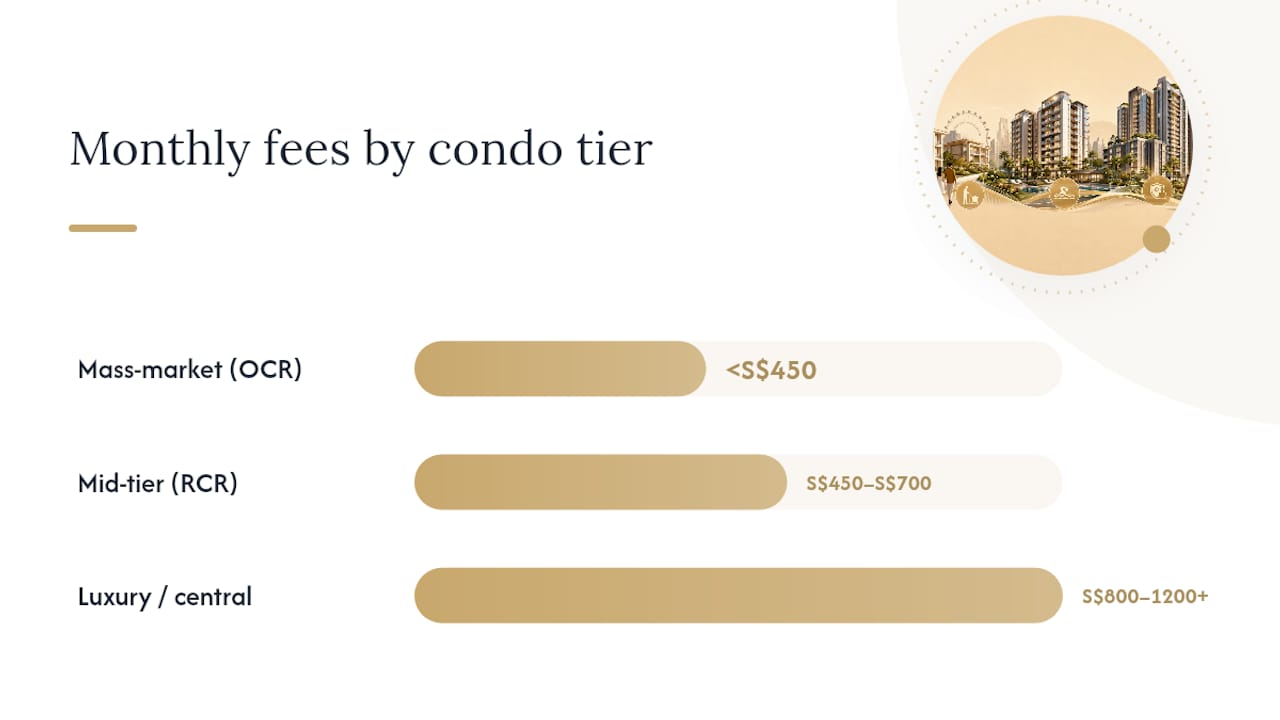
A few scenario examples make the variance concrete. A 1-bedroom unit in a mid-tier condo in the Rest of Central Region (RCR) with a share value of 5 might pay around S$450–S$550/month. The same 1-bedroom in a luxury central development with a higher share value of 7 and more extensive facilities could pay S$800–S$1,000/month. A 3-bedroom in that same luxury building, with a share value of 10, could exceed S$1,200/month.
The main drivers of that variance:
- Amenities and service levels: a development with multiple pools, sky terraces, a childcare centre, and concierge costs more to run than one with a single pool and gym.
- Share value allocation: larger or premium units carry higher share values and therefore higher contributions.
- Building age: older buildings face more frequent capital works, pushing sinking-fund requirements up.
- Number of units: a 100-unit boutique development spreads fixed costs across fewer owners than a 900-unit project, often resulting in higher per-unit fees.
- Management model: a self-managed council with strong procurement discipline can control costs; an MA with performance-based contracts tends to deliver better value than one on a flat retainer.
For buyers comparing developments, the URA's condominium information provides useful context on what facilities and unit types are typical across Singapore's private residential market.
How condo maintenance fees are calculated
The math is straightforward once you know the inputs.
- Determine the total annual budget: the MC adds up all projected management-fund expenses (operations, insurance, MA fees, wages) and sinking-fund contributions for the year.
- Divide by total share value: the budget is divided by the development's total share value to get a contribution rate per share.
- Multiply by unit share value: each unit's monthly fee equals the contribution rate multiplied by that unit's share value.
A simple worked example: if a development's total annual budget is S$1,200,000 and the total share value across all units is 2,000, the rate is S$600 per share per year, or S$50 per share per month. A unit with share value 8 pays S$400/month; a unit with share value 12 pays S$600/month.
What feeds into the budget:
- Utilities for common areas (often the largest single line item)
- Insurance premiums, which have risen with property values
- MA fees and any specialist contractor retainers
- Staff wages, now subject to Progressive Wage Model requirements
- Planned capital works scheduled for the sinking fund
Collection frequency changes the cash-flow shape without changing the annual quantum. Monthly billing is the most common and the most manageable for owners. Some MCSTs bill quarterly or semi-annually, which can create a larger lump-sum obligation. Switching from annual to monthly collection can make payments easier for owners even when the total annual amount stays the same.
Management model comparison:
| Model | Cost control | Transparency | Typical fit |
|---|---|---|---|
| Self-managed council | High (direct oversight) | Depends on council capability | Smaller developments with engaged owners |
| Appointed managing agent | Moderate (contract-dependent) | Higher with performance contracts | Most mid-to-large developments |
| Performance-based MA contract | Best long-term value | High | Developments with active, informed councils |
Why maintenance fees are rising in 2026
Several converging pressures are pushing fees upward across Singapore's condo market.
- Inflation and utility tariffs: electricity and water costs for common areas have increased, and those costs flow directly into the management fund.
- Progressive Wage Model (PWM): mandatory wage floors for security officers, cleaners, and landscape workers have raised the staff-cost line in most MCSTs' budgets.
- Insurance premiums: building insurance costs have risen with higher property valuations and increased claims frequency.
- Ageing building stock: Singapore's older condos, many built in the 1980s and 1990s, are entering major capital cycles for lifts, facades, and mechanical systems simultaneously.
- GST increases: the GST rate increases in 2023 and 2024 flowed through to service contracts and supplies, adding to operating costs.
- Under-collected sinking funds: BCA is actively reviewing strata management partly because many ageing condos have not collected adequate sinking funds, leaving them exposed to large repair bills with insufficient reserves.
One reported example from Channel NewsAsia illustrates the scale: residents in one development paid S$292/month with approximately S$60/month allocated to the sinking fund. When major works arrive and reserves fall short, the gap must be covered by a special levy, which can run into tens of thousands of dollars per unit for large structural projects.
The governance risk signals to watch: a sinking-fund balance that has not grown proportionally with building age, a council that repeatedly defers scheduled cyclical works, and a history of special levies in the AGM minutes. Any one of those patterns suggests fees are likely to rise sharply in the near term.
What to do when your condo fee increases or a special levy is proposed
A fee increase or special levy proposal is not something to accept passively. Here is a practical sequence:
- Request the AGM papers and audited accounts for the last two to three years. The budget breakdown will show exactly where costs have risen.
- Review the sinking-fund projection: ask the MC or MA for a multi-year sinking-fund schedule showing projected contributions versus planned expenditure.
- Ask for tender documents and contractor quotes: for any major works triggering a special levy, the MC should have obtained at least three competitive quotes. If they have not, request that they do.
- Consider requisitioning a general meeting: under the BMSMA, a sufficient number of SPs can requisition an extraordinary general meeting to discuss or challenge a proposed levy.
- Know the voting thresholds: an ordinary resolution (simple majority of votes cast) covers most routine fee increases. A special resolution (75% of votes cast) is required for certain major works and by-law changes. Understanding which applies to your situation determines your leverage.
- Escalate if necessary: if you believe the MC has acted improperly, BCA is the primary regulatory body for strata management complaints. Disputes can also be referred to the Strata Titles Board.
Documents to collect before any meeting:
- Audited financial statements (last 2–3 years)
- Current and proposed budgets
- AGM and EOGM minutes
- Contractor quotes and tender documents
- Sinking-fund schedule and balance
Red flags that warrant closer scrutiny: a special levy proposed without competitive tendering, an MA that has not been reviewed or re-tendered in many years, and audited accounts that show the sinking fund declining in real terms.
Checklist: what to check about fees before you buy a condo
Due diligence on maintenance fees should happen before you sign the OTP, not after.
Documents to request from the seller, agent, or developer:
- Latest audited financial accounts (management fund and sinking fund separately)
- Last two to three years of AGM minutes (look for special levies, deferred works, contested votes)
- Current annual budget and the proposed budget for the next year
- Sinking-fund balance and a schedule of planned major works
- Record of any past special levies and their amounts
- Copy of the MA contract and its remaining term
How to read the sinking-fund balance: compare the balance per unit against the building's age and the likely cost of upcoming capital works. A 20-year-old building with S$2,000 per unit in the sinking fund and a lift replacement due in three years is in a very different position from a new development with S$5,000 per unit already reserved.
Red flags:
- Developer-set initial contributions that are very low relative to the facility footprint (common in new launches to keep headline fees attractive)
- Missing or incomplete audited accounts
- Repeated short-term loans from the developer to the MCST to cover operational shortfalls
- AGM minutes showing the same deferred maintenance items appearing year after year
- A sinking-fund balance that has barely grown despite years of collection
Buyer budgeting tip: model fee increases conservatively. Developers must disclose the maximum initial maintenance charge in the SPA or OTP, so check that figure against what the building's facilities actually cost to run.
Pro Tip: Decompose any quoted monthly fee into its management-fund run-rate and sinking-fund contribution before comparing two developments. A lower headline fee with a negligible sinking-fund allocation is often more expensive in the long run than a higher fee with a healthy reserve.
How reserve planning changes your long-term costs: a scenario
Consider two identical 200-unit developments, both built in the same year with the same facilities. Development A sets an initial sinking-fund contribution of S$80/month per average unit. Development B sets it at S$40/month to keep headline fees competitive.
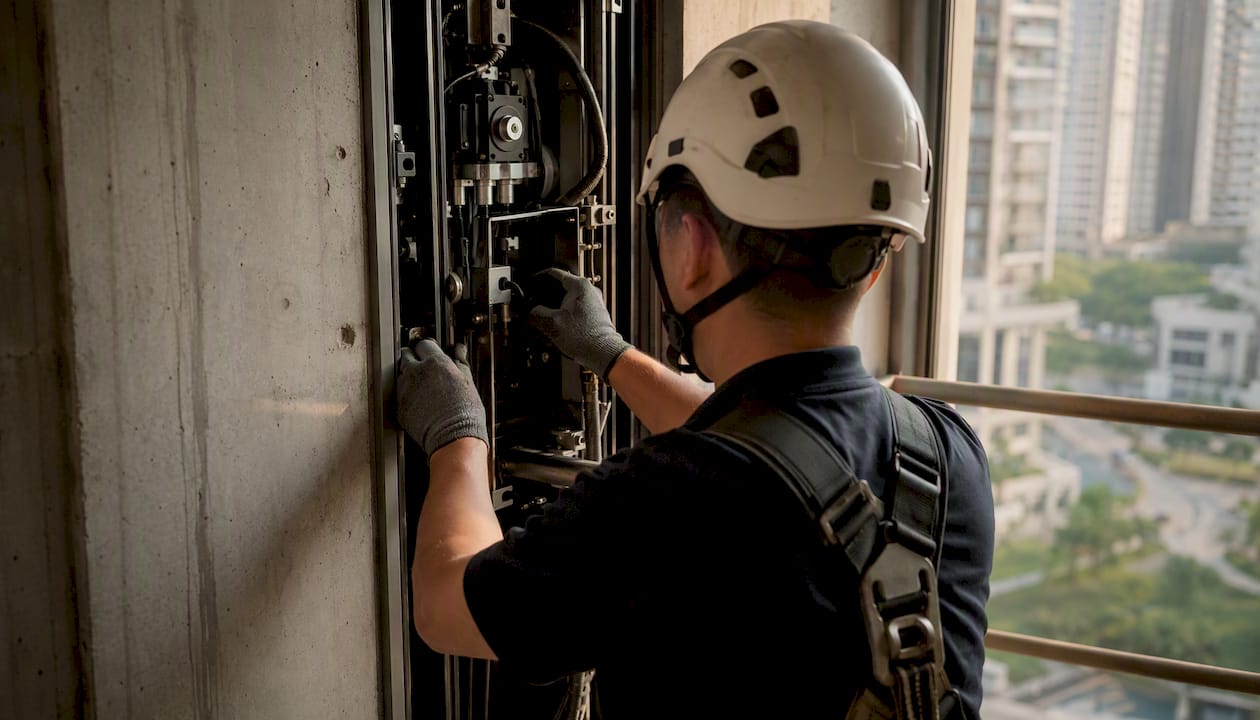
By year 15, Development A has accumulated roughly S$2.88 million in sinking-fund reserves (before interest and expenditure). Development B has accumulated roughly S$1.44 million. When both buildings need a facade overhaul and lift modernization at year 15, costing a combined S$3 million, Development A draws from reserves and imposes a modest top-up levy. Development B faces a special levy of approximately S$7,500–S$10,000 per unit, payable within months.
The BCA review reported by Channel NewsAsia confirms this pattern: under-collection of sinking funds is one of the most common governance failures in Singapore's ageing condo stock, and the downstream cost falls entirely on owners at the time of the repair, not on those who benefited from the artificially low fees in earlier years.
Governance lessons from this scenario:
- Early, adequate sinking-fund contributions are the single most effective way to avoid large special levies.
- A trained, engaged council with an accredited MA reduces execution risk on major works.
- Owners who join the council or attend AGMs have direct influence over contribution levels before the deficit becomes a crisis.
Pro Tip: In AGM minutes, look for whether the council has commissioned a reserve study or independent sinking-fund adequacy review. A council that has done this is planning ahead. One that has not, and whose sinking fund is growing slowly relative to building age, is a risk.
Practical tips to manage or reduce the impact of maintenance fees
Owners are not passive recipients of fee decisions. There are real levers available.
- Join the council or a sub-committee: council members have direct access to budgets, contracts, and procurement decisions. Even one engaged owner asking the right questions can change outcomes.
- Push for competitive tendering: MA contracts, security contracts, and cleaning contracts should be re-tendered regularly. Long-standing contracts without review often carry above-market rates.
- Ask for performance-based MA contracts: a flat-fee MA has little incentive to reduce costs; a performance-linked contract aligns the MA's interests with owners'.
- Pursue energy-efficiency upgrades: LED lighting for common areas, solar panels for common-area power, and variable-speed pump controllers for pools can meaningfully reduce utility costs over time.
- Stage capital works where possible: not all major works need to happen simultaneously. A phased approach spreads the sinking-fund draw and reduces the risk of a single large special levy.
- Request an independent reserve study: if you suspect the sinking fund is inadequate, propose at an AGM that the MC commission an independent reserve study. This gives the council an objective basis for adjusting contributions before a crisis.
- Model fee sensitivity in your budget: for investors, maintenance fees directly reduce net rental yield. A rental yield analysis that ignores fee increases or potential special levies will overstate returns.
For buyers comparing developments, a detailed condo selection guide can help frame how maintenance fees fit into the broader evaluation of a development's long-term value.
Which authorities handle condo governance and where to get help
Knowing who does what saves time when you need answers or need to escalate.
Building and Construction Authority (BCA): the primary regulator for strata management in Singapore. BCA publishes the Strata Management Guides (SMG1 and SMG2), handles complaints about MCST governance, and is currently reviewing strata management practices with a focus on sinking-fund adequacy and council training. Start here for regulatory guidance.
Building Maintenance and Strata Management Act (BMSMA): the full statutory text is available at Singapore Statutes Online. This is the primary legal reference for voting thresholds, MCST powers, fund management obligations, and dispute resolution paths.
MCST Association of Singapore: provides training, resources, and guidance for council members. Useful when a council needs support on governance best practices or when owners want to understand their rights.
Association of Strata Managers (ASM): the professional body for managing agents. ASM accreditation is a useful quality signal when evaluating an MA's credentials. Owners can check whether their MA is ASM-accredited.
Personal Data Protection Commission (PDPC): MCSTs collect residents' personal data for access control, billing, and communications. The PDPC's guidance on condo estate data management explains what data an MCST may collect, how it must be handled, and how residents can raise concerns if they believe their data has been misused.
Strata Titles Board: the dispute resolution body for strata-related disputes that cannot be resolved at the development level. Bring AGM minutes, audited accounts, and relevant correspondence when filing.
When approaching any of these bodies, bring your audited accounts, AGM minutes, and any written correspondence with the MC or MA. A clear paper trail significantly speeds up any review or complaint process.
What most buyers get wrong about condo maintenance fees
The conventional advice is to compare monthly fees across shortlisted developments and pick the lower one. That is almost always the wrong frame.
A low headline fee tells you nothing about whether the sinking fund is adequate, whether the council has been deferring maintenance, or whether a S$15,000 special levy is coming in three years. The fee is a symptom of governance decisions made years before you arrived. What you are actually buying into is the quality of those decisions.
The more useful question is: what does the sinking-fund balance per unit look like relative to the building's age and its capital cycle? A 15-year-old development with S$1,500 per unit in reserves and a lift replacement due is in worse shape than a 5-year-old development with S$3,000 per unit and no major works on the horizon, even if the former charges S$100/month less.
The other thing buyers consistently underweight is management quality. BCA's guidance is explicit that fees reflect planning, budgeting, and procurement choices made by the MC and managing agent. That gap compounds over a decade of ownership.
For investors specifically, the fee-to-yield relationship deserves more attention than it typically gets. A development with rising fees and a thin sinking fund will compress net yield over time, often faster than rental income grows. Model that sensitivity before you commit.
One Marina Gardens: a new-launch benchmark for fee transparency
Buying into a new-launch development like One Marina Gardens gives you something older resale condos rarely offer: a clean starting point. The developer publishes the maximum initial maintenance charge in the SPA before the first AGM, so you know the fee ceiling from day one. There are no inherited sinking-fund deficits, no deferred maintenance backlog, and no history of special levies to untangle.
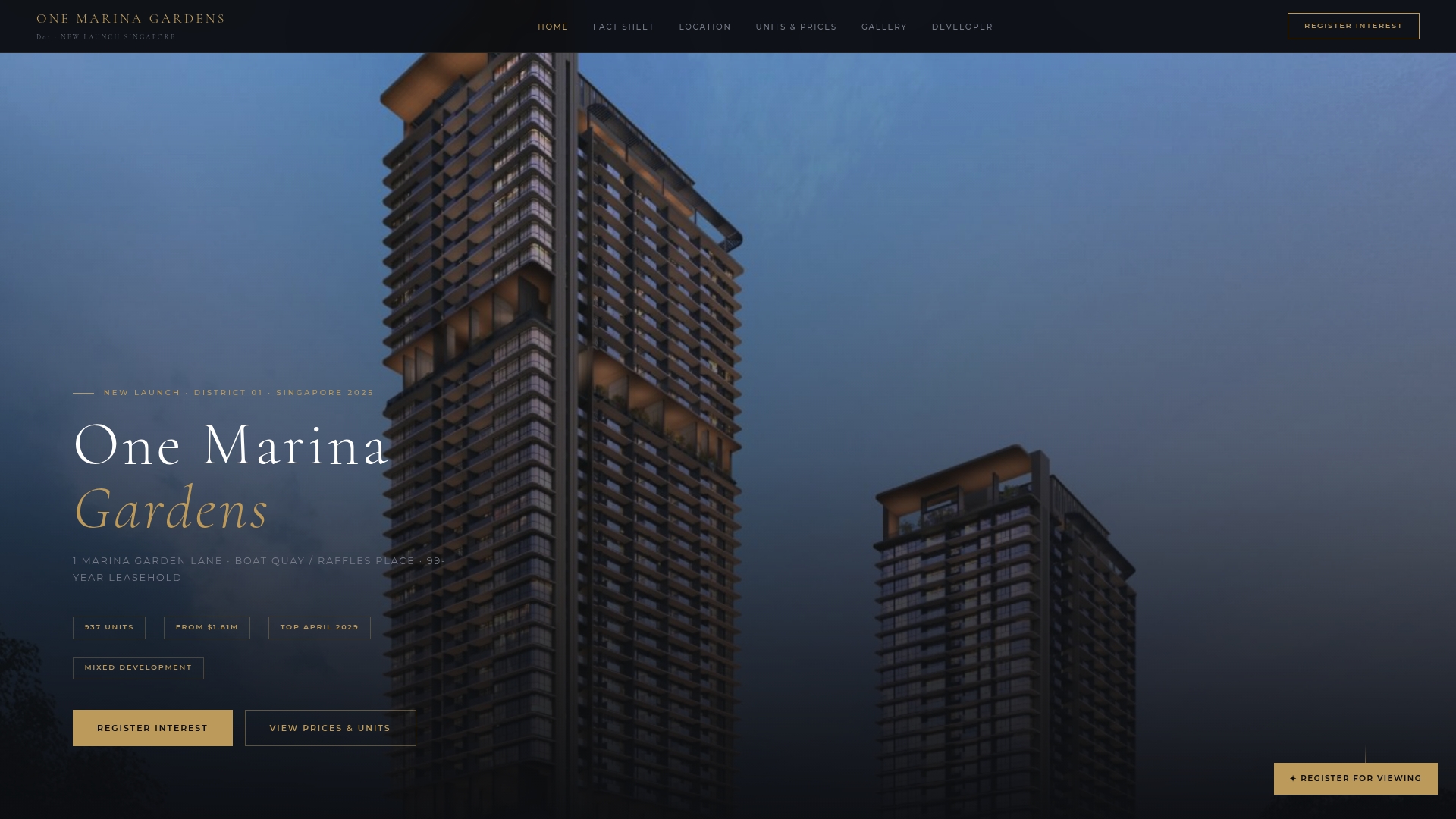
One Marina Gardens is a 937-unit development in District 01, developed by Kingsford Marina Development, with a 50-metre lap pool, multiple sky terraces, a dedicated childcare centre, and direct access to Marina South MRT. The full facility and unit specification is publicly available, so you can map the facility footprint against the fee structure before signing anything. For buyers who want luxury-tier amenities with the governance transparency that only a new launch can provide, this is the comparison point worth anchoring to. Book a showflat appointment at Onemarinagardens to review the fee structure and unit options directly with the sales team.
This article is general information, not a substitute for advice from a qualified financial advisor. Consult a qualified financial professional about your own circumstances before acting on anything here.
Sources
These are the primary references for Singapore condo maintenance fee rules, forms, and regulatory text.
- MCST / Strata Management | Building and Construction Authority
- STRATA MANAGEMENT GUIDE : 1 (Concept of strata living) | Building and Construction Authority
- Condo or estate data management | Personal Data Protection Commission (PDPC)
From the MCST or developer, request: audited financial accounts, AGM minutes (last 2–3 years), the sinking-fund balance and schedule, and any planned major works documentation.
FAQ
How much are condo maintenance fees in Singapore?
In 2026, fees typically range from S$250–S$450/month for mass-market condos, S$400–S$700/month for mid-tier developments, and S$700–S$1,500+ for luxury or central-region condos, depending on unit share value, facilities, and building age.
How do you check a condo's maintenance fee before buying?
Request the latest audited financial accounts, the last two to three years of AGM minutes, the current sinking-fund balance, and any schedule of planned major works from the seller or agent before signing the OTP.
What is considered a high maintenance fee for a condo?
There is no universal threshold, but a fee that is significantly above the tier average without a proportionally larger facility footprint, or one paired with a low sinking-fund balance, warrants scrutiny. The sinking-fund share matters as much as the total amount.
What is the monthly maintenance fee and what does it cover?
The monthly maintenance fee is the contribution each unit owner pays to the MCST, split between a management fund (day-to-day operations: cleaning, security, utilities, insurance) and a sinking fund (long-term capital works: lift replacement, facade repainting, major equipment overhaul).
What is an MCST and who controls it?
An MCST (Management Corporation Strata Title) is the statutory body that manages a private condominium's common property under the BMSMA. It is governed by a Management Council elected by unit owners at the AGM, which sets contribution levels and may appoint a licensed managing agent to handle day-to-day operations.