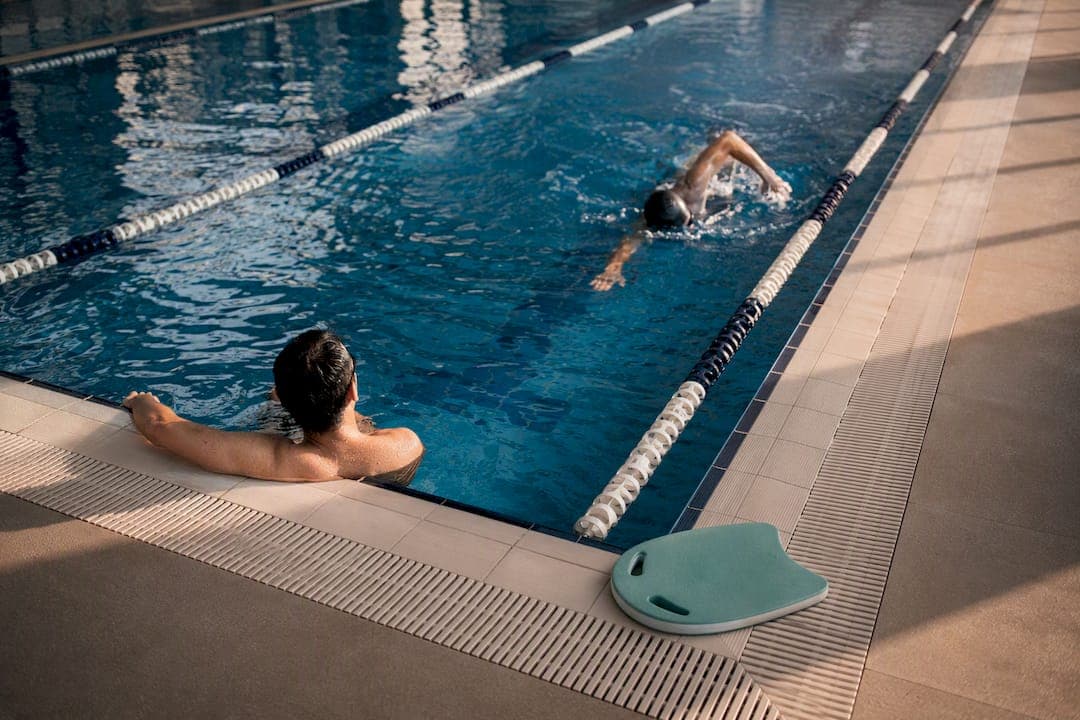
Match your lane to your pace, enter from the ends, keep to your side, and signal before you pass. That single approach, backed by guidance from Swimming and community lane-etiquette sheets, avoids most lap-pool conflicts and applies whether you swim at a public center or a residential facility like One Marina Gardens.
TL;DR:
- Matching your pace to the posted lane label is a starting point, but observing swimmer behavior and equipment use provides a more accurate fit.
- Enter from the ends, wait about five seconds after the previous swimmer pushes off, and avoid dropping into an occupied or turn-in progress lane.
- Signal before passing by tapping the foot to prevent collisions, and stay in your designated side during circle or split lane swimming to maintain order.
- Rest at the corner of the wall and never block the middle of the lane, using touch-in rotations or finishing a length before stopping.
- Always follow lifeguard instructions, posted signs, and local rules to ensure safety and reduce lane conflicts during busy times.
Table of Contents
- Quick checklist: essential lap-pool etiquette rules
- Choosing a lane and matching pace
- Entering, joining an occupied lane, and lane direction
- Passing, overtaking, and lane sharing methods (split lane vs. circle swim)
- Turns, resting, and position in the lane
- Swimwear, equipment, and hygiene for shared lap lanes
- Safety, lifeguard instructions, and facility rules
- Handling lane conflicts and polite conflict resolution
- Noise and behavior considerations to maintain a respectful environment
- Guidelines on using swimming aids and flotation devices safely
- Recommended etiquette during crowded times or peak usage
- Impact of lap pool etiquette on safety and swimmer efficiency
- A swimmer's first-person practical note
- Short list of authoritative resources to consult
- Joining a residential lap pool without the crowd
- Sources
- FAQ
Quick checklist: essential lap-pool etiquette rules
Walk up to any lap pool and you can run through this sequence before you even get in the water. It covers the decisions that cause the most friction: which lane to pick, how to enter, and where to rest.
- Pick an empty lane first. If none is open, choose the lane whose posted speed (fast, medium, slow) matches your pace, not your ego.
- Enter from the ends only. Climb in feet first, and if the lane already has a swimmer, wait for a gap, roughly 5 seconds by some lane-etiquette guidance, before pushing off.
- Check whether the lane runs split or circle. A split lane means everyone stays on their own side; a circle lane means everyone swims in one direction around the rope.
- Signal before passing. A light toe tap on the foot ahead of you, described in municipal lap swim guidance, tells the swimmer in front to pause at the next wall.
- Rest in a corner, never in the middle. The center of the wall belongs to swimmers turning or pushing off.
- Follow lifeguard instructions and posted signs over anything you read here. Local rules always take priority.
That order rarely changes: read the lane, get in safely, move with intention, and clear space when you stop. The rest of this guide fills in the reasoning behind each step.
Choosing a lane and matching pace
Posted labels like "fast," "medium," and "slow" are a starting point, not a guarantee. The real test is watching how the current swimmers move.
- Watch stroke and stopping frequency. A swimmer who rests at every wall belongs in a different lane than one who swims 20 lengths without pausing.
- Notice equipment use. Someone doing long sets with a pull buoy and paddles is usually training at a faster, more consistent pace than someone doing relaxed breaststroke.
- Pace matching beats label matching. Lane-etiquette guidance notes that if you're consistently being passed, the fix is to move lanes rather than expect others to slow down for you.
- Ask before joining. A quick "mind if I hop in?" lets current swimmers agree on lane direction and side before you get wet.
- Check facility rules on group size. Booking systems or posted capacity limits can cap how many people share a lane, so glance at the signage before assuming there's room.
If you find yourself weaving around slower swimmers or getting passed every length, that's your cue to switch, not to push harder.
Entering, joining an occupied lane, and lane direction
Getting into the water is where most avoidable collisions start, so slow down for the first few seconds.
- Enter feet first from the end, never dive into an occupied lane. Wait until the lane is clear or the approaching swimmer has touched the wall.
- Leave a reasonable gap. Guidance from a 2025 lane-etiquette sheet suggests waiting about 5 seconds after the last swimmer pushes off before you follow.
- Announce yourself and let existing swimmers pick a side. They already have a rhythm established; you're the one adjusting.
- Never drop in on someone mid-turn. A flip turn needs open space, and a sudden entry can cause a real collision.
- Check posted signs for direction. Some pools run circle patterns, others split lanes down the middle; the sign or a lifeguard's word settles any disagreement.
- Defer to the facility when signage conflicts with habit. If you're used to swimming clockwise and the pool posts counterclockwise, follow the pool.
Passing, overtaking, and lane sharing methods (split lane vs. circle swim)
Passing safely comes down to timing and communication, not speed.
- Signal early. A gentle toe tap, as described in municipal etiquette guidance, tells the swimmer ahead that you want through.
- Time the pass before the wall, not after. The slower swimmer should stop at the next wall and let the faster one go by, rather than trying to squeeze past mid-length.
- In circle swimming, stick to the agreed direction, commonly counterclockwise, and stay single file.
- In split-lane swimming, stay near your own rope line and avoid drifting across the middle.
Pro Tip: If a lane starts feeling crowded past its usual headcount, suggest circle swimming out loud. It solves most passing headaches without anyone needing to negotiate stroke by stroke.
Turns, resting, and position in the lane
Where you stop matters as much as how you swim. A swimmer parked in the middle of the lane blocks the one resource everyone needs: the wall.
- Never stop mid-lane. Finish your length, touch the wall, and move to a corner.
- Leave the middle third of the wall open. That space is reserved for flip turns and push-offs.
- If someone is closing in on you, pause at the wall and wave them through rather than speeding up defensively.
- In a crowded lane, use a touch-in rotation: the first swimmer touches left, the next center, the next right, then shifts aside so the next arrival has room.
Swimwear, equipment, and hygiene for shared lap lanes
What you wear and bring affects everyone sharing the water with you.
- Wear fitted swimwear built for laps. Swim England's swimwear guidance lists fitted suits, burkinis, and thin swim shorts as workable options.
- Skip anything heavy or baggy. Denim, wool, and loose tracksuits absorb water, slow you down, and can shed fibers into the filter system.
- Use caps and goggles as needed, and keep kickboards or pull buoys stacked at the wall when not in use. Loose equipment floating mid-lane is a tripping hazard for everyone else.
- Shower before entering and keep your poolside items tidy. A cluttered lane end is one more thing someone has to navigate around mid-swim.
- Confirm local policy on modest swimwear options. Some facilities explicitly welcome burkinis or similar coverage; when in doubt, ask the front desk rather than guess.
Safety, lifeguard instructions, and facility rules
Every rule in this guide bends to whatever the facility and its lifeguards actually say.
- Posted signs and lifeguard calls override general etiquette. If a lifeguard asks you to switch lanes or slow down, that instruction comes first.
- Capacity and booking rules are facility-specific. Swimming.org guidance notes that one facility might recommend up to 10 swimmers in a 50-meter lane for a good workout, while its own online booking system caps parties at four before extra fees kick in, so check signage or the booking system rather than assuming a standard number.
- Raise safety concerns calmly. If you notice a hazard, from a loose lane rope to a slippery deck, tell a lifeguard directly instead of posting about it later.
- Ask staff about rules you're unsure of. A quick question at the desk saves an awkward exchange in the water.
Handling lane conflicts and polite conflict resolution
Even with good etiquette, conflicts happen: someone swims too slow for the lane they picked, a group takes over a lane meant for two, or two swimmers disagree about direction. The fix is almost always a short, direct conversation rather than a passive-aggressive pace change.
Start by assuming good faith. Most lane conflicts come from someone misjudging the lane speed or not noticing the posted signs, not from rudeness. A simple line like "would you mind if I passed on the next lap?" resolves more situations than any amount of huffing and puffing at the wall.
If a conversation doesn't work, or if the other swimmer seems unaware of basic lane use, a lifeguard is the right next step. That's part of their job, and it keeps the exchange from escalating into something uncomfortable for both of you.
Groups are a common flashpoint. Three or four people sharing a lane need a plan, whether that's circle swimming or a touch-in rotation, agreed on before the set starts rather than negotiated mid-length. If a lane is clearly over capacity for what the pool allows, it's fair to ask the group to split across two lanes or to check with staff about the posted limit.
The goal isn't to win the lane. It's to keep the water usable for everyone in it, including you on your next visit.
Noise and behavior considerations to maintain a respectful environment
Lap lanes sit right next to each other, and sound carries further over water than people expect. Loud conversation across lanes, aggressive splashing, or shouting instructions to a training partner can throw off swimmers who are counting laps or holding a pace.
Keep poolside conversation to a normal volume, especially near the flags or backstroke markers where swimmers are watching for turn cues rather than listening for chatter. If you're coaching a friend or a child in an adjacent lane, step back from the edge rather than leaning over the rope.
Equipment noise matters too. Dropping kickboards or paddles on the deck, or letting a phone play audio without headphones, breaks the focus that lap swimmers rely on. A pool humming with quiet, steady effort is the sign of a lane system working the way it's supposed to.
Guidelines on using swimming aids and flotation devices safely
Kickboards, pull buoys, fins, and paddles all have a place in lap swimming, but they come with lane-sharing responsibilities. Keep any board or buoy stacked neatly at the wall when you're not actively using it. Left floating in the lane, it becomes an obstacle for the next swimmer coming through, especially on a flip turn.

Fins and paddles change your speed and stroke width, so use them with awareness of who's sharing your lane. A swimmer wearing fins in a slow lane can end up overtaking everyone repeatedly, which usually means the fins belong in a faster lane or a different session.
Pool noodles and larger flotation toys generally don't belong in a dedicated lap lane at all. They're built for open recreational swim, not for the tight, linear space a lap lane provides, and most facilities restrict them to general swim times. If you're unsure whether a piece of equipment is allowed during lap sessions, the posted signage or a quick question to staff will settle it faster than trial and error.
Recommended etiquette during crowded times or peak usage
Early mornings and evenings after work tend to bring the heaviest lap traffic, and that's when etiquette matters most. The core adjustment during a crowded session is flexibility: a lane you'd normally swim alone might need to become a shared, circle-swim lane for an hour.

If you arrive to find every lane occupied, ask politely whether you can join rather than hovering at the end waiting for an opening that may not come. Circle swimming, with everyone moving in one direction around the rope, generally handles higher headcounts better than a strict split-lane setup, since it removes the need for repeated side negotiations.
Shorten your rest intervals at the wall during busy periods, and move to a corner immediately after touching in. If you notice a lane consistently has more swimmers than the posted or booked limit allows, mentioning it to a lifeguard is reasonable rather than confrontational. Peak times reward the swimmer who adapts quickly, not the one who insists on the same lane setup they'd use at 6 a.m. on a quiet Tuesday.
Impact of lap pool etiquette on safety and swimmer efficiency
Good lane etiquette isn't just about politeness. It directly affects how safely and efficiently everyone in the water can train. A pool where swimmers match pace to lane, signal before passing, and rest in the corner functions the way guidance framing lap swimming as traffic management describes it: predictable movement reduces the need for sudden stops or evasive turns, which are where most collisions happen.
Efficiency follows the same logic. A swimmer who isn't dodging a resting body in the middle of the lane, or waiting for someone to notice a pass request, holds a more consistent pace across a full set. Clear lane direction, whether split or circle, removes the guesswork that slows everyone down mid-length.
The pools that run smoothly, whether a public 25-meter facility or a private 50-meter lap pool, tend to share the same trait: swimmers who default to the wall, the sign, and the lifeguard rather than to habit or assumption. That default is what keeps a shared lane from turning into a hazard.
A swimmer's first-person practical note
Before a busy session, I run through the same short mental checklist: read the lane, ask before joining, rest in the corner, and never assume my pace is the default. A simple "mind if I join?" or "can I pass at the wall?" solves almost everything. Communication beats frustration every time.
— Velisa
Short list of authoritative resources to consult
For readers who want the originals: McMinnville's lap swim etiquette sheet covers passing and toe-tap signals, Swimming.org's parent and pupil guidance explains lane choice and turn space, and a 2025 lane-etiquette sheet details entry gaps and lap definitions. If you're weighing a home lap pool, our piece on whether a 50-meter lap pool adds real value to a condo covers practical daily use.
Joining a residential lap pool without the crowd
A shared public pool means negotiating lanes with strangers every visit. At some residential developments, a 50-meter lap pool changes the math on crowding, booking, and who you're sharing water with. You still apply the same etiquette, matching pace, entering from the ends, resting in the corner, but with a smaller, more familiar pool of residents rather than a rotating public crowd.
If you're comparing condo facilities more broadly, our rundown of condos with notable pool amenities shows how booking and capacity policies differ by building. This development sits in a prime district close to transit, offering various unit types including two to four-bedroom options. Current pricing and availability are listed on the One Marina Gardens units and price page, where you can also check unit layouts and facility details ahead of a showflat visit.
Sources
FAQ
What are some etiquette rules for swimming in a lap pool?
Match your lane to your pace, enter from the ends rather than the middle, signal before passing with a toe tap or a polite word, and rest in a corner instead of blocking the wall. Facility signage and lifeguard instructions always take priority over general habits, since posted rules and lane direction can vary by pool.
What to wear to a lap pool?
Fitted swimwear designed for laps works best, including standard suits, burkinis, or thin swim shorts, according to Swim England's swimwear guidance. Avoid heavy or baggy clothing like denim or tracksuits, which slow you down and can affect pool filtration.
What is the proper technique for lap swimming?
Good technique means keeping a predictable line, looking ahead for other swimmers, and leaving enough space to complete a controlled turn without blocking the wall. Definitions of a "lap" vary by facility, so it's worth confirming whether your pool counts a single length or a down-and-back as one lap.
Is down and back a lap in a pool?
It depends on the facility. Some pools count a single length as a lap, while others count a full down-and-back, so checking with staff or posted signage avoids confusion when tracking a workout.
How do I ask to join or pass in a shared lane?
A short, direct phrase works best, such as asking "mind if I join this lane?" before entering, or giving a gentle toe tap to signal a pass request while swimming. The slower swimmer should then stop at the next wall to let the faster one through, a convention noted in municipal lap swim etiquette guidance.