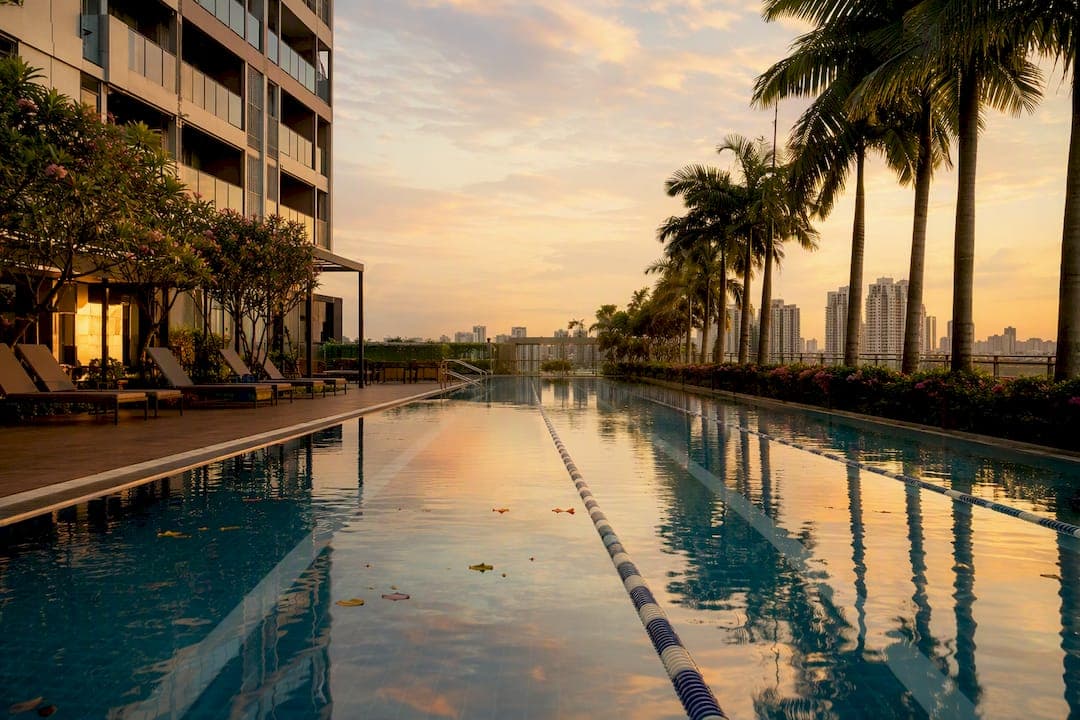
A 50-metre lap pool earns its place in a condominium when it does two jobs at once: give residents a facility they will actually use, and give buyers a defensible reason to pay more for the unit. One Marina Gardens, a 937-unit development in Singapore's District 01, includes a full 50-metre lap pool alongside multiple sky terraces and a childcare centre, giving a concrete case study for what the amenity looks like in practice.
- Full-length pools support lane swimming, classes, and casual use at once, unlike a 15 to 20-metre plunge pool.
- Industry data ties well-run pool amenities to a measurable price premium, not just a lifestyle nicety.
- The payoff depends on how the pool is designed, staffed, and paid for, not just its length.
Key Takeaways
A well-designed 50-metre lap pool improves daily resident life measurably, and industry data ties well-operated pool amenities to a real, if modest and market-dependent, price premium.
| Point | Details |
|---|---|
| Usability beats size alone | A 50-metre pool supports lane swimming and family use simultaneously, but only with good zoning and staffing. |
| Premiums are conditional | Price uplift ranges from roughly 3% to over 20% depending on size controls, location, and operating model. |
| Watch the cost structure | Ask for utilization data and maintenance contracts before trusting a pool's return on common charges. |
| Red flag: opaque OpEx | Unexplained maintenance costs well above a per-unit estimate signal poor operational planning. |
| One Marina Gardens as a benchmark | Its 50-metre lap pool, sky terraces, and childcare centre offer a verifiable example of the amenity done at scale. |
This article is general information, not a substitute for advice from a qualified financial advisor. Consult a qualified financial professional about your own circumstances before acting on anything here.
Table of Contents
- How a 50m Lap Pool Shapes Everyday Resident Life
- Does a Lap Pool Actually Raise Resale or Rental Value?
- What Costs and Design Choices Determine If the Pool Pays Off
- A Buyer's Checklist for Evaluating a 50m Lap Pool
- How a Lap Pool Supports Building-Wide Wellness Programs
- See What a Well-Designed 50m Lap Pool Looks Like in Practice
- Sources
- FAQ
How a 50m Lap Pool Shapes Everyday Resident Life
Length changes how a pool gets used, not just how it looks in a brochure photo. A 25-metre pool works fine for a quick dip, but once more than three or four people show up, lanes disappear and everyone is just treading water around each other. A 50-metre pool splits naturally into zones: lap lanes on one side, family and recreational space on the other, at the same time.
That distinction matters for buildings trying to serve both retirees doing morning laps and families with kids in the water by afternoon. A 50-metre format supports:
- Structured swim programming. Coaches or residents' committees can run timed lane sessions without shutting the pool to everyone else.
- Family use without conflict. Shallow zones or designated sections keep young children away from lap swimmers.
- Overflow capacity. Larger buildings with hundreds of units need pool space that doesn't turn into a bottleneck on weekends.
Design details around the pool matter as much as its length. Cabanas, sundecks, poolside restrooms, and shaded seating turn a pool from a fitness box into a place residents actually want to spend an afternoon. Reviews of Marina Bay area developments back this up, showing usable pool space and adjacency to family amenities as recurring points of resident satisfaction in what residents actually say about their buildings. Placement next to a childcare centre extends usable hours further, since parents can supervise young kids without giving up their own swim time, a factor worth checking against any condo's childcare facilities.
Pro Tip: Ask to see the pool at two different times of day, once in the morning and once after work hours. A pool that looks pristine at 10am can be a different story at 6pm when every resident in the building wants the water at once.
Does a Lap Pool Actually Raise Resale or Rental Value?
Yes, but the number is smaller and more conditional than most sales pitches suggest. Homes with pools commanded roughly a 21.2 percent higher price per square foot after controlling for size, according to Realtor, though that premium has cooled from pandemic-era highs. Redfin's guide to condo amenities cites separate studies showing pools adding up to about 7 percent to sale price in warm climates, and case-study analysis from Appraised.online puts well-run amenity premiums in a tighter 3 to 8 percent range depending on market and buyer profile.
The spread matters more than the headline number. A pool amenity can swing from a 3 percent premium to over 20 percent depending on how the comparison controls for size, location, and operating model, which means any single statistic quoted to you should be treated as a starting point, not a guarantee.
None of these figures hold up in isolation. A few confounders explain most of the variance:
- Building size and unit mix change the math: a 50-metre pool serving 900 units spreads cost and crowding differently than the same pool serving 150 units.
- Location sensitivity drives demand: in high-density, amenity-hungry micro-markets, a pool pulls more weight than in areas with excess inventory or budget-focused buyers.
- Operating structure decides whether the pool helps or hurts NOI: a pool bundled into common charges reads differently to a buyer than one requiring a separate membership fee.
Luxury rental markets show the ceiling on this effect. Reporting on high-end New York rentals in 2026 describes resort-style pools becoming a genuine deal breaker for tenants choosing between comparable buildings, per coverage of luxury rental amenity trends. When you're comparing listings, ask the agent or appraiser for comparables that isolate the pool as a variable, not just a blended "amenity-rich building" premium, and check how amenities generally move property values in that specific submarket.
What Costs and Design Choices Determine If the Pool Pays Off
The pool that looks great on launch day can turn into the line item that quietly inflates your monthly common charges five years later. Capital and operating costs split into distinct categories, and each one carries a different long-term risk:
- Capital expenditure (CapEx): mechanical, electrical, and plumbing (MEP) plant, filtration systems, and the pool shell itself, usually amortized into the purchase price or an early sinking fund contribution.
- Operating expenditure (OpEx): heating, chemical treatment, seasonal resurfacing, and staffing, which show up every month in the maintenance fee.
- Energy and sustainability specs: filtration efficiency and heating system type directly affect how much of that OpEx grows year over year.
Case-study analysis of amenity-driven premiums makes a specific point here: a pool without a transparent, operationally sound cost model erodes the return it's supposed to generate, no matter how impressive it looks in a marketing render. Ask the developer or managing agent for utilization data and a maintenance contract summary before assuming the pool is a net positive on your monthly bill.
Safety and staffing questions deserve equal weight. Confirm lifeguard coverage hours, whether lane allocation is scheduled or first-come, and what insurance limits apply to pool-related incidents. Placement matters too: a pool with direct lift access and clear sightlines from family units tends to see higher, safer usage than one tucked behind a service corridor. Landscaping and adjacency design, the kind covered in expert outdoor design work, shows how sundecks and shaded seating turn a functional pool into one residents linger around.
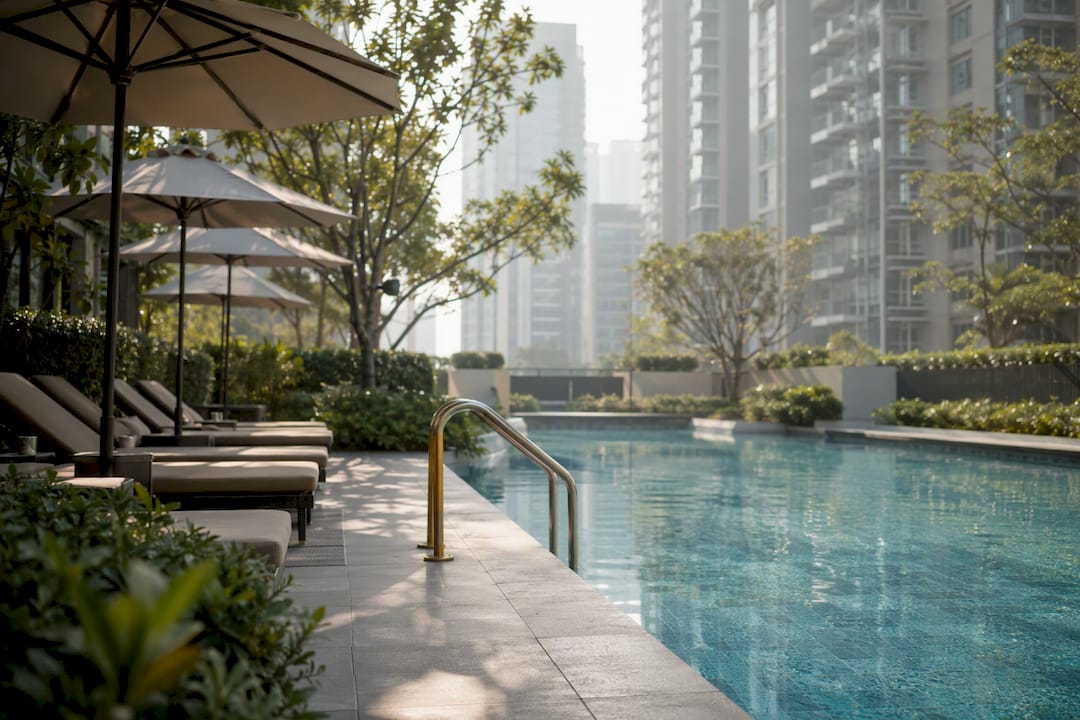
Pro Tip: Request the pool's annual maintenance contract value, not just the capital cost. A cheap-to-build pool with an expensive service contract will cost you more over ten years than a well-specified one with efficient filtration.
A Buyer's Checklist for Evaluating a 50m Lap Pool
Walk into a showflat with specific questions, not vague enthusiasm. The developer's sales team should be able to answer all of the following without dodging:
- Utilization data. Ask if the pool schedule shows peak-hour crowding or consistent lane availability.
- Maintenance contracts. Request the current or projected annual service agreement value.
- CapEx amortization. Find out whether pool construction cost is baked into unit pricing or funded separately through the sinking fund.
- Membership terms. Confirm whether pool access is included in common charges or requires an add-on fee.
- Insurance and liability. Ask what coverage applies to pool-related incidents and who bears the excess.
- Staffing schedule. Get specific lifeguard hours, not a general "supervised" claim.
A rough per-unit math exercise helps put OpEx claims in context. Take a hypothetical building with $180,000 in annual pool-related operating costs (staffing, chemicals, utilities, and routine maintenance) spread across 900 units. That works out to $200 per unit per year, or roughly $17 a month, added to common charges before any capital cost recovery is factored in.
| Cost Component | Monthly Per-Unit Impact |
|---|---|
| Staffing and lifeguard coverage | Included in shared OpEx pool |
| Chemical treatment and filtration | Included in shared OpEx pool |
| Routine maintenance and repairs | Included in shared OpEx pool |
| Total estimated OpEx (900-unit example) | ~$17/month |
If the number quoted to you is dramatically higher than that, ask why, and don't accept "premium finishes" as the entire answer.
How a Lap Pool Supports Building-Wide Wellness Programs
A pool this size becomes infrastructure for more than swimming once a building's management committee treats it as one. Fifty metres gives room for scheduled aqua aerobics, resident swim clubs, and rehabilitation-focused sessions for older residents, all running without one group crowding out another. Buildings that pair a large pool with structured programming tend to see it become a genuine social hub rather than an underused line item on the facilities list.
Wellness committees in larger developments often use the pool as an anchor for broader health initiatives: seasonal swim challenges, water-based fitness classes, or partnerships with visiting instructors. Industry commentary on community design in 2026 points to exactly this shift, noting that developers are moving toward amenity-rich, usable pool spaces that anchor social interaction rather than sitting empty as a visual centerpiece.
The wellness angle also touches resale conversations indirectly. A building known for an active, well-programmed pool community tends to retain residents longer, which stabilizes occupancy and, by extension, the building's reputation among prospective buyers. That reputation effect is harder to quantify than a price-per-square-foot statistic, but it shows up in resident reviews and referral patterns over time. A pool that sits mostly still during the day, by contrast, signals underused infrastructure regardless of how good it looks in photos, a distinction worth checking against reviews of comparable pool providers and their supporting facilities.
When a 50m pool is worth prioritizing
Owner-occupiers who swim regularly or have young families get the clearest daily return on a 50-metre pool, since they use it often enough to justify whatever share of common charges it consumes. Investors should weigh it differently: the pool matters most in amenity-sensitive rental markets where tenants compare buildings side by side, less so in markets where price per square foot dominates tenant decisions.
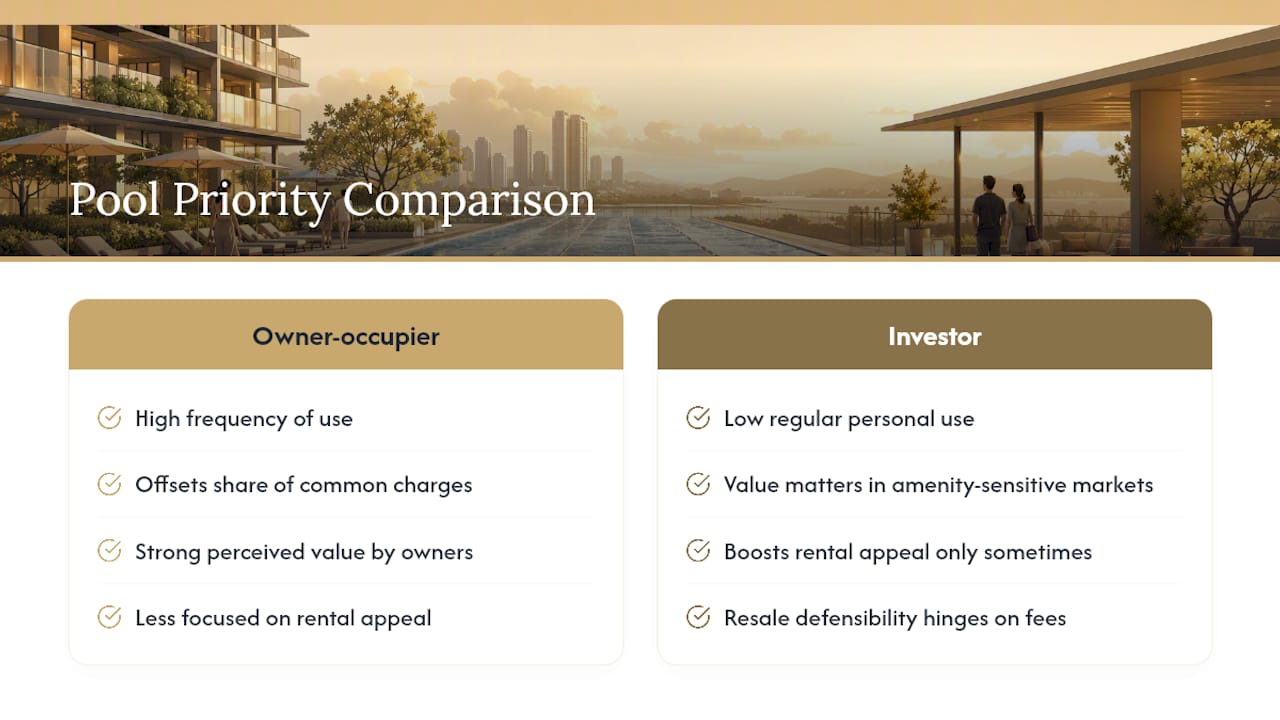
The honest tradeoff is monthly fees against long-term resale defensibility. A pool bundled transparently into common charges, with real utilization data behind it, tends to hold its value case better at resale than one buyers suspect is quietly subsidized or under-maintained.
See What a Well-Designed 50m Lap Pool Looks Like in Practice
Reading about amenity premiums only gets you so far. At some point you want to see the actual pool, not a rendering. Onemarinagardens gives you exactly that: a real, verifiable 937-unit development in District 01 with a full 50-metre lap pool, multiple sky terraces, and an on-site childcare centre, all just 160 metres from Marina South MRT.
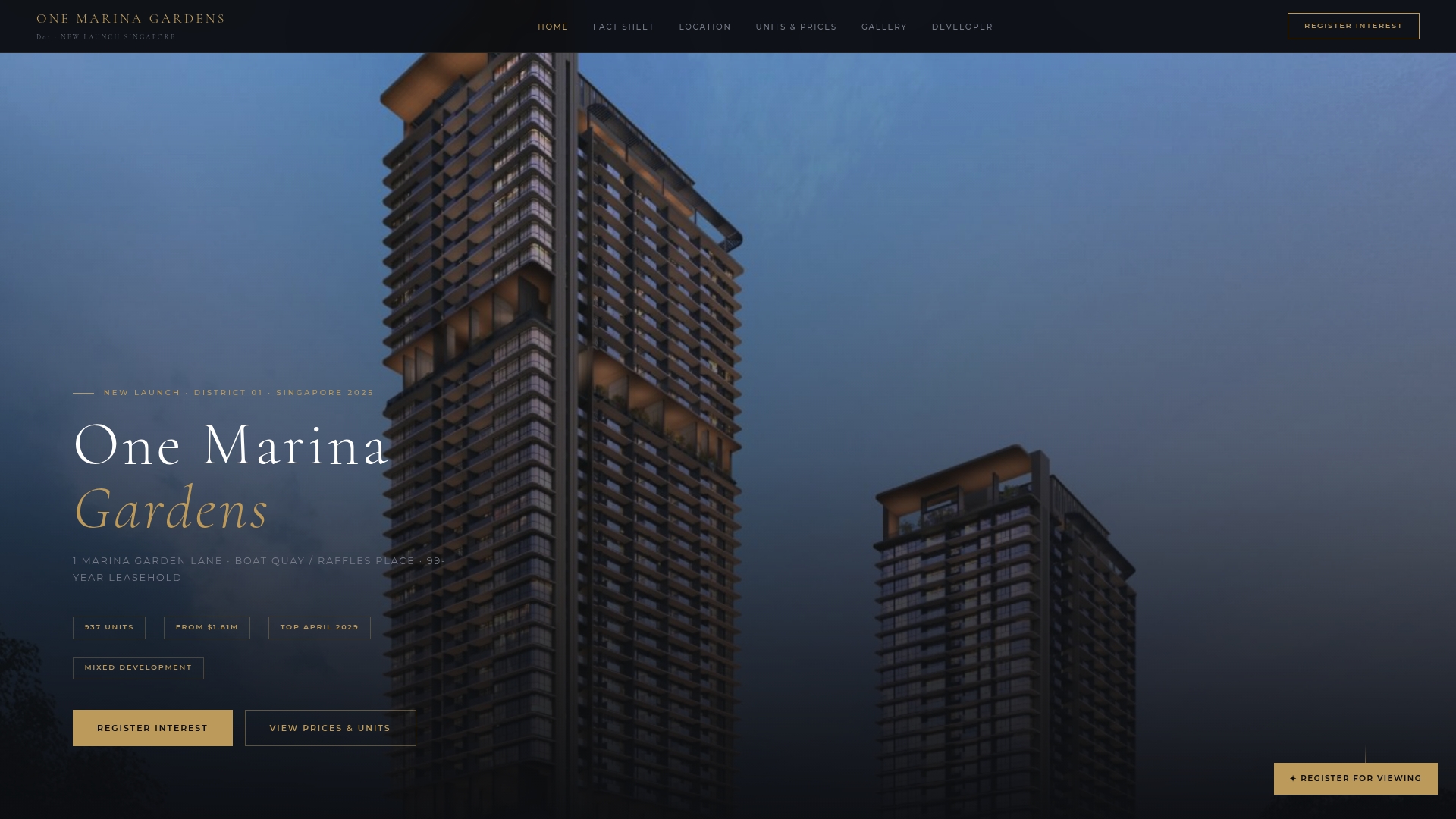
Every detail in this article about facility scope and unit distribution traces back to the development's own fact sheet, so you can check specs directly instead of taking a sales brochure's word for it. If you want to see how the pool sits relative to the sky terraces and residential towers, the project gallery has artist impressions and development photos worth a look before you book anything. When you're ready to see it in person, the main project page has current pricing and showflat booking details.
Sources
- Realtor
- 10 Must-Have Condo Amenities: A Buyer’s Dream | Redfin
- Appraised
- How water amenities are making waves in community design | Builder Online
FAQ
Is a 50m lap pool better than a 25m pool for a condo?
A 50-metre pool supports lane swimming and casual use at the same time without crowding, which a 25-metre pool struggles to do once more than a few residents are in the water.
Does a lap pool actually increase condo resale value?
Yes, though the effect varies widely: Realtor.com found roughly a 21.2 percent higher price-per-square-foot for homes with pools, while other studies put condo amenity premiums closer to 3 to 8 percent depending on market and operating model.
What should I ask about a pool's operating costs before buying?
Request the annual maintenance contract value, staffing schedule, and whether pool access is bundled into common charges or requires a separate membership fee.
Does pool placement affect unit value?
Yes. Pool-facing, lower-floor units have shown stronger price appreciation in some markets, and proximity to lifts and family amenities like childcare tends to increase usable hours and resident satisfaction.
Is One Marina Gardens a good example of a well-designed 50m lap pool?
It's a documented example: the development's fact sheet confirms a full 50-metre lap pool alongside multiple sky terraces and a childcare centre across 937 units, close to Marina South MRT.