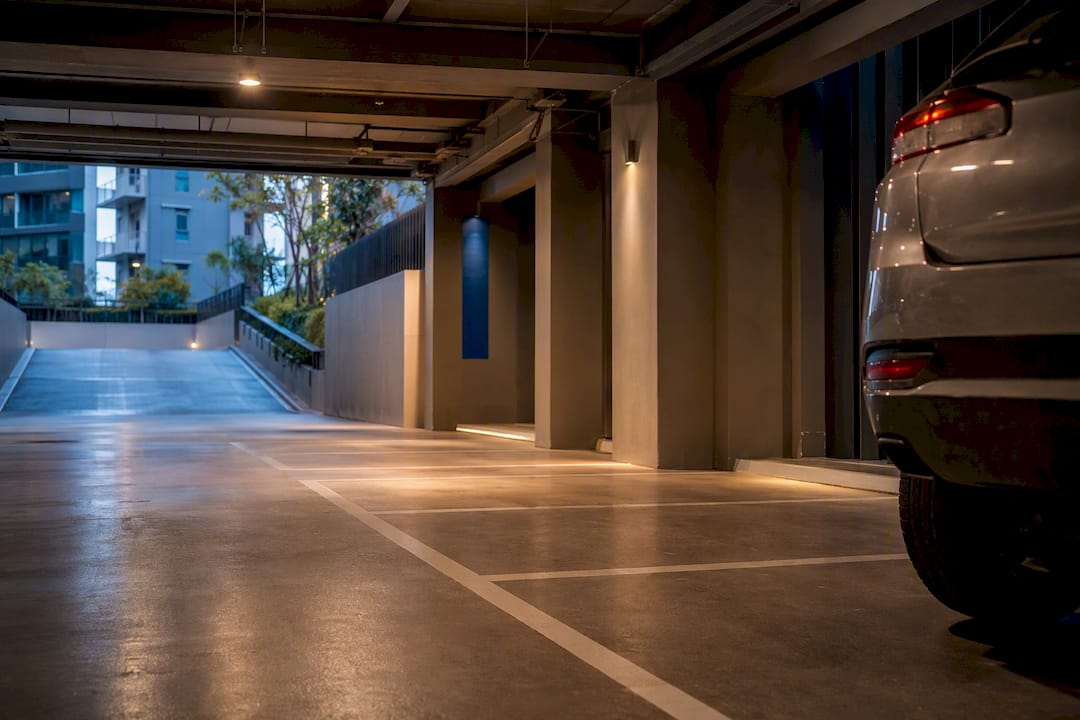
Singapore's condo parking policy today runs on the Urban Redevelopment Authority's Range-based Parking Provision Standards, which let developers scale back visitor parking in developments near MRT stations and the CBD. Actual enforcement and access depend on each project's house rules and master deed. Before you buy or move in, confirm whether your parking space is titled, assigned, or a limited common element, since that single detail decides whether you can sell, mortgage, or lease it.
TL;DR:
- Fewer visitor parking spaces are now common in new condos near MRT stations, replaced by pick-up and drop-off zones to reduce congestion.
- Only titled parking spaces can be sold, leased, or mortgaged independently; assigned or limited common element spaces are tied to the unit and have restricted transfer options.
- Enforcement practices escalate from warnings to towing, with residents advised to confirm visitor limits, guest rules, and clamping procedures directly with management beforehand.
- Verify parking classification and ownership details through official documents like the Master Deed and Certificate of Title before purchasing a condo.
- Don’t rely on verbal assurances about parking or promises of extra visitor slots; always obtain written confirmation from the management or legal counsel.
Table of Contents
- What Is the Condo Parking Policy Behind Singapore's New Launches?
- How Does Visitor Parking Work at Singapore Condos?
- Titled, Assigned, or Limited Common Element: Which One Do You Actually Own?
- Checklist: Confirming Your Condo's Real Parking Policy Before You Buy
- Why New Condos Have Fewer Visitor Lots: The PUDO Alternative
- Enforcement, Scams, and What to Do If You're Clamped
- One Marina Gardens and Car-Lite Living in Marina South
- How Do You Transfer or Sell a Parking Space Within a Condo?
- What Happens When a Parking Dispute Breaks Out?
- Does Parking Policy Affect Your Condo's Resale Value?
- Are Disabled Parking Spaces Required in Singapore Condos?
- Author's short take: three priorities every buyer should act on about parking
- One Marina Gardens: Where to Confirm Your Parking Questions
- Sources
- FAQ
What Is the Condo Parking Policy Behind Singapore's New Launches?
The old rule of thumb, roughly one parking space per unit, no longer applies uniformly. Under the Range-based Parking Provision Standards, URA now sets parking provision as a range tied to a development's location zone and how well it connects to public transport, rather than a fixed ratio. A condo three minutes from an MRT interchange can justify far fewer visitor lots than one stuck deep in a low-density estate with no rail access nearby.
That shift changes what buyers actually see on site. Developers building in transit-proximate zones increasingly redirect the footprint once reserved for extra visitor bays into sky terraces, function rooms, or larger communal pools. It's not a cost-cutting trick so much as a planning response to how Singaporeans near MRT nodes are actually using cars, less as a daily necessity and more as an occasional convenience.
Three documents matter if you want the technical basis rather than a sales pitch:
- The URA development control handbook on parking, which lays out how RPPS zones and ranges work.
- The LTA Code of Practice on vehicle parking provision, the technical reference planners use when proposing ratios for a specific site.
- URA's circular DC25-04, which covers updated design guidance developers must fold into new proposals.
Reading even one of these before signing anything tells you more than any showflat brochure.
How Does Visitor Parking Work at Singapore Condos?
Visitor parking at most Singapore condos runs on a permit system managed by the Management Corporation Strata Title (MCST), not a free-for-all; for practical visitor-parking tips and local living advice, new residents can find useful information at Haio. Guests typically register at the guard house or through a digital portal, and older developments with generous visitor allocations tend to be more forgiving than newer, RPPS-affected launches where lots are scarcer and demand spikes on weekends.
Enforcement usually escalates in a set order:
- A warning notice placed on the windshield or sent to the resident who registered the guest.
- A fine, charged either to the visitor or billed against the unit owner's account.
- Wheel-clamping by the MCST's appointed contractor if the vehicle stays past the grace period.
- Towing, reserved for repeat violations or vehicles blocking fire access or other units.
Newer condos often cap visitor stays at a set number of consecutive nights and limit how many permits one unit can request per month. If you're hosting overnight guests regularly, ask the management office for the exact cap in writing rather than relying on what the security guard tells you verbally, policies change and verbal answers don't hold up in a dispute.
Titled, Assigned, or Limited Common Element: Which One Do You Actually Own?
This is the single most misunderstood part of condo parking policy in Singapore, and it decides real money down the line. A titled parking space carries its own strata title or certificate, meaning you can sell it, mortgage it, or lease it out independently of your unit, much like a separate small property. An assigned space or one classified as a limited common element is exclusive-use only: the Master Deed grants you the right to park there, but the space technically remains common property, and the MCST's rules govern what you can do with it.
That distinction affects three things buyers routinely overlook:
- Resale: a titled slot adds transferable value; an assigned slot usually cannot be sold apart from the unit.
- Financing: banks may not accept an assigned or limited common-element space as security for a loan the way they would a titled one.
- Leasing: subletting a limited common-element space to another resident or outsider may breach the by-laws even if no one seems to mind.
Check the Master Deed, the unit's allocation schedule, and any Certificate of Title evidence before you assume anything about what you're buying.
Pro Tip: Ask your conveyancing lawyer to confirm the parking classification in writing as part of the sale process, don't rely on the agent's verbal description or the floor plan legend alone.
Checklist: Confirming Your Condo's Real Parking Policy Before You Buy
Sales brochures rarely spell out enforcement details or visitor caps, so the paperwork and a site visit matter more than the marketing deck.
- Request the Master Deed, the by-laws, and the unit's parking allocation schedule from the seller or agent.
- Look for any Certificate of Title evidence if the listing claims the space is titled.
- Walk the actual parking level: check slot dimensions, signage, EV charging point locations, and where the PUDO zone sits relative to the ramp.
- Ask the management office directly about visitor permit limits, overnight guest rules, and which contractor handles clamping or towing.
- Get any unusual promise, like "additional visitor slot guaranteed", confirmed in writing before you sign.
Parking disputes in strata developments often trace back to a mismatch between what a buyer assumed about a slot and what the Master Deed actually says, which is exactly why written confirmation beats a verbal assurance every time.
Why New Condos Have Fewer Visitor Lots: The PUDO Alternative
Instead of building dozens of extra visitor bays that sit empty most of the day, LTA and URA now push developments toward pick-up and drop-off zones. The PUDO design guide, finalized in March 2025, sets out layout standards developers now build to, covering things like kerbside clearance, drop-off dwell time, and separation from parking circulation.
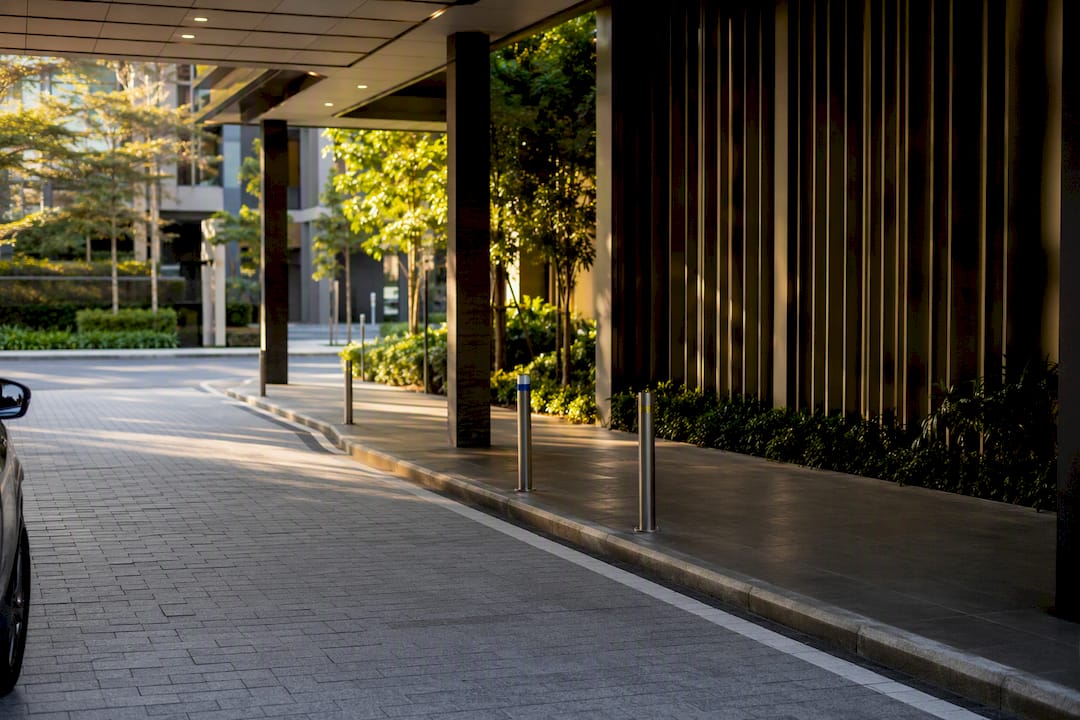
The logic is straightforward: a car idling for two minutes to drop off a guest doesn't need a full parking bay, and a well-designed PUDO clears congestion faster than a scramble for a scarce visitor lot ever would.
When you tour a showflat or completed project, look for:
- A dedicated kerbside PUDO space, not just a repurposed driveway.
- Clear signage separating drop-off traffic from residents heading to basement parking.
- Enough queuing length that ride-hail pickups don't spill into the main driveway.
Enforcement, Scams, and What to Do If You're Clamped
URA has issued explicit warnings that it will never request bank transfers or login details by phone, email, or text regarding parking matters, and residents who receive suspicious messages should call ScamShield at 1799 to verify before paying anything. Legitimate enforcement notices come from the MCST's appointed contractor and should show a printed reference number and contact details, never a request for immediate payment via personal bank transfer.
- If clamped or towed, contact the MCST management office first, not the contractor directly.
- Ask for the towing company's name, license, and storage location in writing.
- Keep every receipt and photograph of the notice before the vehicle is moved.
| Situation | Correct first step |
|---|---|
| Suspicious payment request | Call ScamShield (1799) |
| Vehicle clamped | Contact MCST office |
| Disputed fine | Request written notice reference |
One Marina Gardens and Car-Lite Living in Marina South
Sitting roughly 160 meters from Marina South MRT, One Marina Gardens fits squarely into the car-lite pattern URA's RPPS anticipates. The development channels space into sky terraces and a 50-meter lap pool rather than an oversized parking deck. Buyers deciding whether a titled slot is worth paying for should weigh how often they'd actually drive against how close the MRT sits to their door.
How Do You Transfer or Sell a Parking Space Within a Condo?
Only a titled parking space can change hands independently of the unit it was originally allocated to. If your slot carries its own Certificate of Title, selling or transferring it works much like transferring any other strata title: the buyer's lawyer conducts a title search, the transaction goes through the usual conveyancing process, and the transfer gets lodged with the relevant registry once stamp duty and legal fees are settled.
An assigned or limited common-element space is a different story entirely. Because the Master Deed ties that space to your unit rather than granting you independent title, you generally cannot sell or transfer it on its own. Some MCSTs allow an internal swap between two unit owners, say, if one resident needs a larger bay and another is happy to trade, but that kind of arrangement requires MCST approval and usually a formal request through the management council, not a private handshake deal.
Before assuming you can transfer anything, pull the by-laws and check for a specific clause on parking reallocation. Some developments explicitly bar any transfer of assigned spaces outside a change of unit ownership; others permit swaps only within the same block or stack. If you inherited a parking arrangement through a resale purchase, get the previous classification confirmed by the MCST secretary in writing rather than assuming the seller's description was accurate. Buyers who skip this step sometimes discover, months later, that the "extra bay" they thought they bought was never legally transferable at all.
What Happens When a Parking Dispute Breaks Out?
Parking conflicts in condos usually start small: a resident parking in someone else's assigned bay, a visitor overstaying a permit, or a dispute over who's responsible for a fine. The first stop for nearly all of these is the MCST management council, since the by-laws typically require internal resolution attempts before anything escalates further.
Most MCSTs run a basic complaints process: a written report to the managing agent, a review against the house rules, and a warning or fine issued to the offending party. Where the dispute involves interpretation of the Master Deed itself, say, whether a space was ever properly classified as titled versus assigned, the matter can go to the Strata Titles Boards, which handle disputes specifically arising under the Building Maintenance and Strata Management Act. That's a more formal route than a management office complaint, and it typically involves filing an application and, in some cases, mediation before a hearing.
For disputes that don't touch strata title questions, like a neighbor repeatedly parking in your assigned bay, the Community Mediation Centre offers a faster, less adversarial route than heading straight to a tribunal. Escalating too quickly to legal action over a parking spot rarely serves anyone well; most MCSTs would rather resolve it through mediation than have owners racking up legal bills over a bay dispute. Keep a written record of every complaint you file, since a paper trail matters if the issue ever needs to go further.
Does Parking Policy Affect Your Condo's Resale Value?
A titled parking space adds measurable resale value because it's a transferable asset a buyer can independently price into their offer, sometimes negotiated as a near-separate line item from the unit itself. An assigned or limited common-element space, by contrast, doesn't move the needle the same way since it can't be sold apart from the unit, though buyers still factor in whether a guaranteed bay exists at all.
Connectivity increasingly outweighs raw parking supply in how buyers value a unit. A condo near an MRT station with fewer visitor lots but excellent transit access often holds resale value better than an older, car-heavy development further from a station, reflecting how differently residents now weigh convenience against ownership.
Buyers evaluating resale potential should ask two questions the listing agent won't always volunteer: is the parking space titled, and how does the development's visitor parking compare to similar projects in the same precinct? A shortage of visitor lots isn't automatically a red flag if the building compensates with strong PUDO design and nearby public transport, but it does warrant a direct conversation with current owners or the MCST about how residents actually experience day-to-day parking availability.
Are Disabled Parking Spaces Required in Singapore Condos?
Yes. Developments must set aside accessible parking bays sized and positioned per building accessibility requirements administered alongside URA's planning approval process, and these bays typically sit closer to lift lobbies than standard resident or visitor slots. The number required scales with the total unit count and overall parking provision for the development.
Accessible bays generally follow wider dimension standards than a standard slot, giving room for wheelchair transfer on either side of the vehicle, and they must connect to a step-free path into the building. MCSTs are responsible for keeping these bays clear of unauthorized vehicles, and misuse typically triggers the same enforcement escalation, warning, then fine, that applies to other parking violations, though management should treat obstruction of an accessible bay as a priority complaint given the direct impact on residents who depend on it.
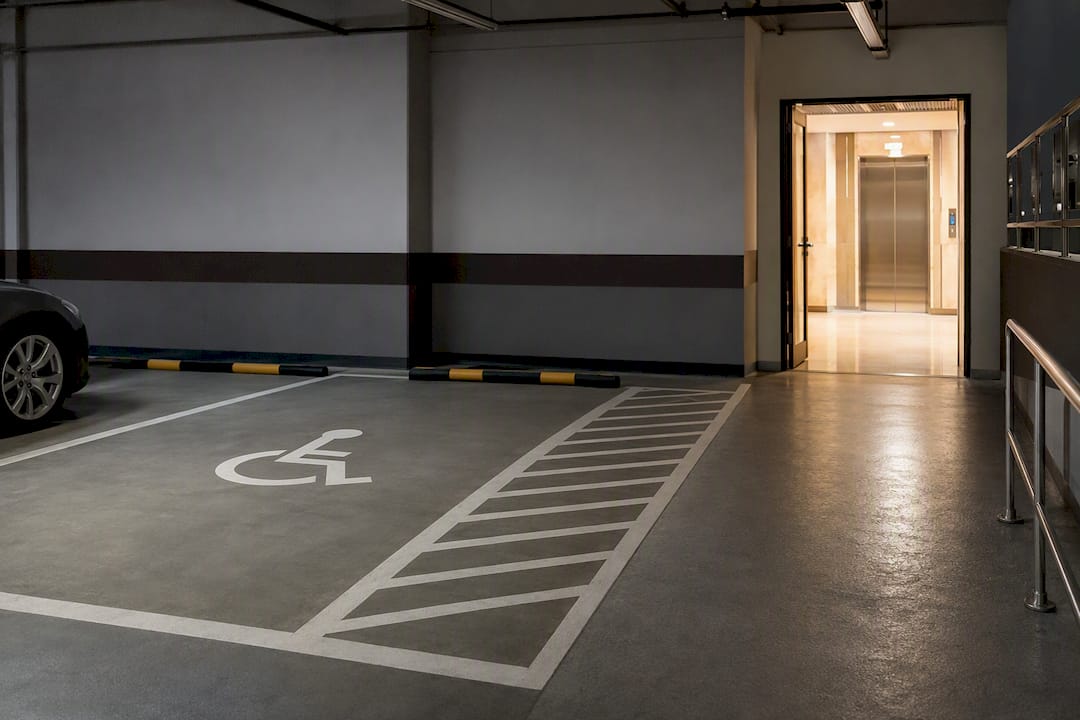
If you or a family member requires accessible parking, raise it directly with the MCST or the developer's sales team before purchase, since the number and location of these bays are fixed at construction and rarely change afterward. Confirming this detail early avoids the frustration of discovering, after moving in, that the nearest accessible bay sits at the opposite end of the building from your unit.
Author's short take: three priorities every buyer should act on about parking
Verify title status and the Master Deed before you get emotionally attached to a unit, then confirm enforcement procedures in writing rather than trusting the sales pitch. Weigh actual transit connectivity against paying extra for a titled slot you might rarely use. And don't forget ongoing costs, maintenance, property tax, MCST dues, since a parking space is never really free once you own it.
— Velisa
One Marina Gardens: Where to Confirm Your Parking Questions
If you're weighing whether a titled slot makes sense for your situation, the answer often comes down to the specific project, not general policy. One Marina Gardens sits close to Marina South MRT, which can affect whether paying extra for a titled bay is worth it.
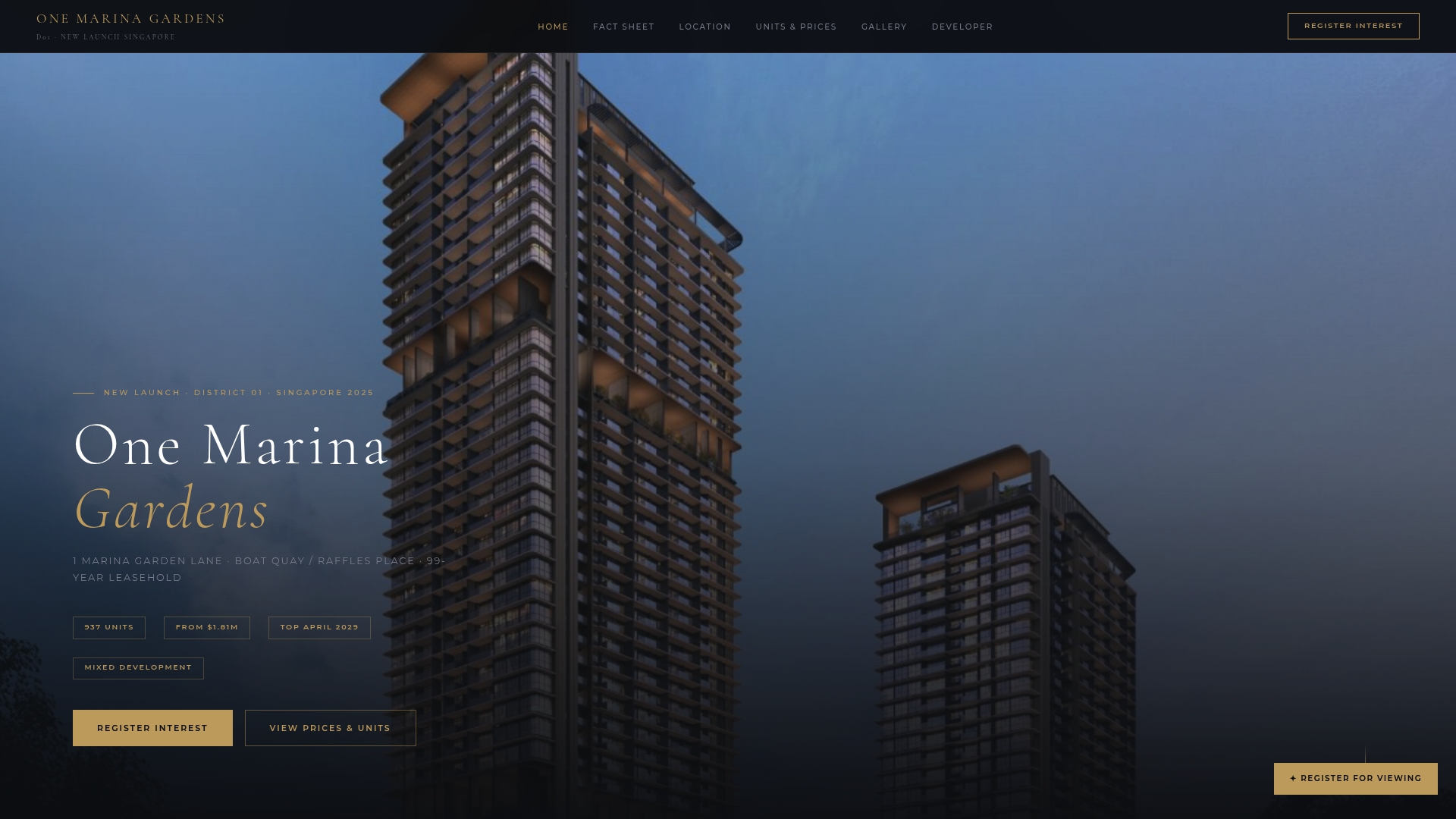
Rather than guessing from a brochure, pull the One Marina Gardens fact sheet for the project's actual unit distribution, facilities, and parking provisions. You can also browse the gallery of artist impressions to get a sense of the parking level layout before booking a showflat visit. For questions specific to titled-slot availability or the MCST's planned house rules, contact the sales team directly through the main project page and ask them to walk you through the parking allocation for your unit type.
Sources
- Parking — URA development control handbook (flats & condominiums)
- Code of Practice on vehicle parking provision in development proposals — LTA (2019 edition)
- ScamShield
FAQ
What are the parking rules for condos in Singapore?
Parking provision is set under URA's Range-based Parking Provision Standards, which vary by location zone and transit connectivity, while day-to-day enforcement runs on each condo's own house rules and by-laws through the MCST.
What's changing with parking rules for new condos and executive condominiums?
New launches near MRT stations increasingly qualify for reduced visitor parking under RPPS, with developers redirecting the space savings toward communal facilities and PUDO zones instead of extra bays.
What determines how many parking spaces a condo must provide?
The development's parking provision range comes from its location zone, unit count, and connectivity to public transport, calculated against the standards in the LTA Code of Practice and URA's handbook.
Where is parking not allowed in a condo development?
Parking is prohibited in fire access lanes, PUDO zones, spaces reserved for accessible bays without authorization, and any area marked as common circulation on the development's approved site plan.
How do I report a suspected parking payment scam?
Call ScamShield at 1799 to verify before transferring any money; URA has confirmed it never requests bank details or transfers by phone, email, or text for parking matters.