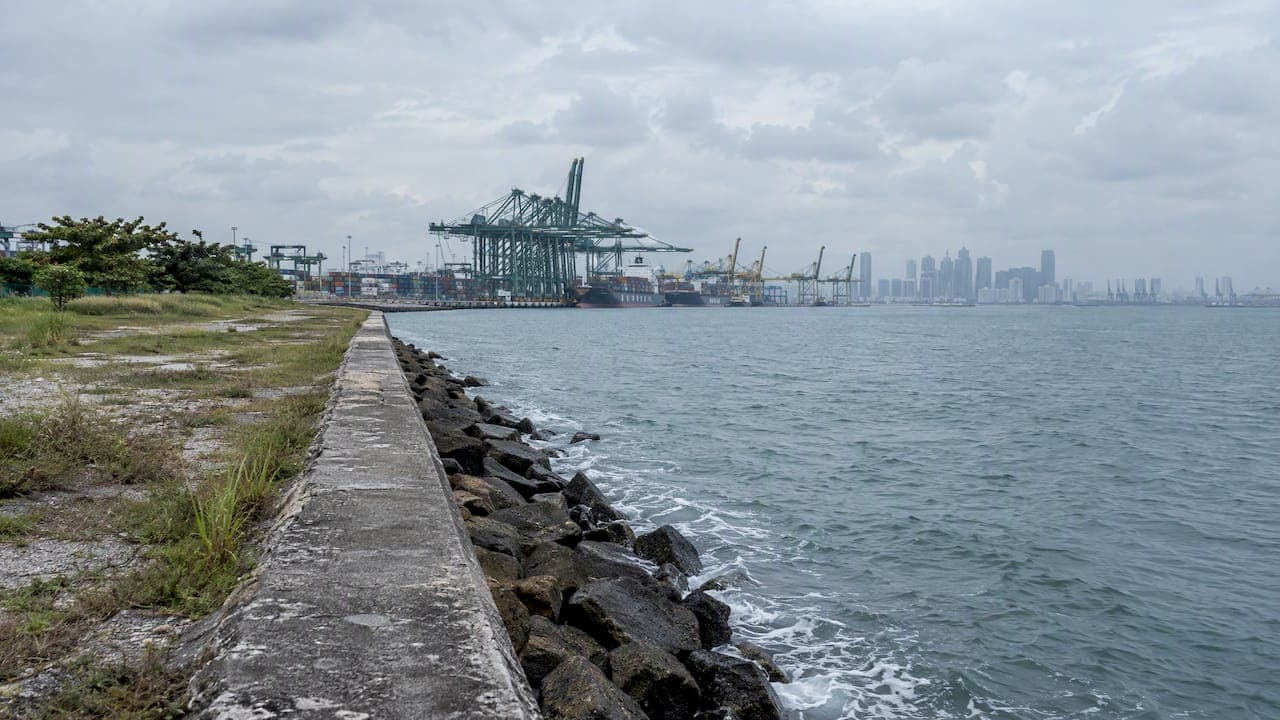
The Greater Southern Waterfront plan is Singapore's multi-decade blueprint to turn roughly 2,000 hectares and 30 kilometers of southern coastline into a new live-work-play precinct. The first major project, Berlayar estate, is already underway with a headline target of about 10,000 homes. The pace of everything else hinges on port relocations to Tuas and ongoing coastal reclamation work.
TL;DR:
- Berlayar’s 48 hectare site targets about 10,000 homes, including 7,000 public flats and 3,000 private units, with 20% reserved for green space.
- City terminal relocation to Tuas is expected around 2027, but reclamation will proceed in phases for more than a decade, delaying later waterfront construction.
- About 213 hectares at Keppel and Tanjong Pagar are proposed for reclamation; plans include coral transplantation, silt screens, and marine monitoring during construction.
- Buyers tracking progress should follow HDB sales exercises, URA plan updates, and environmental reviews, while recognizing Pasir Panjang is among the last areas to redevelop.
Table of Contents
- What the GSW covers: geography, scale, and planning rationale
- Where the new land comes from: reclamation and coastal protection
- Key sites and first-wave projects taking shape
- Timeline and phasing: what to expect over the next five to thirty years
- Planned land uses: housing, jobs, retail, and heritage woven together
- Transport and infrastructure supporting the waterfront
- Environmental and heritage concerns under active study
- What GSW momentum means for buyers near Marina South
- Everyday amenities the GSW plan is expected to bring
- Sustainability measures beyond the seawalls
- Policies and incentives shaping housing and investment in the area
- Schools, healthcare, and community facilities planned for residents
- Why the GSW matters more than its size suggests
- Living near the waterfront: One Marina Gardens
- FAQ
- Sources
What the GSW covers: geography, scale, and planning rationale
The precinct runs from Pasir Panjang in the west through Keppel, Tanjong Pagar, and Pulau Brani, out to Marina East. The Urban Redevelopment Authority frames this stretch as roughly 2,000 hectares of land and water along about 30 kilometers of coastline, most of it previously occupied by working port facilities.
That land is only becoming available because Singapore is consolidating its container port operations at Tuas, which frees up prime waterfront acreage close to the central business district. The planning rationale is straightforward:
- Shift port operations away from the city center and into a single, modern facility at Tuas.
- Reopen the vacated waterfront for housing, offices, parks, and public space.
- Stitch together a continuous public coastline rather than a series of fenced-off industrial sites.
The URA Master Plan 2025 regional plan materials remain the authoritative reference for boundaries, land use zoning, and illustrative maps of the precinct.
Where the new land comes from: reclamation and coastal protection
Port consolidation alone does not create a continuous waterfront. Much of the usable land around Keppel and Tanjong Pagar needs to be reclaimed first, and that reclamation does double duty as coastal defense.
About 213 hectares of reclamation is proposed at Keppel and Tanjong Pagar, according to environmental impact assessment reporting in The Straits Times. That reclaimed land is intended to form contiguous waterfront parcels and to support higher seawalls as climate adaptation infrastructure, not just more building space.
The reporting and accompanying environmental impact assessment point to several mitigation steps for the marine habitat affected by reclamation work:
- Coral transplantation away from areas slated for land fill.
- Silt screens placed around active reclamation zones to limit sediment spread.
- Ongoing monitoring of water quality and marine life during construction.
Reclamation is being carried out in phases rather than all at once, with the exact footprint and sequencing still subject to environmental review and public consultation.
Key sites and first-wave projects taking shape
A handful of named sites anchor the earliest visible changes along the waterfront. Here is what is planned, in rough order of how soon each will become tangible:
- Berlayar estate: a 48 hectare site on the former Keppel Golf Course, targeting about 10,000 homes, split roughly between 7,000 public BTO flats and 3,000 private units. Berlayar Residences and Berlayar Rise are the first launches under this masterplan, designed around green corridors linking the Southern Ridges to the water.
- Pulau Brani: envisioned as a leisure and tourism island, developed in tandem with the broader rejuvenation of nearby Sentosa rather than as a standalone residential zone.
- Keppel and Tanjong Pagar: the site of most of the proposed reclamation, earmarked for future mixed-use development once port operations fully vacate and land stabilizes.
- Pasir Panjang: the longest-horizon site, since Pasir Panjang terminal operations are expected to continue well after Tuas consolidation absorbs the city terminals.
Heritage is part of the plan as much as new construction. Older port-era structures, including former power stations and dockside buildings, are being studied for possible retention and adaptive reuse rather than demolition, giving the precinct a sense of place that pure redevelopment would erase.
Timeline and phasing: what to expect over the next five to thirty years
The GSW is not a single project with one completion date. It is a rolling sequence tied to port relocation milestones, and most of what happens in the next few years is already visible.
- Near term: city terminal operations at Tanjong Pagar, Keppel, and Brani are being consolidated at Tuas, with that move expected around 2027; Berlayar's BTO launches are already rolling out ahead of that.
- Medium term: reclamation at Keppel and Tanjong Pagar is expected to proceed in phases over more than a decade, with construction following as land is cleared and stabilized.
- Long term: full buildout of the precinct, including Pasir Panjang's eventual transition, is a 20 to 30 year horizon.
For anyone tracking progress in real time, the most useful public signals are HDB sales exercises, URA plan updates, and environmental impact assessment outcomes as they are published.
Planned land uses: housing, jobs, retail, and heritage woven together
The GSW is not zoned as housing alone. The plan blends residential, commercial, and public space in a way meant to avoid the single-use estates common in earlier decades of Singapore planning.
- Housing with green space built in: Berlayar estate sets aside about 20% of its 48 hectares for parks and green corridors, linking the Southern Ridges to the waterfront rather than treating greenery as an afterthought.
- Commercial and office space: parts of Keppel and Tanjong Pagar are expected to extend the central business district's footprint, adding office catchment closer to the water.
- Tourism and recreation: Pulau Brani's leisure orientation, paired with Sentosa's ongoing rejuvenation, positions that corner of the waterfront as a destination rather than a residential extension.
- Heritage as placemaking: retained port structures, where feasible, are meant to give new neighborhoods a sense of history rather than a blank-slate feel.
Pro Tip: If you want a feel for how green allocation translates into daily life, Berlayar's planned corridors are a useful preview of how the rest of the GSW is likely to balance density with open space.
Transport and infrastructure supporting the waterfront
None of this works without transport capacity to match a growing resident population. Circle Line connectivity already links several points along the southern corridor, and Marina South MRT serves the eastern end of the precinct directly.
HarbourFront, with its MRT interchange and proximity to VivoCity, continues to anchor the western end as a transport and retail hub. Road networks, bus routes, and active mobility paths, such as park connectors tying into the Southern Ridges, are expected to expand in step with each phase of housing and commercial rollout rather than all at once.
Environmental and heritage concerns under active study
Reclamation and redevelopment at this scale draw real scrutiny, and agencies have been transparent about what is still being assessed. The environmental impact assessment tied to Keppel and Tanjong Pagar reclamation has flagged coral habitat as a primary concern.
Roughly 213 hectares of proposed reclamation is under review, with mitigation measures including coral transplantation and silt screens built into the plan rather than added after the fact. Separately, heritage studies reported in The Straits Times are assessing whether certain port-era buildings and infrastructure warrant retention for their historical value.
- Environmental findings and mitigation plans are tracked through EIA reporting tied to each reclamation phase.
- Heritage assessments are handled alongside URA's planning studies for the affected sites.
- Public exhibitions and consultation notes from URA and HDB are the usual channels for community feedback on draft plans.
What GSW momentum means for buyers near Marina South
Watching the Greater Southern Waterfront take shape, one thing stands out: the momentum around Berlayar and the wider precinct is already reshaping expectations for connectivity and amenities across Marina South, not just within the GSW boundary itself.
For anyone considering a home in this part of District 01, proximity to transport matters more as the surrounding area fills in. One Marina Gardens sits about 160 meters from Marina South MRT, which is worth factoring into any decision about long-term convenience as the precinct around it grows. Readers who want a deeper look at how URA rules shape the Marina South precinct can find more detail in our related coverage.
Everyday amenities the GSW plan is expected to bring
Beyond the headline housing numbers, the GSW plan is built around amenities meant to make daily life along the waterfront genuinely livable, not just scenic from a distance.
Green corridors are a recurring theme. Berlayar's masterplan includes corridors reported at 30 to 60 meters wide, linking the Southern Ridges to the water and giving residents continuous green space to walk or cycle through rather than isolated pocket parks. Building heights within Berlayar are staggered deliberately, both to preserve sightlines to the water and to account for movement patterns of local wildlife.
Waterfront promenades and park connectors are expected to run along much of the reclaimed coastline, tying new residential pockets to existing recreational areas like Labrador Nature Reserve and the Southern Ridges trail network. Pulau Brani's leisure orientation adds another layer: a dedicated island for recreation and tourism within walking or short-ferry distance of new housing, rather than a separate destination requiring a longer trip.
Retail and food options are expected to grow alongside commercial space in Keppel and Tanjong Pagar, giving residents more everyday options without needing to travel into the existing CBD core. For buyers weighing options in this corner of Singapore, our guide to finding spacious homes in Singapore covers practical considerations beyond location alone.
Sustainability measures beyond the seawalls
Coastal protection through reclamation gets most of the attention, but the GSW plan folds in sustainability measures that go well beyond higher seawalls.
Green corridors and park allocation, like Berlayar's 20% green space target, serve an ecological function as well as a recreational one: they create connected habitat corridors rather than isolated green patches, supporting biodiversity movement between the Southern Ridges and the coast. Staggered building heights within Berlayar are partly a response to this, intended to reduce disruption to bird and wildlife movement across the estate.
Marine mitigation tied to reclamation work, including coral transplantation and silt screens during construction, is itself a sustainability measure aimed at limiting long-term damage to marine ecosystems near Keppel and Tanjong Pagar. Monitoring of water quality during active reclamation phases is part of the same effort.
Heritage retention plays a quieter sustainability role too. Studying port-era structures for adaptive reuse rather than demolition reduces construction waste and preserves embodied carbon in existing buildings, an approach increasingly common in large-scale urban redevelopment. Where retention proves feasible, these structures are expected to anchor public spaces or cultural uses rather than sitting idle.
Together, these measures suggest the GSW plan treats sustainability as a design principle running through housing density, green space, marine protection, and heritage reuse, rather than a single reclamation-focused fix.
Policies and incentives shaping housing and investment in the area
Most of the near-term housing supply within the GSW is coming through HDB's public housing pipeline, with Berlayar's roughly 7,000 BTO flats representing the bulk of that activity in this precinct. Buyers interested in public housing here follow the standard HDB sales exercise process, including eligibility rules tied to income ceilings and citizenship status that apply nationwide, not uniquely to Berlayar.
On the private side, roughly 3,000 units within Berlayar estate are planned for private development, and nearby private launches in Marina South and the broader GSW corridor are expected to follow as land parcels come online through government land sales. Policies affecting private purchases, such as additional buyer's stamp duty and loan-to-value limits, apply uniformly across Singapore and are not adjusted specifically for GSW properties.
For investors, the appeal lies less in a specific incentive scheme and more in the broader market read: analysts covering the GSW have noted it as a long-term driver of commercial and retail catchment expansion in the area, which can support demand for nearby residential and commercial real estate over time. Readers weighing investment timing may find our analysis of 2026 Singapore property market trends useful context before acting on precinct-level news.

Schools, healthcare, and community facilities planned for residents
A precinct built around 10,000 new homes needs more than housing and parks. Community infrastructure is expected to follow the same phased approach as everything else in the GSW, scaling up as population density increases.
Berlayar's masterplan allocates space for schools and childcare facilities within the estate itself, following HDB's standard approach of embedding education infrastructure directly into new towns rather than relying solely on existing catchment schools nearby. Healthcare provision is expected to draw on a mix of new neighborhood clinics within the estate and existing hospitals and polyclinics in the broader Bukit Merah and Queenstown area until dedicated facilities are built out.
Recreational and community facilities are tied closely to the green corridor network already planned through Berlayar, giving residents access to parks, sports facilities, and community spaces integrated into the estate's layout rather than built later as needs emerge. As subsequent phases at Keppel, Tanjong Pagar, and eventually Pasir Panjang come online, similar community infrastructure planning is expected to follow the same pattern: housing, green space, and social facilities developed together rather than housing first and amenities as an afterthought.
Why the GSW matters more than its size suggests
The Greater Southern Waterfront is less about adding housing stock and more about rewriting how a working port city relates to its own coastline. Watch the BTO calendar, follow URA's published updates, and visit Berlayar's public exhibitions if you want a direct read on how the plan is actually unfolding.
— Velisa
Living near the waterfront: One Marina Gardens
As the Greater Southern Waterfront fills in over the coming decades, District 01 is becoming one of the more interesting corners of Singapore to put down roots now rather than later. We offer homes close to this transformation without waiting for it to finish: our development sits roughly 160 meters from Marina South MRT, with direct connectivity to the CBD and Orchard Road.
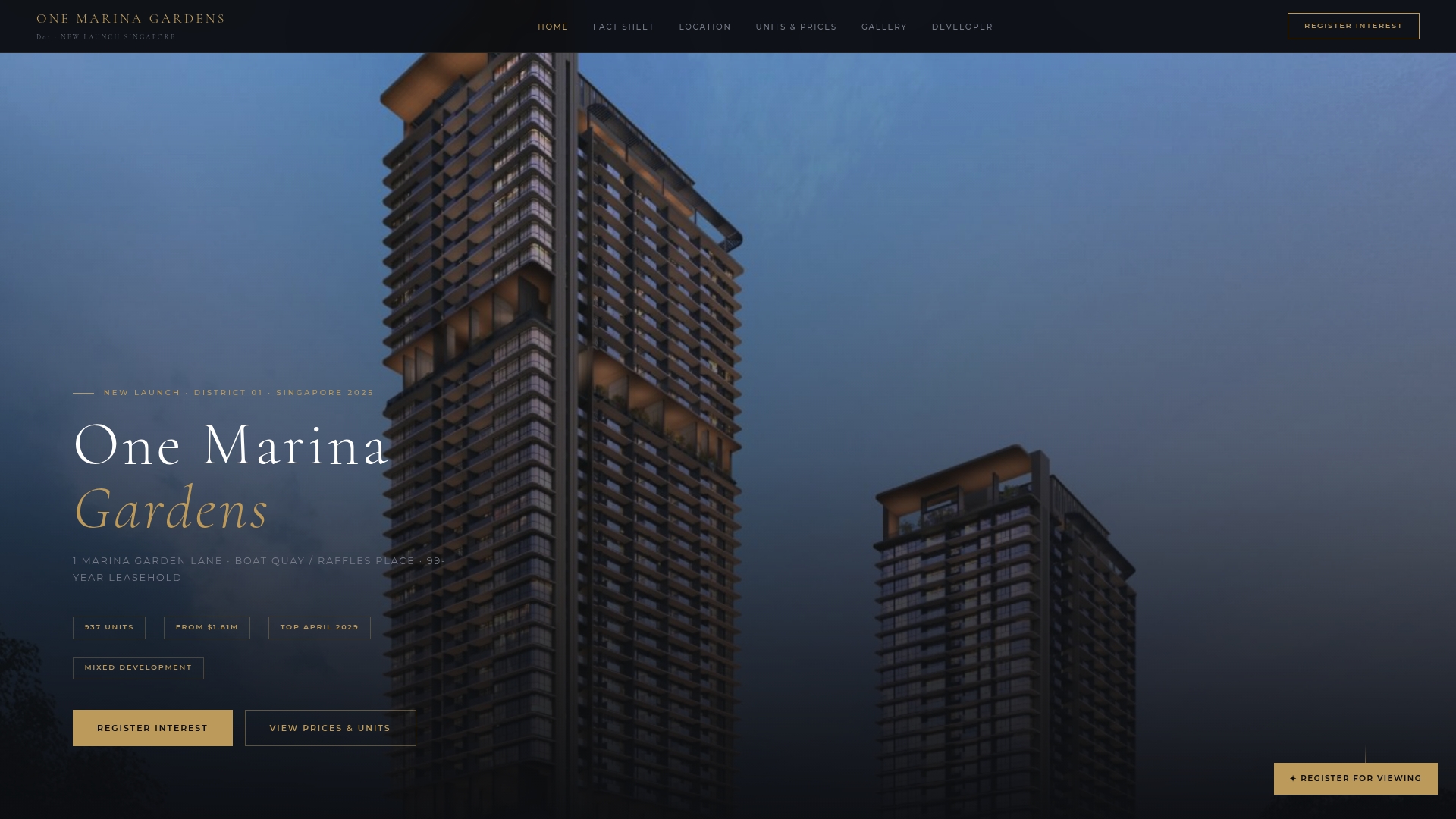
Our unit mix covers a range of configurations to match different household needs.
Residents also get access to a lap pool, sky terraces, a childcare center, and on-site retail and dining, all within a mixed-use setting designed for both owner-occupiers and investors. If you are furnishing a unit for rental, our partner's guide to earning more from furnished rentals is a useful read before you list. To see current availability and layouts, browse our units page or check our price list for the latest figures and book a showflat visit.
This article is general information, not a substitute for advice from a qualified financial advisor. Consult a qualified financial professional about your own circumstances before acting on anything here.
FAQ
What exactly is the Greater Southern Waterfront plan?
It is Singapore's long-term plan to redevelop about 2,000 hectares and 30 kilometers of southern coastline, currently occupied largely by port facilities, into a mixed residential, commercial, and recreational precinct. The transformation rolls out over decades as port operations relocate to Tuas.
When will the Greater Southern Waterfront be completed?
There is no single completion date, since the plan unfolds in phases tied to port relocation milestones, with Tuas consolidation expected around 2027 and reclamation work continuing for more than a decade after. Full buildout across the entire precinct is generally described as a 20 to 30 year undertaking.
How many homes will Berlayar estate have?
Berlayar estate is planned for about 10,000 homes, split roughly between 7,000 public BTO flats and 3,000 private units, on a 48 hectare site that was formerly the Keppel Golf Course.
How much land is being reclaimed for the waterfront?
Reporting on environmental impact assessments points to roughly 213 hectares of proposed reclamation at Keppel and Tanjong Pagar. That land is intended to form contiguous waterfront parcels and support higher seawalls for coastal protection.
What does One Marina Gardens cost?
Pricing for One Marina Gardens starts at a level typical for the area, with unit configurations ranging from 2 Bedroom to 4BR Premium. Current availability and exact prices by unit are listed on our price list page.
Sources
- Vibrant city living for all | URA Master Plan 2025
- Land half the size of Marina Bay expected to be reclaimed as part of Greater Southern Waterfront | The Straits Times