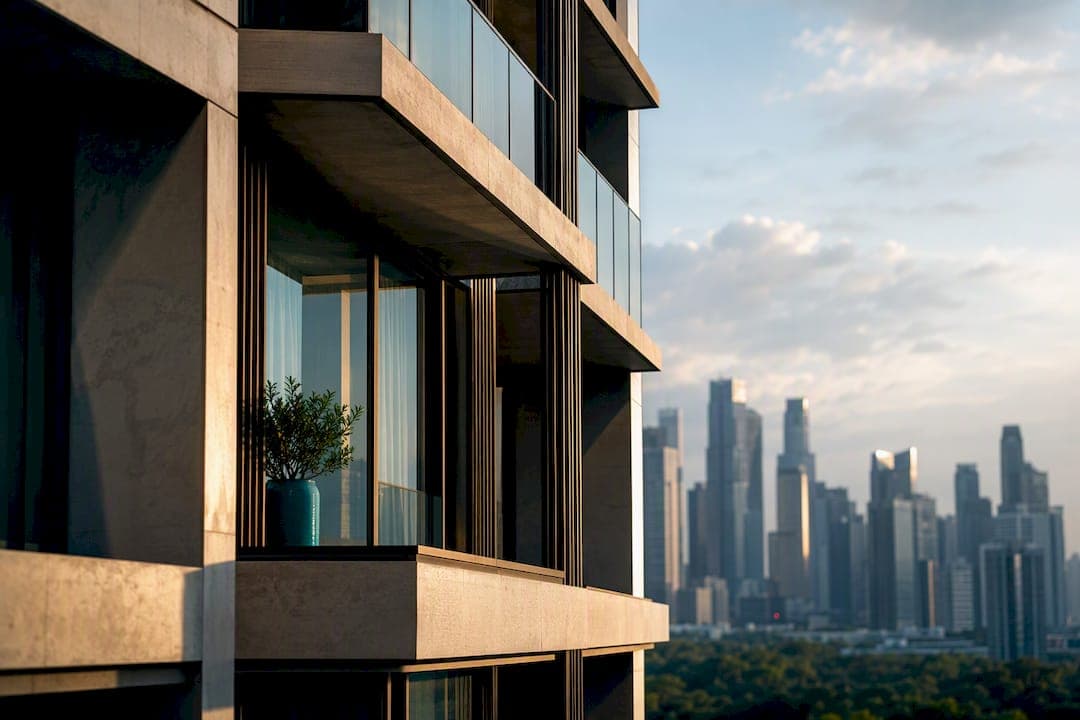
Permanent Residents can buy private condos, apartments, and most strata units in Singapore immediately, no approval needed. HDB resale flats require specific eligibility, usually three years of continuous PR status for PR-only households, while BTO and new-build ECs stay off-limits entirely. Landed homes need discretionary approval from the Singapore Land Authority, and Additional Buyer's Stamp Duty adds real cost on top of every purchase.
TL;DR:
- PRs can purchase private condominiums, apartments, and most strata units immediately without approval, provided they have confirmed PR status.
- Landed homes and certain HDB flats require specific approvals or meet household scheme and tenure rules; approval for landed property is discretionary and non-guaranteed.
- Second property purchase by PRs incurs a 30% Additional Buyer's Stamp Duty, six times higher than the 5% rate for first properties, significantly increasing costs.
- PRs looking to buy HDB resale flats must meet household scheme and tenure requirements; PR singles cannot buy HDB flats alone.
- For private-market homes like One Marina Gardens, no approval hurdles exist once PR status is confirmed, making it a straightforward option for immediate private property entry.
Table of Contents
- Which Property Types Can PRs Buy in Singapore?
- How Does HDB Eligibility Work for PR Buyers?
- Can PRs Buy Landed Property, and What Does SLA Approval Involve?
- What Taxes and Stamp Duties Do PR Buyers Pay?
- How Does Financing and CPF Usage Differ for PR Buyers?
- What's the Step-by-Step Process for a PR Property Purchase?
- Expert Note and Buyer Checklist From Velisa
- Can PRs Rent Out Property They Own in Singapore?
- What Happens to PR-Owned Property Through Inheritance or Transfer?
- What Penalties Apply If PRs Break Property Purchase Rules?
- Perspective: Buy Now or Wait for Citizenship?
- Own a Piece of Marina Bay Without Waiting on Approvals
- Sources
- FAQ
Which Property Types Can PRs Buy in Singapore?
Private non-landed residential property is the easiest lane. Condominiums, private apartments, and most strata units are open to PRs the moment their PR status is confirmed. No waiting period, no scheme to qualify for, no application to file with any government body before signing an Option to Purchase.
HDB is where things narrow considerably. Build-To-Order flats and first-sale Executive Condominiums are reserved for Singapore Citizens only, so a PR cannot apply for either as a lead applicant. HDB resale flats are a different story: PRs can buy them, but only through the right household scheme and only after meeting the tenure requirement, which the next section covers in detail.
Landed property, meaning terrace houses, semi-detached homes, and bungalows on their own land, sits under the Residential Property Act as "restricted" property. That means PRs need sign-off from the Land Dealings Approval Unit before they can even complete a purchase, and approval is far from automatic.
Here's the quick breakdown by category:
- Private condos and apartments: open to PRs immediately, no approval required.
- HDB BTO and new-build ECs: citizens only, PRs cannot apply.
- HDB resale flats: open to PRs under specific household schemes, subject to tenure rules.
- Landed houses (terrace, semi-detached, bungalow): restricted, requires LDAU approval.
- Strata-landed units inside approved condo developments: generally treated as non-landed, but confirm the specific project's status before committing.
One practical wrinkle worth flagging: Sentosa Cove runs its own approval track for landed units there, separate from the standard LDAU process elsewhere in Singapore. If a landed property on Sentosa Cove catches your eye, the paperwork and criteria differ slightly from a bungalow in, say, Bukit Timah.
How Does HDB Eligibility Work for PR Buyers?
The scheme your household falls under determines whether you're buying today or waiting years. Two paths matter most for PRs looking at HDB resale flats.
- SC–PR Family Scheme. If your household includes at least one Singapore Citizen, whether a spouse, parent, or child, you can apply for an HDB resale flat right away. No tenure requirement applies to the PR party in this arrangement.
- Public Scheme for PR–PR households. If both applicants are PRs with no citizen in the household, each PR must have held that status continuously for at least three years before applying. HDB measures that three-year window from the date on your In-Principle Approval letter, not the date you collected your NRIC. Applicants who count from the NRIC date frequently get the timeline wrong and find out too late that they're still short.
- Ethnic Integration Policy and PR quota checks. Every HDB block and neighborhood carries EIP limits by ethnic group, plus a separate PR quota per block. A flat you want to buy might be unavailable to you not because of your PR status generally, but because the specific block has already hit its PR quota or ethnic ceiling for that transaction.
One more rule trips people up regularly: PR singles are generally not eligible to buy an HDB resale flat as a sole applicant. Singles schemes on the HDB resale market are built around citizenship, and PR status alone doesn't unlock that door. If you're single and holding PR status, private property is usually the realistic route.
Can PRs Buy Landed Property, and What Does SLA Approval Involve?
Landed homes carry a legal classification under the Residential Property Act that puts them out of reach for PRs without a formal approval step. The Singapore Land Authority's Land Dealings Approval Unit reviews every application on its own merits, and there's no published checklist that guarantees a yes.
What LDAU typically weighs:
- How long you've held PR status and whether that tenure suggests long-term settlement in Singapore.
- Your economic and professional contribution, meaning employment history, business ties, or investment in the local economy.
- Evidence of genuine long-term commitment to Singapore rather than a short-term residency plan.
- Whether the property is standard landed housing or falls under Sentosa Cove's separate approval track, which follows different criteria.
Approval is discretionary, full stop. Don't assume a strong application guarantees the outcome, because SLA doesn't publish approval rates or a scoring formula.
Pro Tip: Never sign an unconditional Option to Purchase on a landed property before LDAU approval comes through. Build in a conditional clause tied to approval, with a clear timeline, so your deposit isn't at risk if the application gets rejected.
Strata-landed units inside approved condominium developments usually dodge this whole process, since they're treated as non-landed property for acquisition purposes. Still, confirm the exact status with the developer or your conveyancer for the specific project, because treatment can vary. For general enquiries on processing, SLA's feedback channel is the direct line.
What Taxes and Stamp Duties Do PR Buyers Pay?
Additional Buyer's Stamp Duty is the single biggest cost variable for PR buyers, and it scales fast. Under IRAS rules), PRs pay 5% ABSD on a first property, 30% on a second, and 35% on a third or subsequent purchase. Compare that to citizens, who pay 0% on a first property, and you can see the gap widens the moment you're not holding a pink IC.
By the numbers: A PR buying a second residential property faces 30% ABSD on top of Buyer's Stamp Duty, a rate six times higher than the 5% charged on a first purchase, according to IRAS's ABSD schedule.
There's relief for mixed households. An SC–PR married couple buying their first property together can apply for ABSD remission, effectively bringing the duty down toward the citizen rate. However, the process requires documentation and typically involves paying the full ABSD upfront and waiting for a refund once IRAS processes the remission. That refund window can stretch to a few months, so don't plan your cashflow assuming instant reimbursement.
For a rough sense of scale, buying a resale HDB flat at a modest resale price still triggers standard BSD on the full amount, plus ABSD if it's a second property. A private condo purchase compounds both duties on a larger transaction value. Our Buyer's Stamp Duty calculator walks through the math for your specific price point, and these figures are illustrative only, not a substitute for checking current IRAS rates directly.
Stamp duties are due within a fixed statutory window after signing the Option to Purchase or Sale and Purchase Agreement. Line up your cash or CPF arrangements before that date, not after.
How Does Financing and CPF Usage Differ for PR Buyers?
PR-only households generally can't tap HDB's concessionary loan, which means a commercial bank loan is the default path. That shifts the math meaningfully, since bank loans run at market interest rates and carry different Loan-to-Value ceilings than HDB's concessionary rate loans. An SC–PR household, by contrast, may still access an HDB loan through the citizen party where eligibility criteria are met.
Two stress tests shape how much you can borrow, regardless of citizenship:
- Mortgage Servicing Ratio (MSR): caps monthly HDB flat repayments at 30% of gross monthly income, applicable to HDB purchases.
- Total Debt Servicing Ratio (TDSR): caps all debt obligations, including the new mortgage, at 55% of gross monthly income, under MAS Notice 645.
CPF Ordinary Account usage has its own limits worth understanding before you commit. The Valuation Limit caps how much CPF you can use up to the property's valuation, and the Withdrawal Limit caps total CPF usage at a higher threshold, factoring in the property's remaining lease. Older buyers eyeing a shorter-lease unit should check these limits early, since lease length directly affects how much CPF the system allows you to draw down.
Get bank pre-approval before you start touring units seriously, and verify your CPF limits with an HDB or CPF officer before signing anything. Both steps cost you nothing and prevent an ugly surprise two weeks before completion.
What's the Step-by-Step Process for a PR Property Purchase?
The order matters here, because skipping a step often means redoing paperwork later.
- Confirm your household scheme. Work out whether you qualify under the SC–PR Family Scheme or the Public Scheme, since this determines your tenure requirement and eligible flat types.
- Check EIP and PR quota status for any specific HDB block you're targeting, since quota limits can eliminate options you assumed were available.
- Secure loan pre-approval, whether through a bank or, for eligible SC–PR households, HDB.
- Engage a conveyancer to handle the legal transaction and review contract terms.
- Apply to LDAU if the target property is landed, and build in time for a decision before finalizing.
- Complete the Option to Purchase and pay stamp duties within the statutory deadline.
- Submit the HDB resale application through the standard portal if applicable, with both parties' documentation.
Required documents typically include your PR IPA letter or NRIC, marriage certificate for joint applications, proof of funds or CPF statements, and a loan-in-principle letter. HDB eligibility checks usually resolve within days through the HDB portal, LDAU processing timelines vary by case and aren't publicly fixed, and ABSD remission refunds through IRAS can take several months to land.
Expert Note and Buyer Checklist From Velisa
Velisa contributes Singapore property ownership guidance for One Marina Gardens, focusing on the practical questions PRs actually ask before signing anything.
Before you commit to any purchase, run through this:
- Confirm which household scheme applies to you and whether the three-year clock has actually started.
- Set aside cash for ABSD upfront, since remission refunds take time even when you qualify.
- Get bank pre-approval before house-hunting, not after finding "the one."
- If landed property is the goal, treat LDAU approval as uncertain until it's actually granted.
- Check EIP and PR quota status for any HDB block before falling in love with a specific flat.
For PRs who want a private-market option available right now, without waiting on approvals or tenure clocks, our unit pages and fact sheet are worth a look.
Can PRs Rent Out Property They Own in Singapore?
Subletting rules for PR-owned property largely mirror the rules that apply to citizens, with a few distinctions worth knowing. For HDB flats, PRs who own a resale flat under the Public Scheme must typically meet the Minimum Occupation Period, usually five years, before they can rent out the entire unit. Subletting individual rooms while living in the flat follows different, generally more flexible conditions, but the whole-flat rental route stays locked until MOP is satisfied.
Private property ownership gives PRs considerably more flexibility. A condo or private apartment owned by a PR can typically be rented out immediately after purchase, with no minimum occupation period attached, since private property doesn't carry the same public-housing conditions HDB does. That said, short-term rental arrangements, think nightly or weekly stays, run into a separate layer of restriction across Singapore regardless of who owns the unit.
Short-term letting under the minimum stay period set by URA is generally not permitted for private residential property, and enforcement has tightened over recent years. If buy-to-let is part of your plan, especially if you're weighing short stays for extra yield, check the current minimum stay rules for your specific property type before you commit, since violations carry real financial consequences covered in the next section.
What Happens to PR-Owned Property Through Inheritance or Transfer?
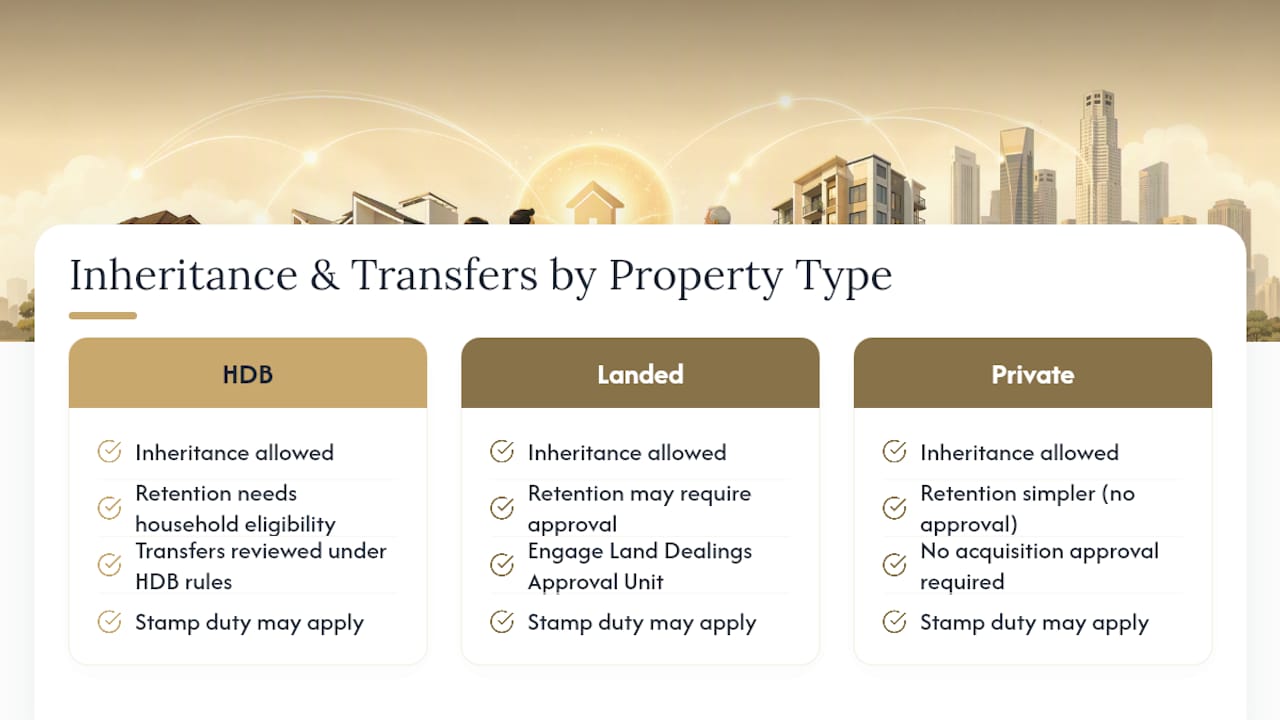
Inheritance doesn't automatically follow the same acquisition rules that applied when the property was first purchased, but it isn't a free pass either. If a PR inherits an HDB flat, the inheritance itself is generally allowed, but retaining ownership afterward depends on satisfying the same eligibility framework any HDB owner must meet, including citizenship or PR status of the resulting household and quota considerations for the block.
Landed property inherited by a PR raises a similar question mark. Even though the transfer happens through inheritance rather than a market purchase, retaining a landed property as a PR can still require engagement with the Land Dealings Approval Unit, since the restricted classification under the Residential Property Act attaches to the property itself, not just to how it changes hands.
Transferring property between family members while both parties are alive, sometimes called a transfer by way of gift or a change in ownership shares, also triggers scrutiny. HDB reviews these transfers against the same eligibility schemes that govern purchases, and stamp duty can still apply depending on the structure. Private property transfers are more straightforward for PRs, since acquisition itself carries no approval requirement, but legal and tax advice is worth the cost before restructuring ownership, particularly where CPF funds were used to finance the original purchase.
What Penalties Apply If PRs Break Property Purchase Rules?
Buying restricted property without approval, or misrepresenting eligibility to secure an HDB flat, carries consequences that go well beyond a slap on the wrist. Under the Residential Property Act, acquiring restricted residential property without the required LDAU approval can result in the transaction being voided, financial penalties, and in serious cases, a requirement to divest the property entirely.
For HDB flats, providing false information on an application, such as misstating household composition, PR tenure dates, or existing property ownership, can lead to the flat being compulsorily acquired by HDB, financial penalties, and disqualification from future HDB transactions. These aren't hypothetical risks. HDB actively cross-checks applicant data against immigration and property records, and PR tenure discrepancies are one of the more common triggers for rejected or unwound applications.
On the tax side, underdeclaring ABSD liability or attempting to structure a purchase to dodge the correct stamp duty rate exposes buyers to penalties from IRAS, including additional duty owed plus fines. The safest approach is straightforward: verify your eligibility and tax obligations through official channels before signing anything, rather than relying on assumptions or secondhand advice from a friend who bought a few years back under different rules.
Perspective: Buy Now or Wait for Citizenship?
Buying private property now gets you into the market immediately, at the cost of PR-tier ABSD and no access to new-build public housing. Waiting for citizenship removes that ABSD gap and opens BTO eligibility, but citizenship timelines are genuinely uncertain, and nobody can promise you a grant date. The honest approach is running the numbers: model expected price appreciation against the ABSD you'd pay today, rather than betting on a citizenship application that might take years or might not succeed at all. For most PRs with stable Singapore ties, aligning the decision with actual family needs and how much liquidity you can tie up matters more than chasing a hypothetical future discount.
— Velisa
Own a Piece of Marina Bay Without Waiting on Approvals
Every rule above applies to landed homes and HDB flats. Private condos don't carry the LDAU approval risk or the three-year tenure clock, which makes them the most straightforward property type available to PRs the moment their status is confirmed. One Marina Gardens is a residential condominium located in a central district of Singapore, offering units with various bedroom counts, communal outdoor spaces, a swimming pool, and childcare facilities within a mixed-use environment that includes retail and dining options.
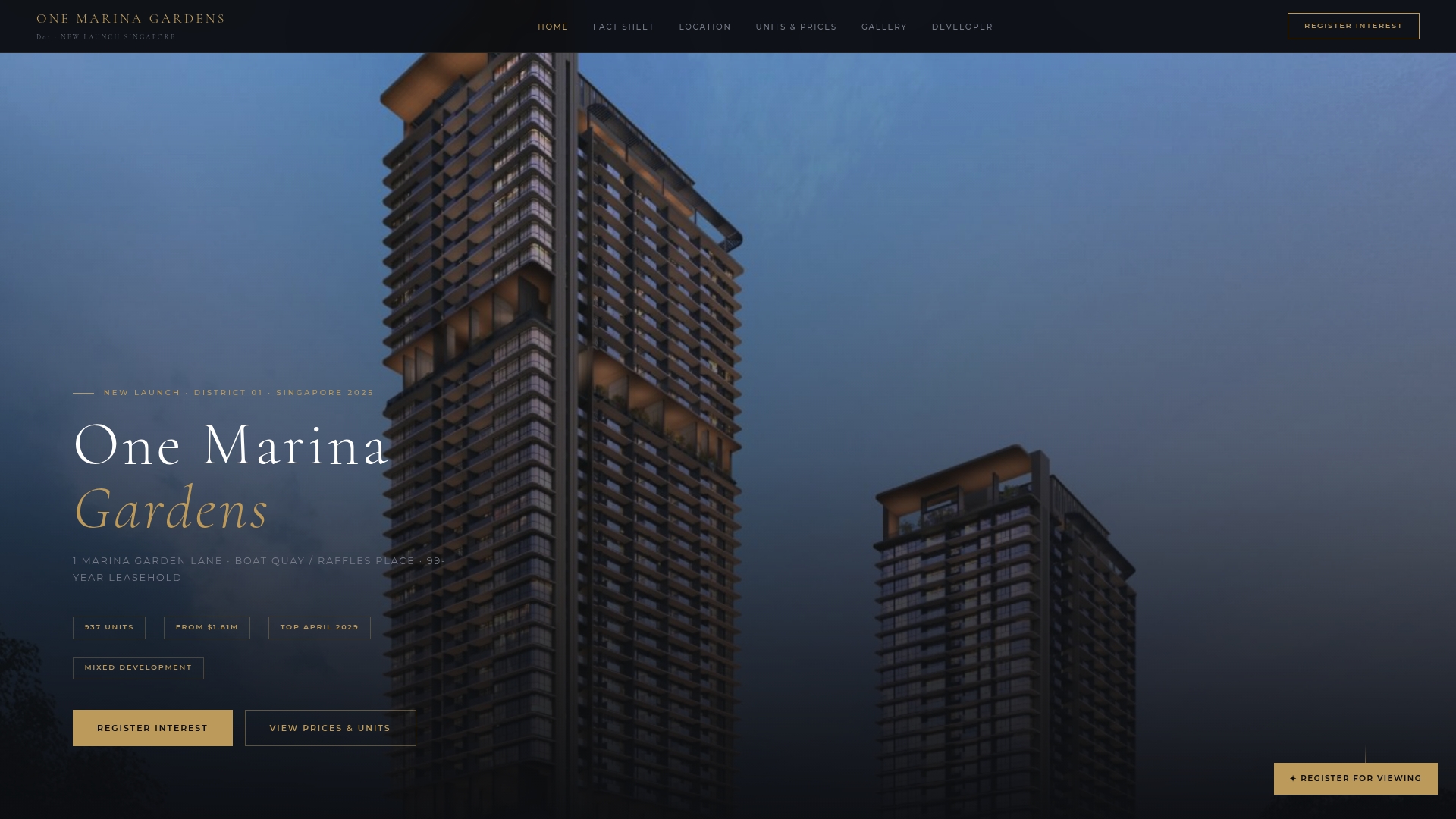
If you're a PR who wants central, private-market access now rather than navigating HDB schemes or an uncertain LDAU decision, this development fits that exact profile, particularly if proximity to the CBD and Orchard Road matters for daily life. Browse current available units or check the price list to see what fits your budget once you've factored in ABSD. Eligibility checks and financing pre-approval still apply no matter which unit you choose, so confirm those first, then reach out to the sales team to book a showflat visit.
Sources
- Housing & Development Board (HDB) official website
- Singapore Land Authority — Foreign ownership of property
FAQ
What Property Can a PR Buy in Singapore?
PRs can buy private condos, apartments, and most strata units immediately, with no approval needed. HDB resale flats are available under specific schemes, while BTO flats and first-sale ECs stay reserved for citizens, and landed property needs LDAU approval.
What Are the Newest Rules Affecting PRs Buying Property?
The core framework hasn't shifted dramatically: ABSD rates for PRs remain at 5% for a first property, 30% for a second, and 35% for a third, per IRAS. The three-year PR tenure rule for HDB resale under the Public Scheme also continues to apply for PR-only households.
Can a 35-Year-Old PR Buy an HDB Flat?
Age alone isn't the deciding factor. What matters is household composition and PR tenure. A 35-year-old PR with a Singapore Citizen spouse or family member can typically buy immediately under the SC–PR Family Scheme, while a PR-only household needs three continuous years of PR status each under the Public Scheme.
Can a PR Buy a House Alone in Singapore?
A PR can buy private property alone without any approval requirement, since acquisition of non-landed private residential property carries no restriction for individual PR buyers. HDB resale flats are different, since PR singles are generally not eligible to buy as sole applicants, and landed property alone still requires discretionary LDAU approval regardless of marital status.